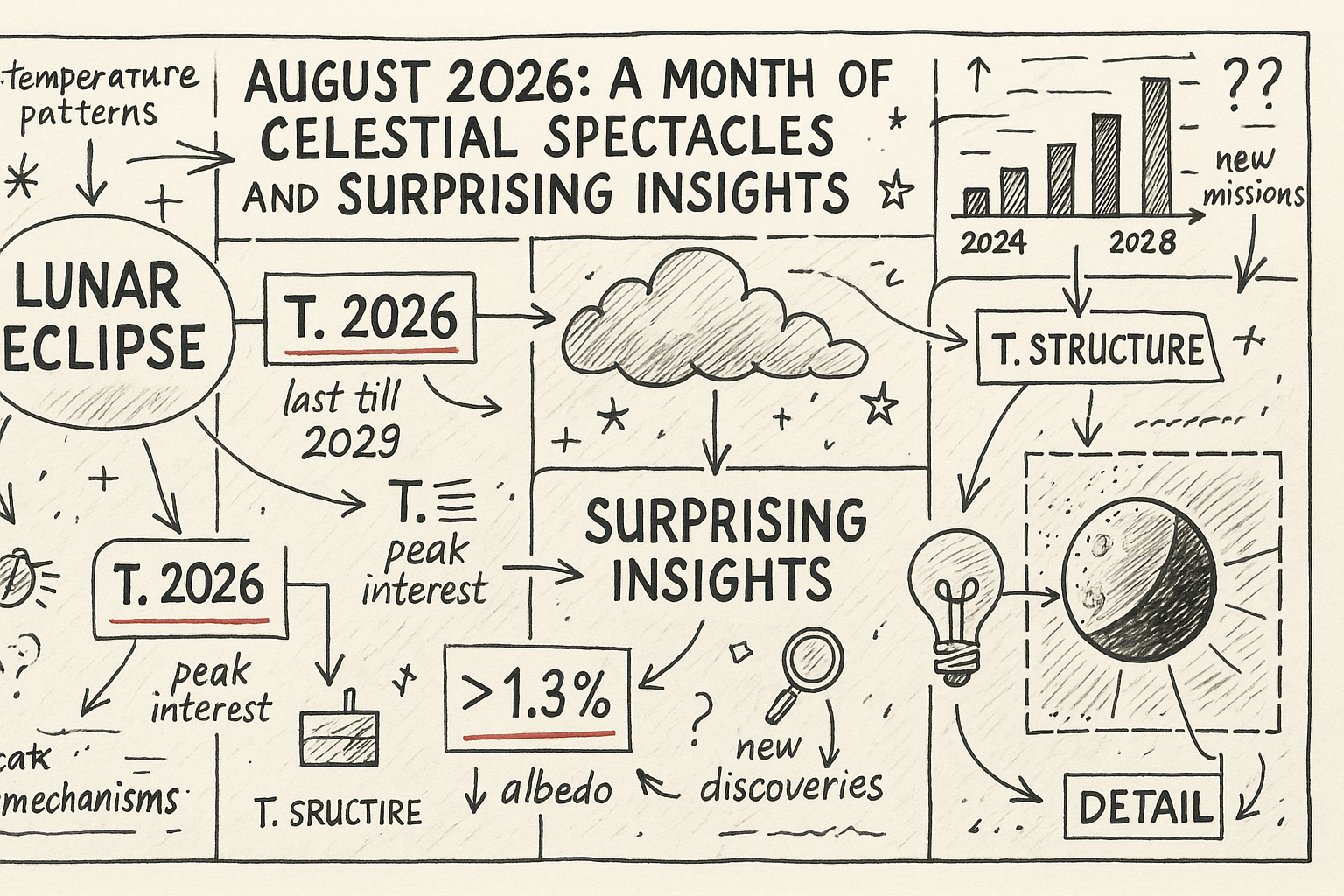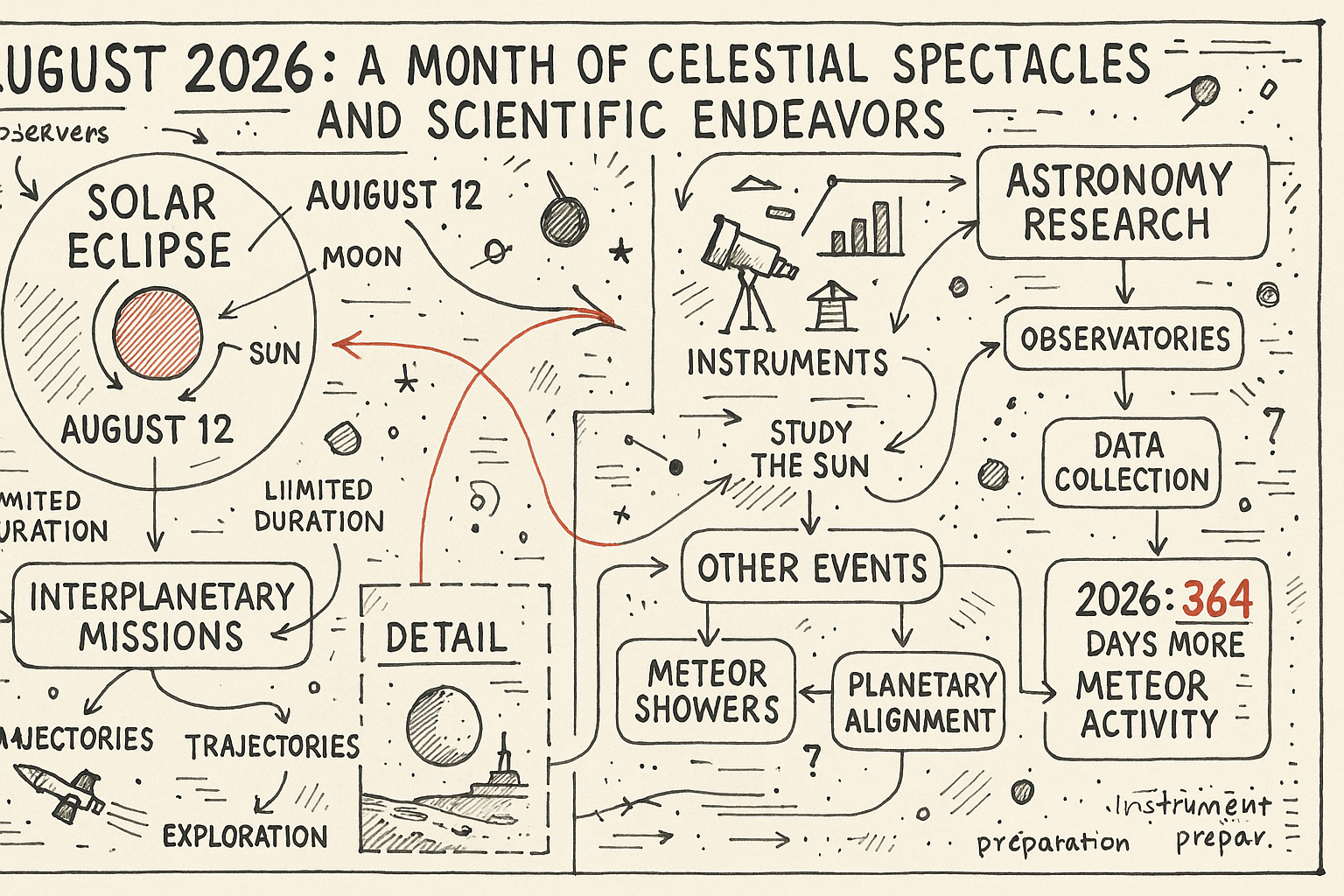
The month of August 2026 presents a confluence of astronomical phenomena and scientific initiatives that both amateur skywatchers and professional astronomers find compelling. From the tantalizing total solar eclipse on August 12 to the planned impact of a Falcon 9 rocket stage on the Moon, the events this month underscore humanity's evolving relationship with space.
The Dance of Shadows: Solar and Lunar Events
On August 12, a total solar eclipse will captivate observers as it arcs from Greenland across Iceland and into the Iberian Peninsula. This eclipse, unique in its path across Earth's poles, provides a rare opportunity for both scientific study and public engagement. In Italy, partial views of the eclipse near sunset promise a dramatic end to the day (Source 4). The eclipse's path and timing remind us of the celestial mechanics that have inspired both awe and scientific inquiry throughout history.
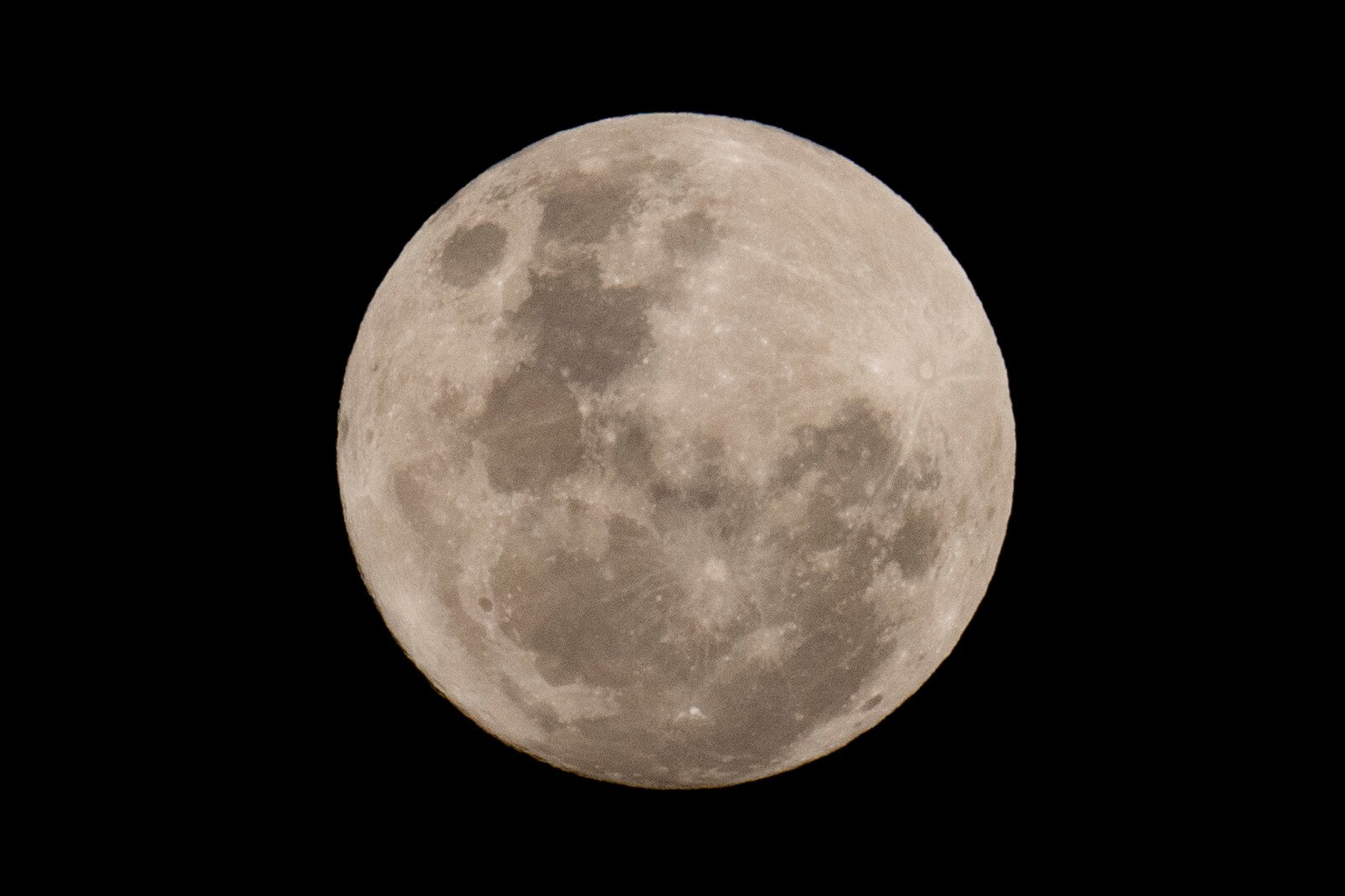
Meanwhile, the Moon itself remains a focal point of interest. August's lunar observations are enriched by detailed maps and guides, allowing enthusiasts to witness lunar phases and notable conjunctions (Source 1, 2). These observations are not merely for aesthetic appreciation; they are crucial for scientific missions planning future lunar bases, as understanding the lunar regolith's thickness becomes vital (Source 5).
Asteroids in Opposition
Adding to the celestial tapestry, three main belt asteroids—Dembowska, Eleonora, and Metis—reach opposition this month, making them prime targets for observation (Source 7). These events highlight the ongoing interest in minor celestial bodies, not only for their scientific value but also for their potential economic and practical implications in the realm of asteroid mining and planetary defense.
SpaceX and Lunar Impact
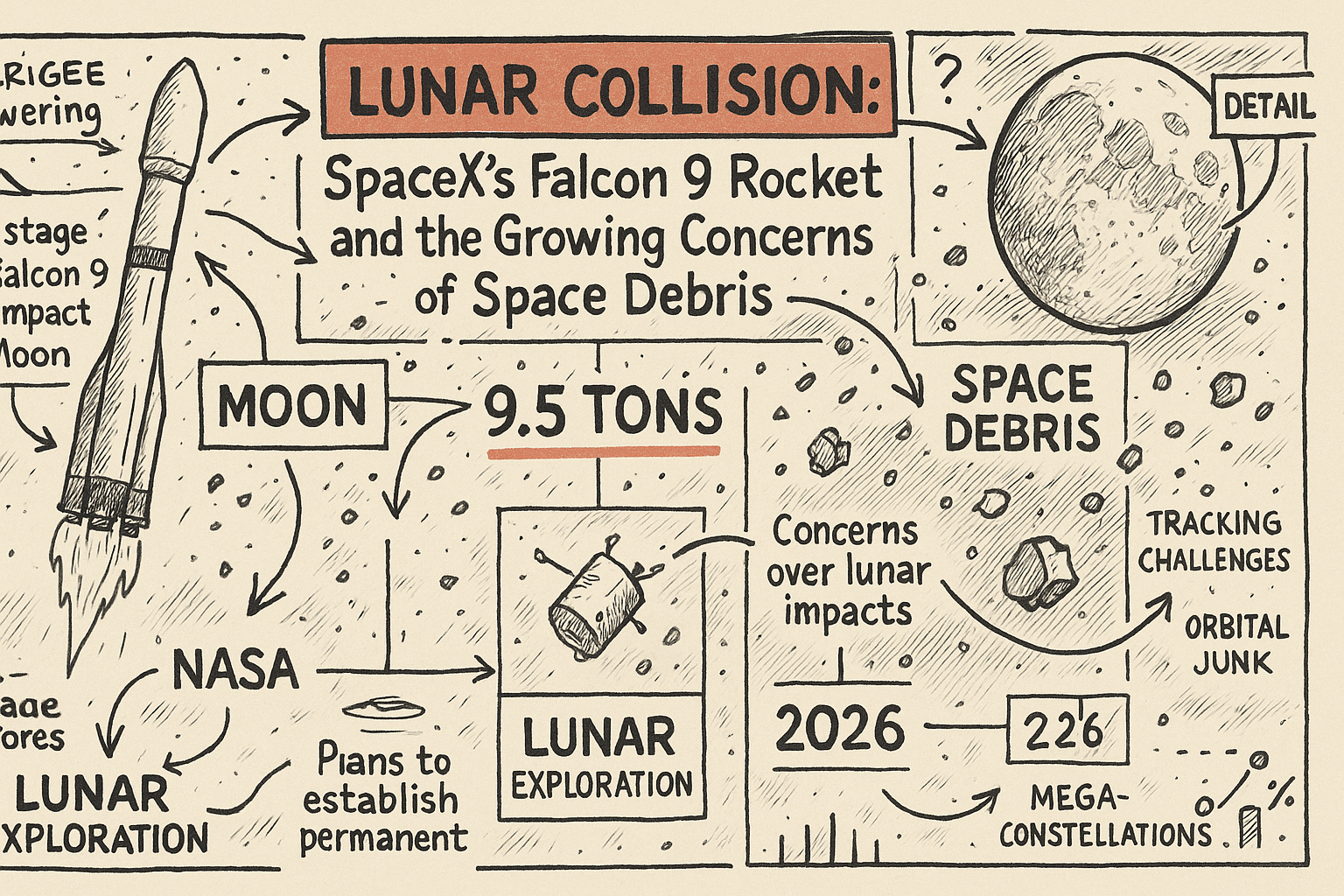
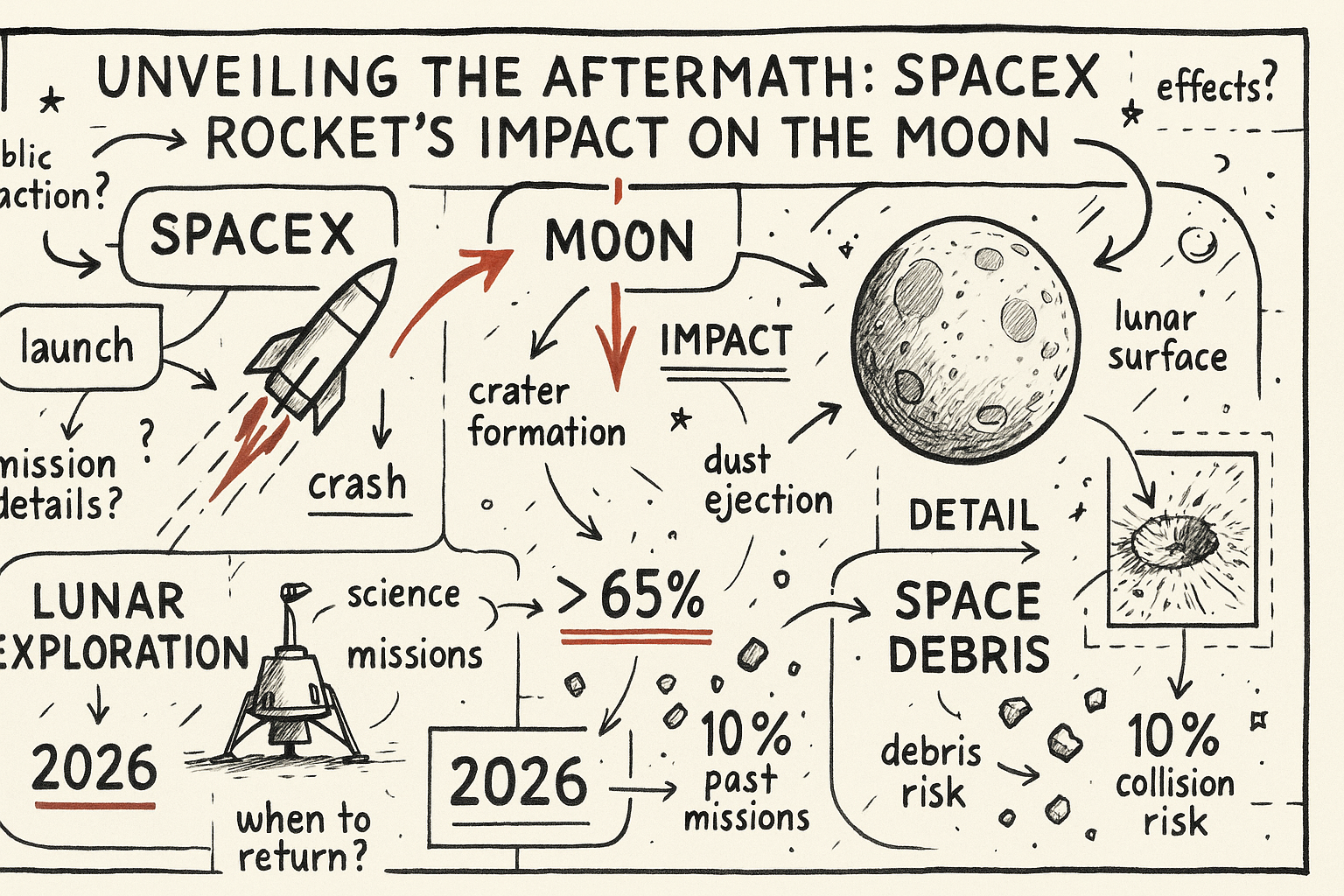
In a fascinating blend of human engineering and natural celestial bodies, SpaceX's Falcon 9 upper stage is set to impact the Moon on August 5 (Source 8). This controlled impact offers a rare chance to study the resulting effects on the lunar surface, such as crater formation and the dispersal of lunar dust into space. Such experiments are invaluable for future missions, providing insights into surface dynamics and potential hazards for lunar habitats.
The Broader Implications
These events collectively illustrate the dual nature of our engagement with space: as a realm of natural wonder and a frontier for human exploration and utilization. The total solar eclipse serves as a reminder of the ancient allure of celestial phenomena, while the Falcon 9 impact signifies our growing ability to interact with and alter extraterrestrial environments.
This blend of observation and intervention speaks to a future where humanity's role in space is increasingly active and participatory. As we look to establish bases on the Moon or mine asteroids, understanding these celestial processes is crucial. Furthermore, these activities exemplify the global nature of space exploration, with international collaborations playing a vital role in both scientific discovery and technological advancement.