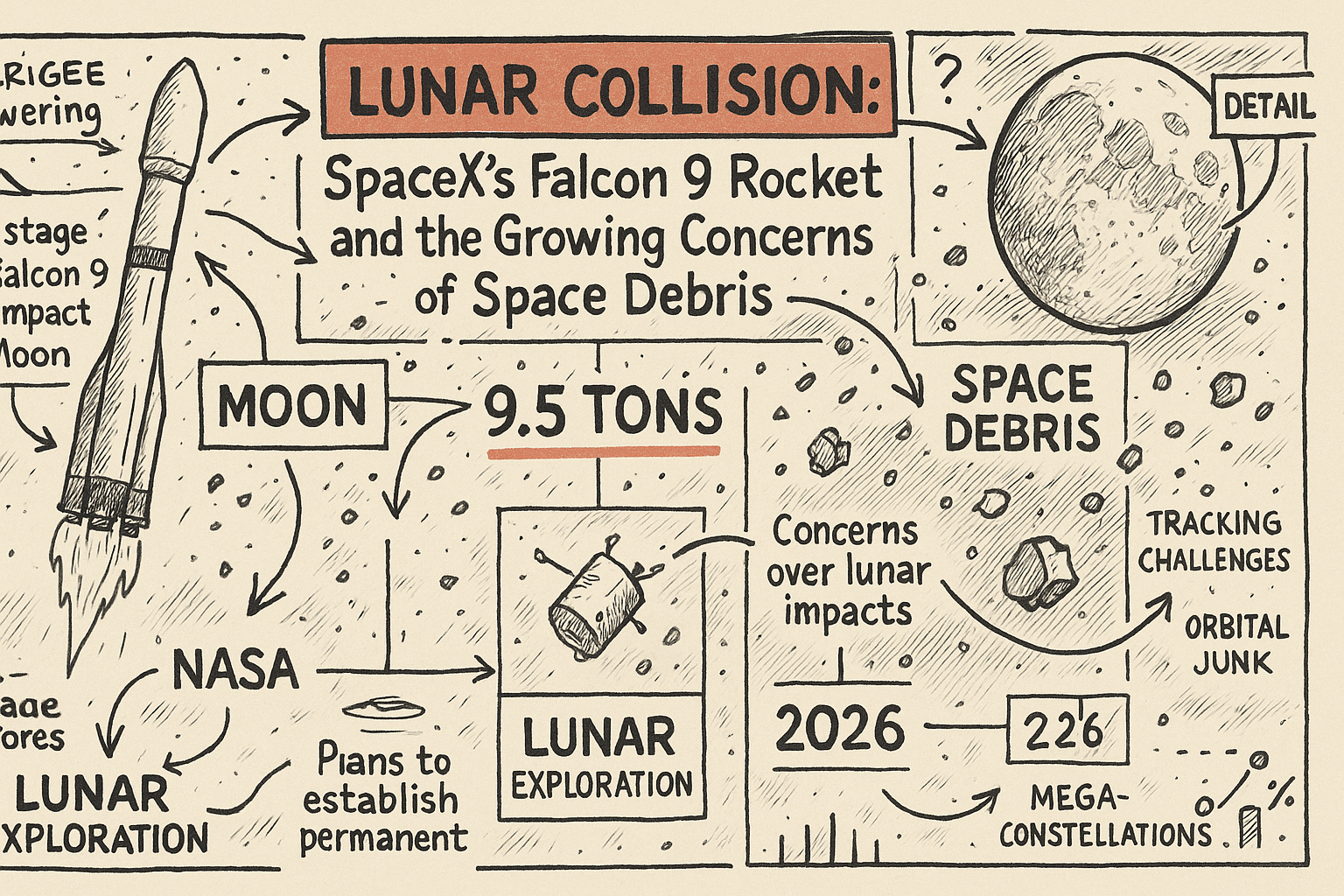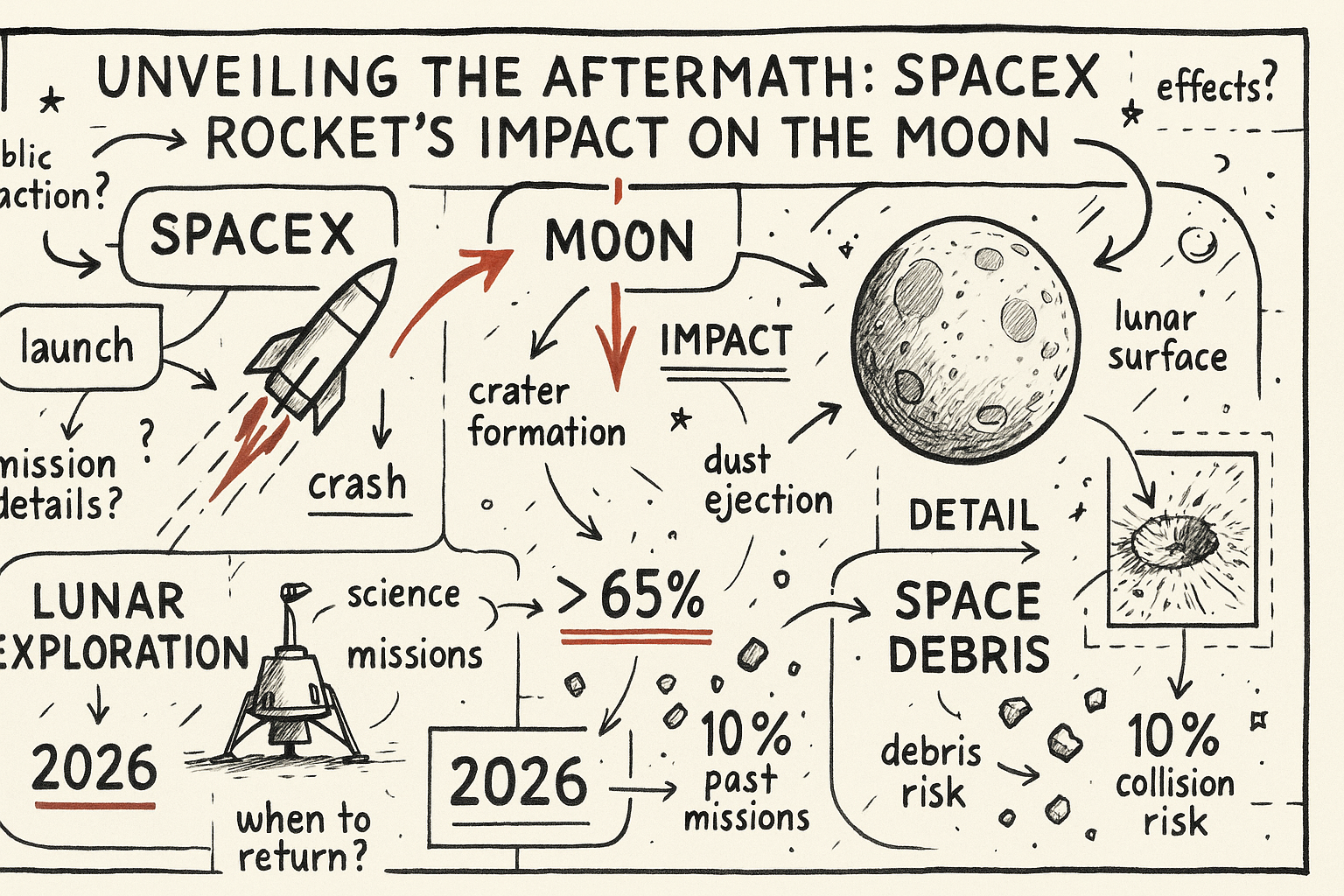
On August 5, 2026, the upper stage of a SpaceX Falcon 9 rocket collided with the Moon, marking a significant event in space exploration. While the initial impact went unrecorded by direct imaging, subsequent observations have provided new insights into the aftermath of this collision.
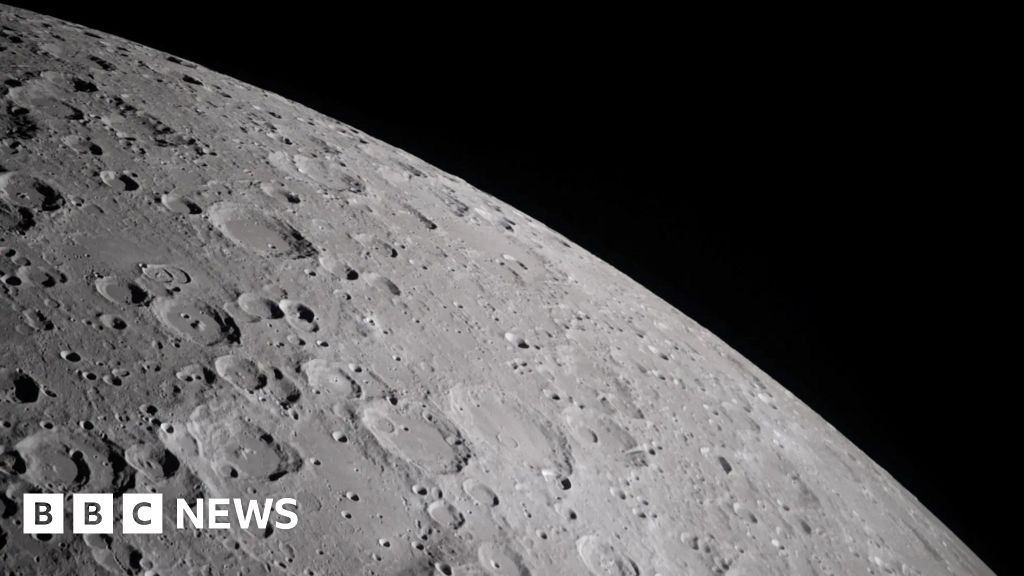
The Korean AeroSpace Administration (KASA) played a pivotal role in capturing the post-impact scenario. Utilizing their lunar orbiter, Danuri, KASA released images showing the Moon's surface before and after the rocket's debris struck. These images offer a rare glimpse into the changes induced by human-made objects impacting celestial bodies.
Scientific Observations and Discoveries
Despite the absence of direct images of the impact, scientists have gathered substantial evidence confirming the collision. The European Southern Observatory's Very Large Telescope in Chile detected a stream of sodium and lithium shortly after the predicted impact time, reinforcing the occurrence of the event. Additionally, the Lowell Observatory in Flagstaff, Arizona, reported evidence of a plume on the Moon, further corroborating the impact.
These observations are crucial as they provide data on the composition and dynamics of lunar impacts. The detection of specific elements like sodium and lithium can offer insights into the materials present in both the rocket debris and the lunar surface, enhancing our understanding of such interactions.
Implications for Future Lunar Exploration
The event has sparked a race among orbiters to closely examine the predicted crash site. This endeavor aims to gather more detailed information about the impact's effects and the resulting crater. Such investigations are vital for future lunar exploration missions, as they help refine our models of impact dynamics and lunar geology.
The incident also highlights the growing need for international collaboration in monitoring and managing space debris. As more missions target the Moon and beyond, understanding the consequences of human-made impacts becomes increasingly important for sustainable space exploration.
In conclusion, while the direct images of the SpaceX rocket's impact on the Moon remain elusive, the subsequent observations and data gathered by various scientific institutions provide valuable insights. These findings not only enhance our understanding of lunar impacts but also underscore the importance of continued observation and collaboration in space exploration efforts.