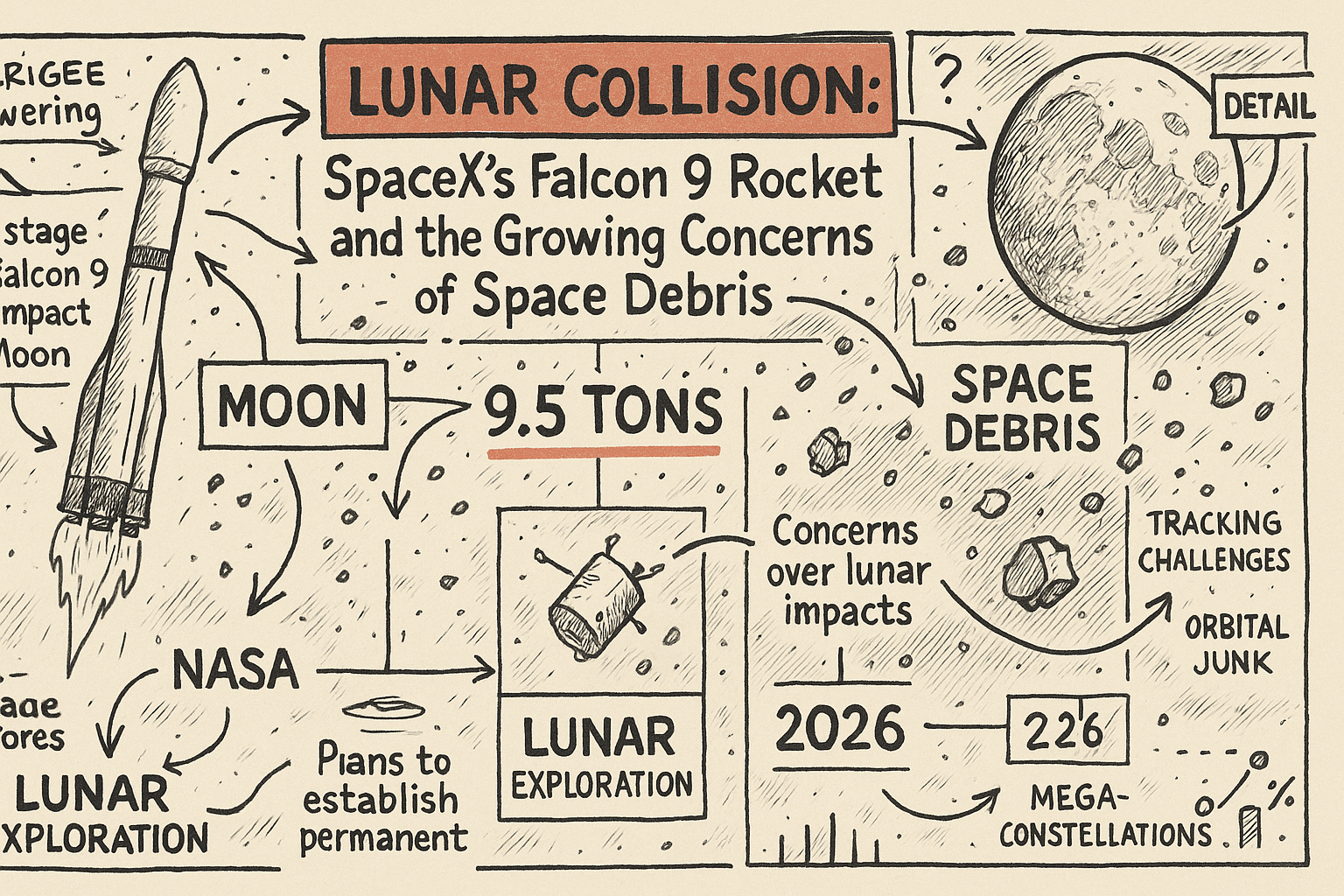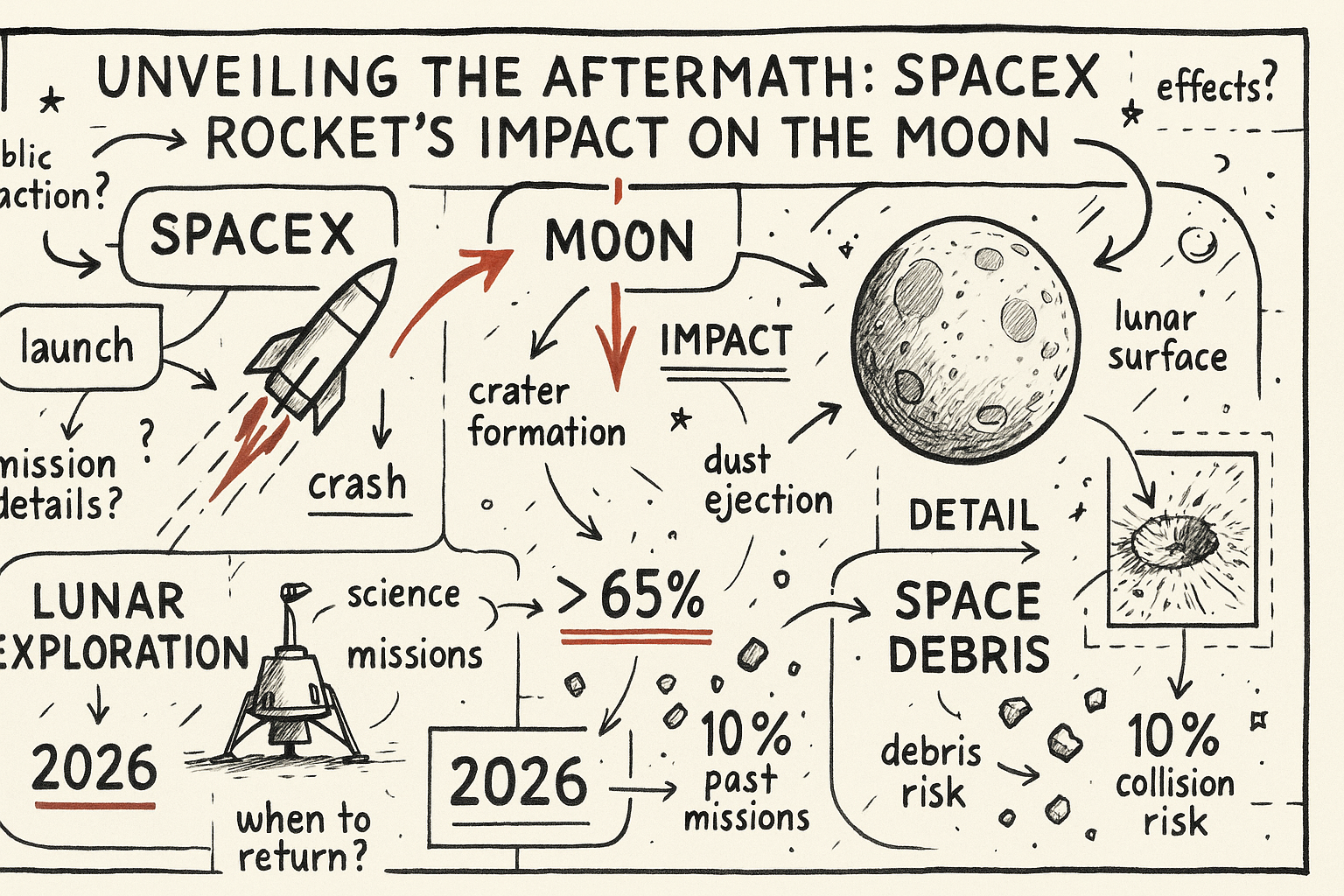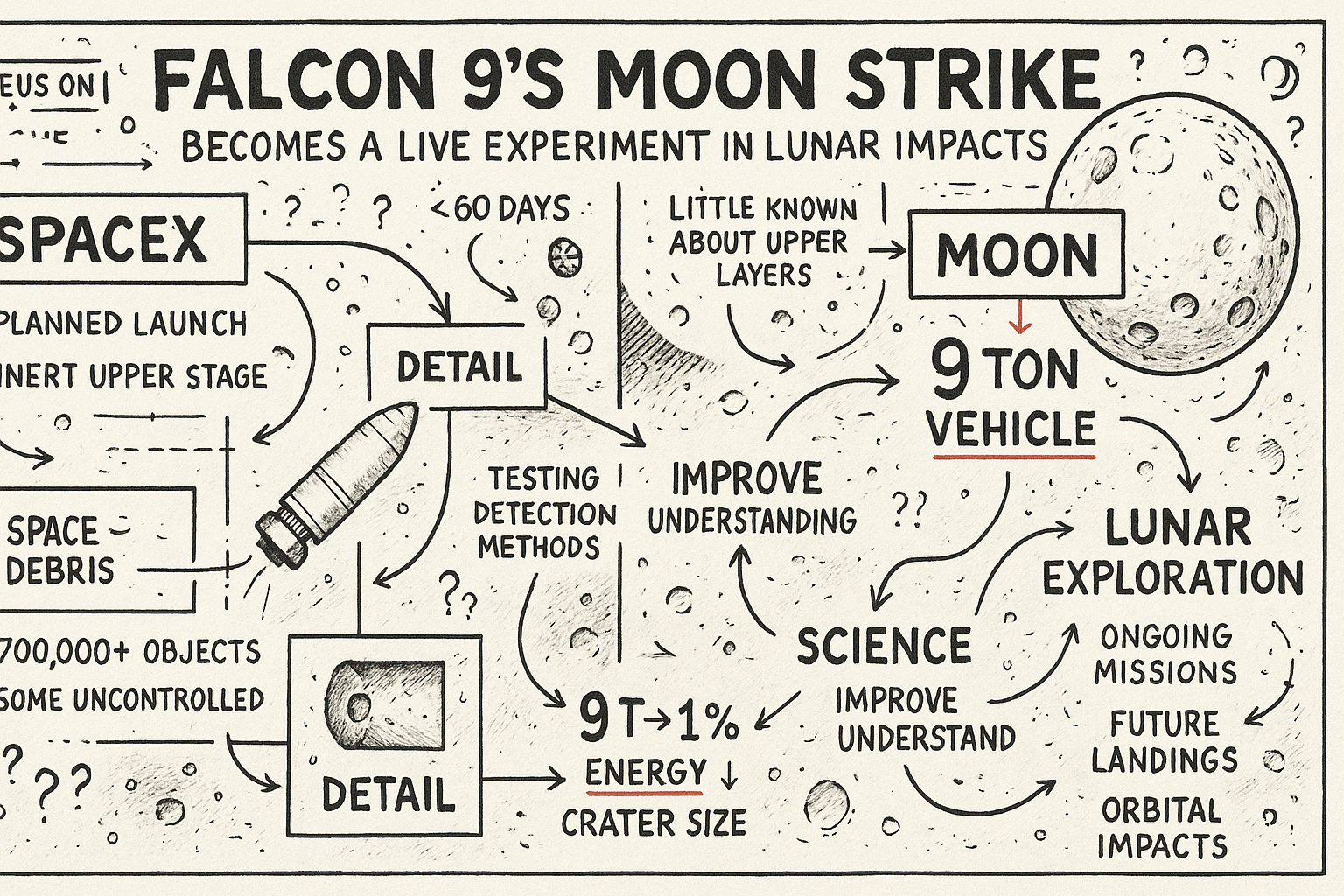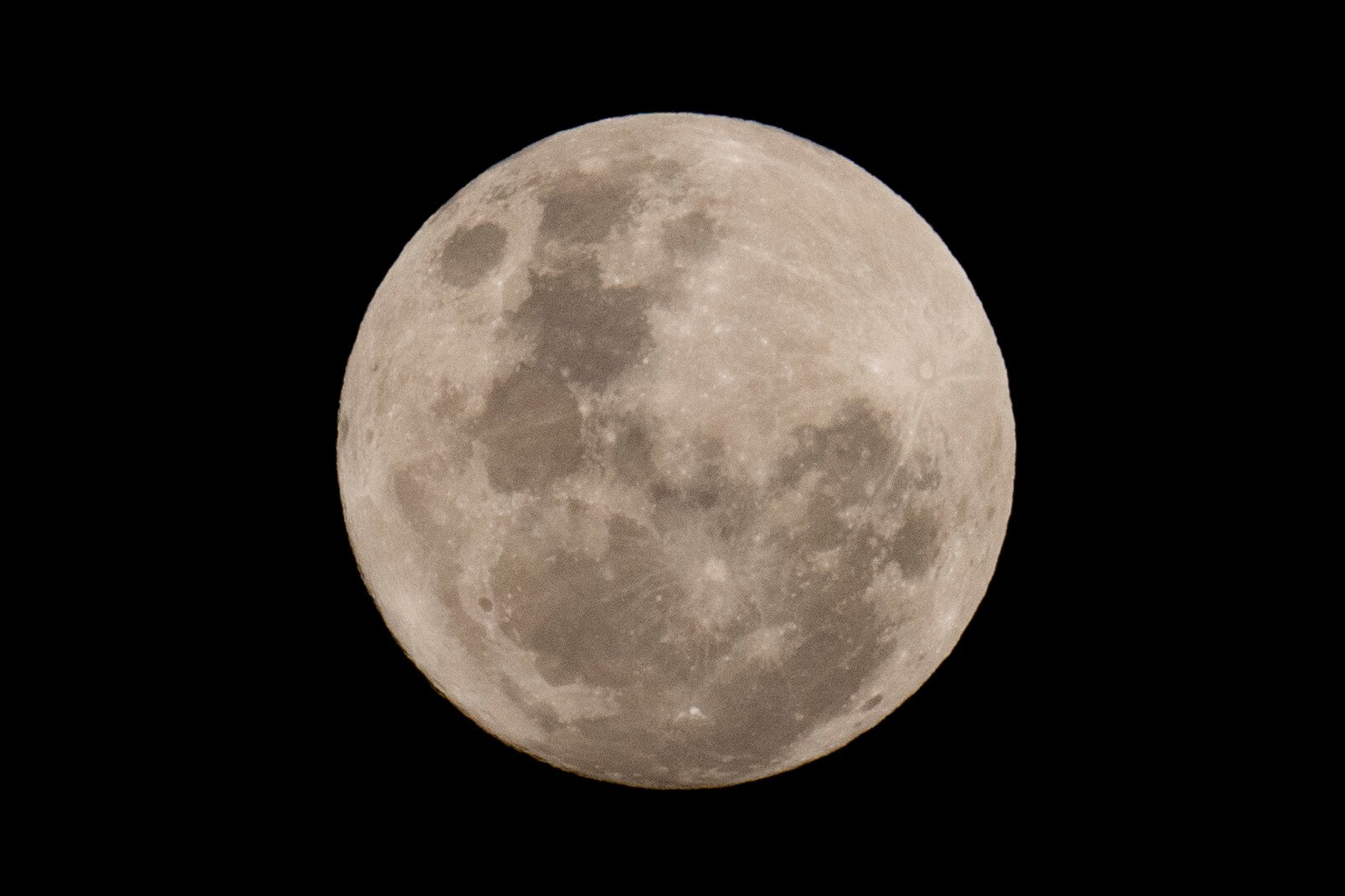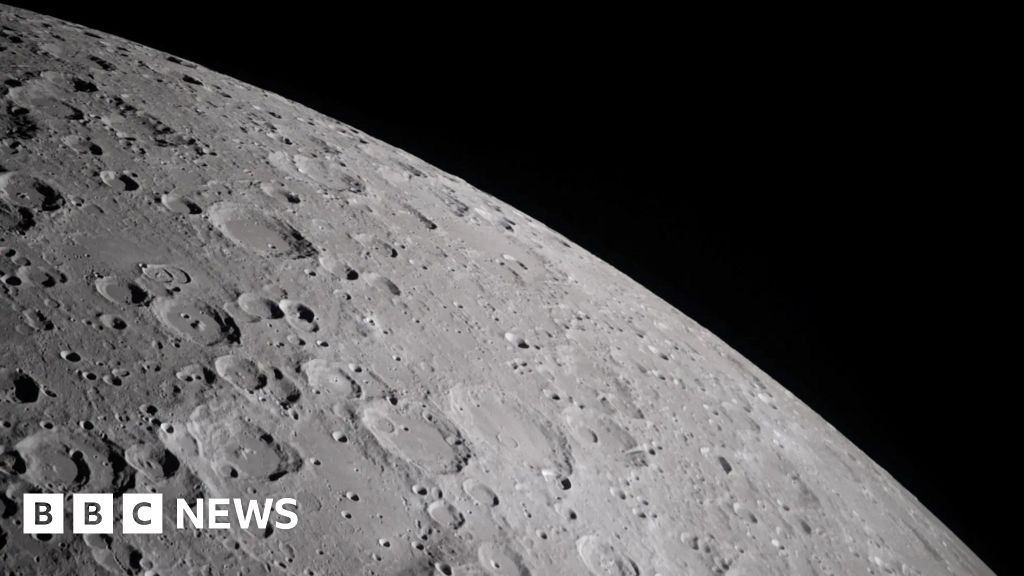
A piece of a SpaceX Falcon 9 rocket, roughly the size of a school bus and weighing four tonnes, has impacted the lunar surface, creating a large crater and offering a unique opportunity for scientific study. The discarded rocket stage, which had been lingering in space since a mission in January 2025, finally succumbed to gravitational forces and crashed near the Einstein Crater on the Moon.
The debris was part of a mission that successfully delivered two lunar landers, Firefly's Blue Ghost and ispace's Hakuto-R, to the Moon. Since its jettison, astronomers had been closely monitoring the trajectory of the rocket stage, anticipating its eventual collision with the Moon. This prediction was confirmed by a report in late April, which outlined the inevitability of the impact.
The collision occurred at an astonishing speed of 5,400 miles per hour, equivalent to about seven times the speed of sound on Earth. The energy released upon impact was estimated to be equivalent to three tonnes of TNT, resulting in the creation of a crater that NASA estimates to be approximately 60 feet wide and 12 feet deep. Some estimates suggest the crater could be as wide as 100 feet.
While the immediate explosion was challenging to observe from Earth, the aftermath provides a golden opportunity for lunar observation. NASA's Lunar Reconnaissance Orbiter and South Korea's Pathfinder Lunar Orbiter are both set to capture images of the impact site to analyze the effects of the collision. These observations could take some time, as the explosion itself was not directly observed, but signals confirming the impact were detected by scientists.
The European Southern Observatory's Very Large Telescope captured evidence of the impact through "spectral lines," depicting the release of sodium and lithium gases, which are illustrative of the event's magnitude. Despite the dramatic nature of the impact, the Moon's surface, which lacks a protective atmosphere, is regularly bombarded by meteoroids. NASA notes that impacts with similar energy occur approximately every six days.
The collision raises intriguing questions about the long-term management of space debris, which has become an increasing concern as space exploration and commercialization expand. While such impacts pose no direct threat to Earth, they highlight the need for international cooperation in tracking and mitigating space debris.
As the scientific community awaits further data from lunar orbiters, the event underscores the potential for unintended consequences in space exploration. It also serves as a reminder of the dynamic and sometimes unpredictable nature of our interactions with celestial bodies.
In retrospect, the incident not only highlights the challenges posed by space debris but also provides a unique research opportunity. By studying the crater and the effects of the impact, scientists hope to gain insights into the lunar surface's composition and the dynamics of high-velocity impacts.
With the ongoing advancements in space exploration, the incident serves as a reminder of the importance of responsible stewardship of space environments. As more missions venture into space, the lessons learned from such events will be crucial in shaping future policies and practices in space exploration.