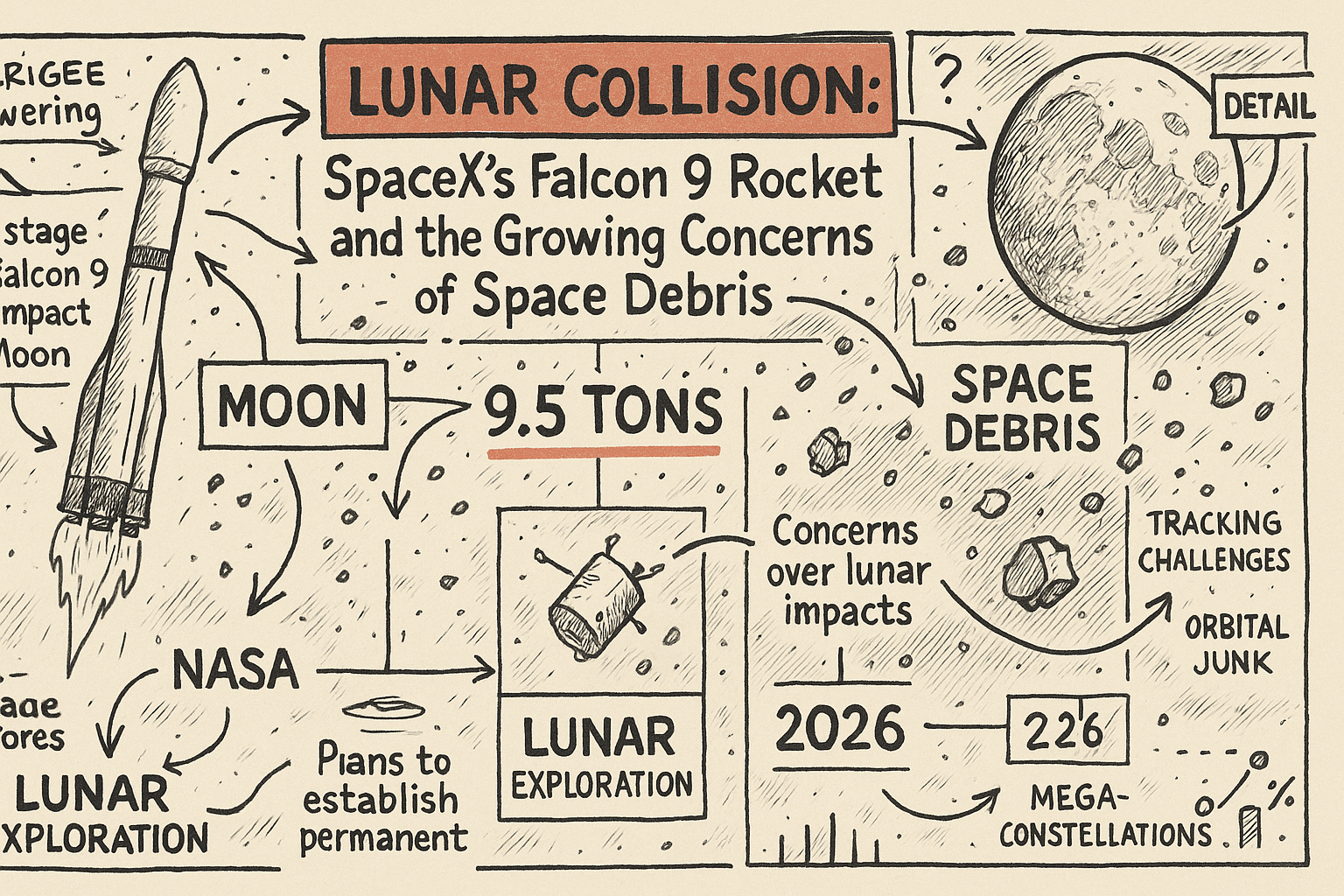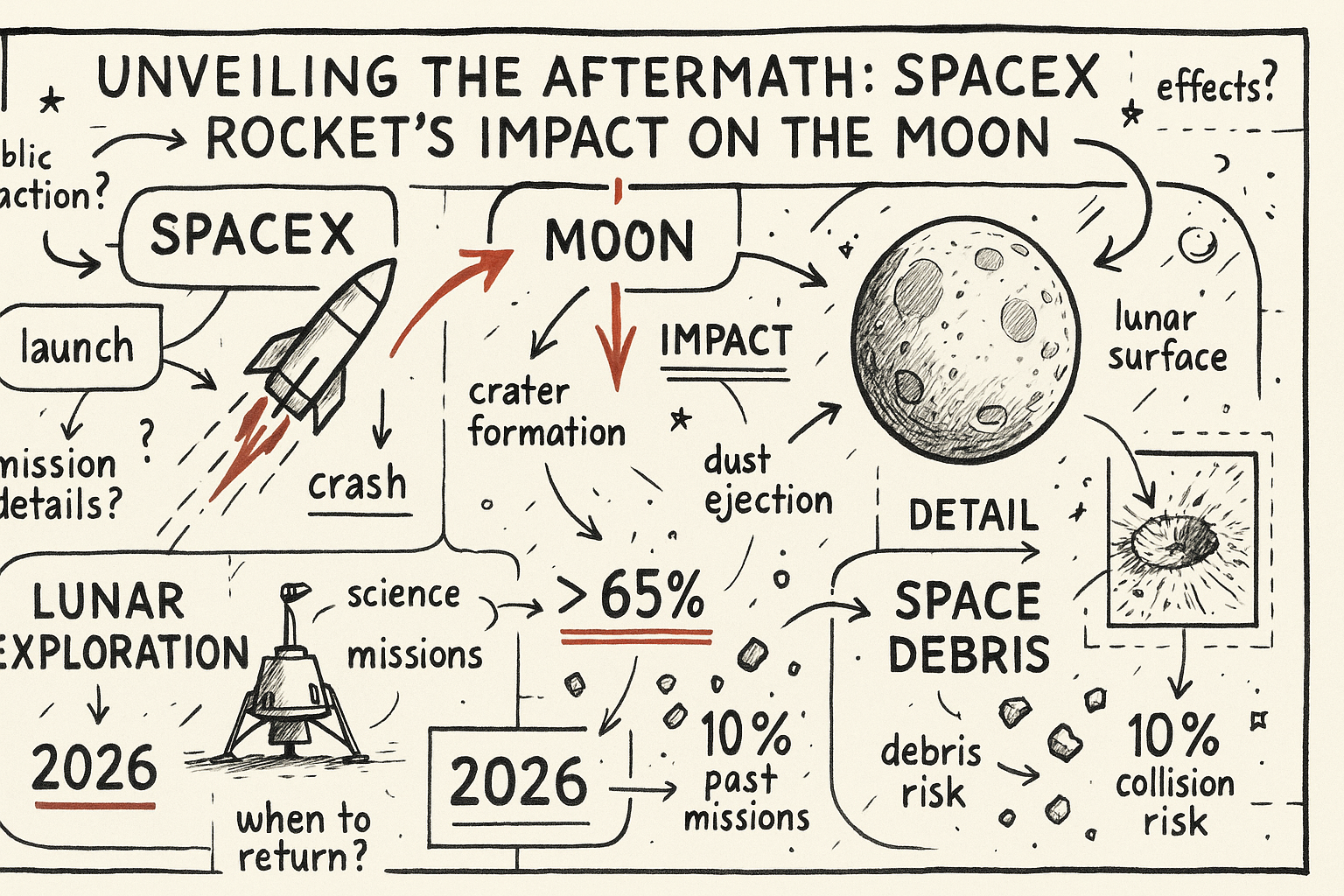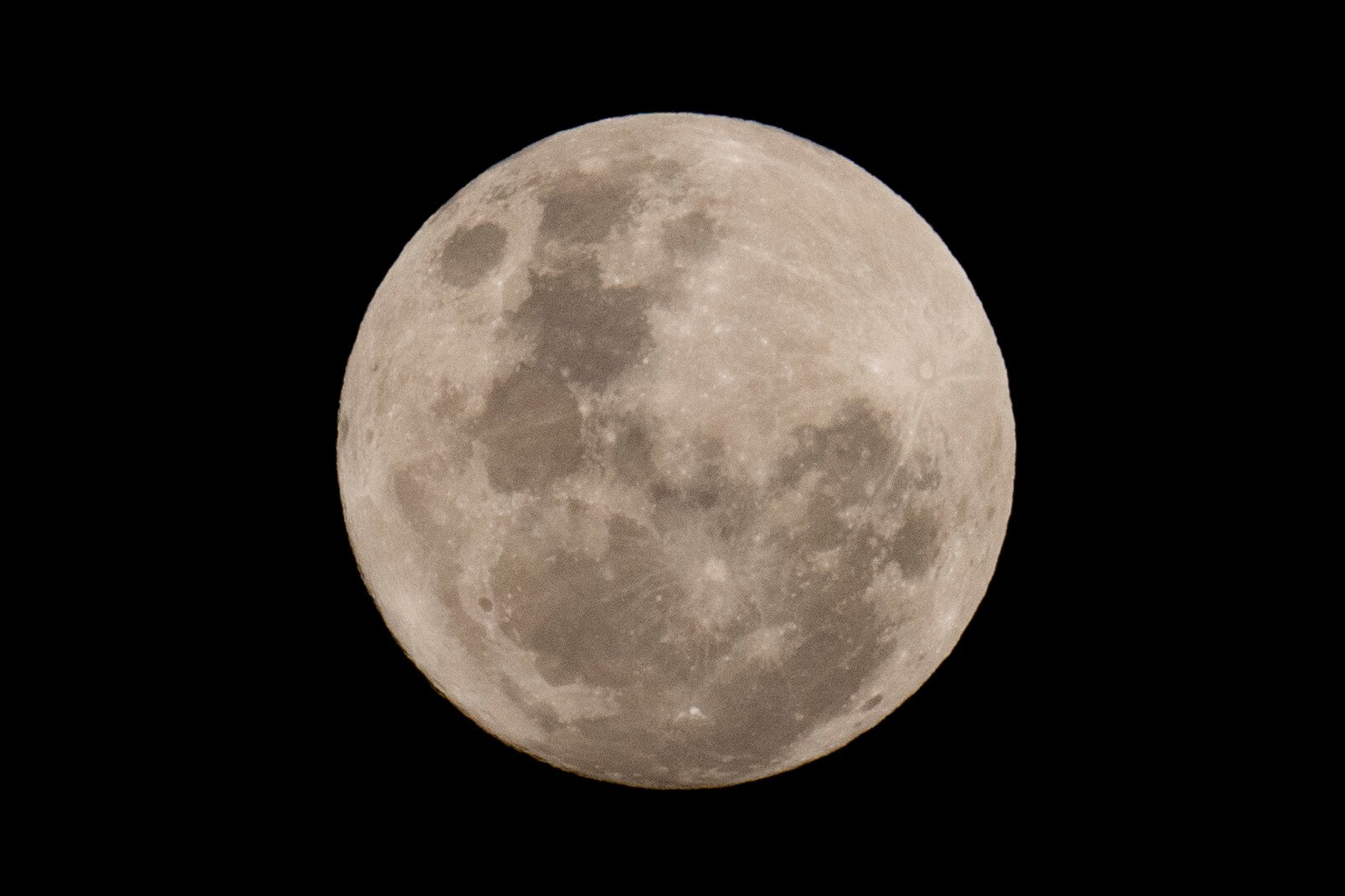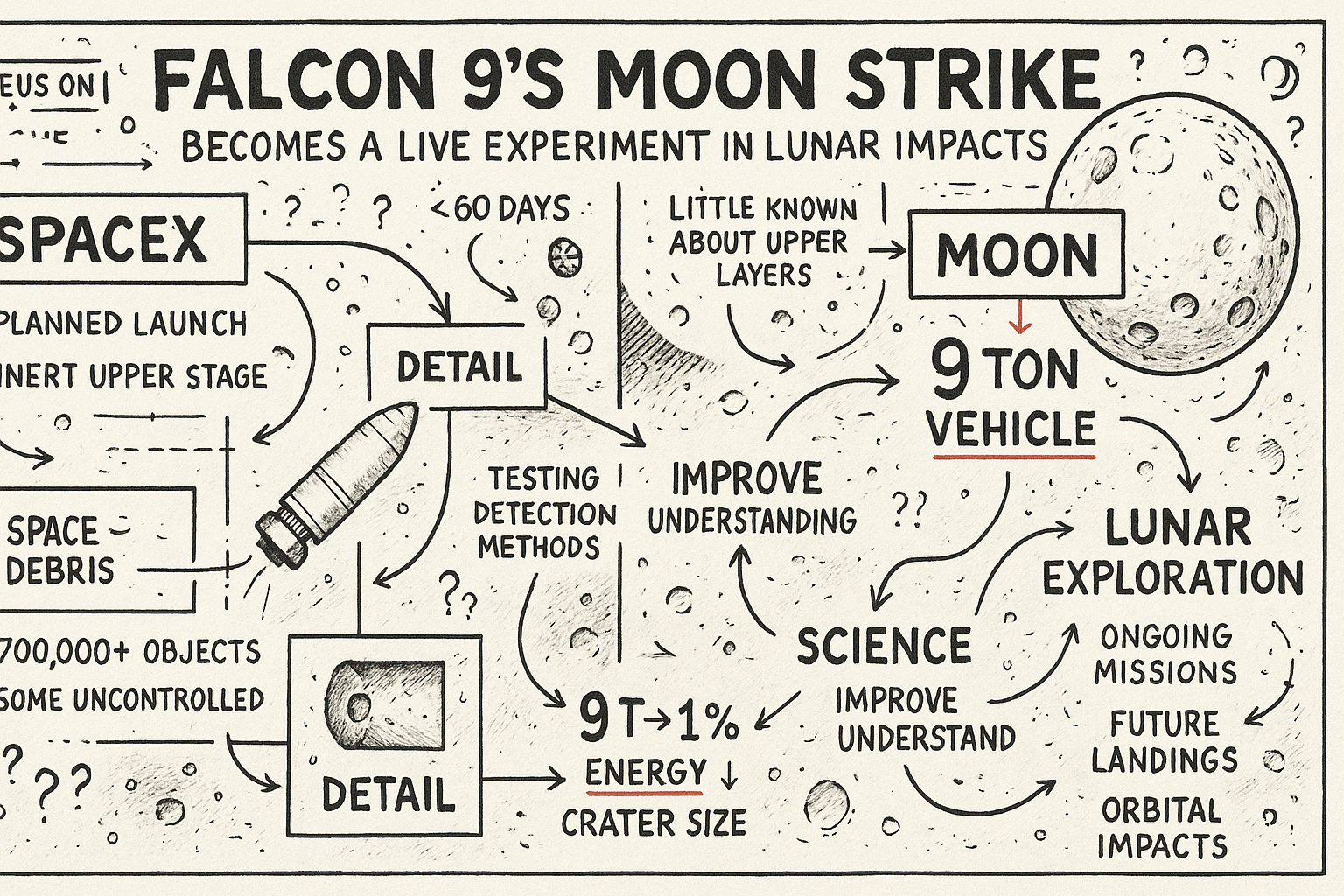
The recent unintended collision of a SpaceX Falcon 9 rocket upper stage with the Moon has sparked significant interest in both the scientific community and the public. This event, which occurred on August 5, 2026, is not just a reminder of the growing issue of space debris but also presents a unique opportunity for scientific exploration.
The Collision Event
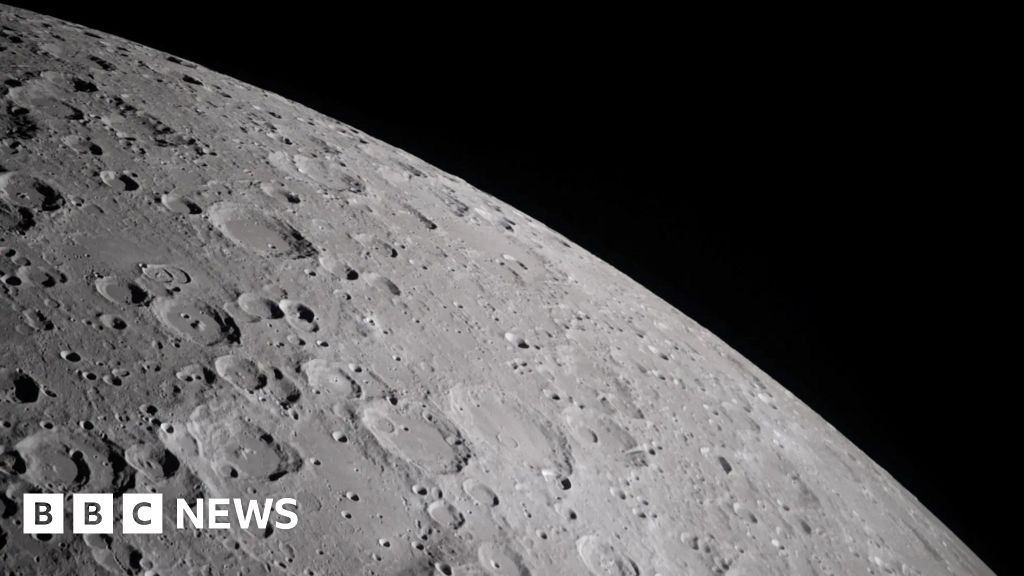
The piece of the Falcon 9 rocket, weighing approximately 4,000 kg, was launched in January 2025. It was initially part of a mission to transport a pair of lunar landers, which successfully reached their destination. However, the upper stage of the rocket was left adrift due to insufficient fuel to return to Earth or enter a stable orbit. Traveling at a speed of about 5,400 mph (8,700 km/h), the rocket stage was expected to impact the Moon around 6:35 a.m. GMT, near the Einstein crater.
The impact of the rocket stage is believed to have created a crater up to 27 meters in diameter and 5 meters deep, with an explosion equivalent to 3 metric tons of TNT. This event adds to the estimated 3,000 human-made objects that now litter the lunar surface.
Scientific Opportunities
While the collision was accidental, it provides a unique scientific gift for planetary geologists. The impact site near the Einstein crater offers an unprecedented opportunity to study the effects of high-velocity impacts on the lunar surface. Scientists are eager to analyze the newly formed crater to gain insights into the Moon's geology and the processes that shape it.
The data gathered from this event could be crucial for future lunar missions. Understanding the nature of impacts and the resulting debris could help in planning and protecting future lunar bases, as the risk of space debris impacts is expected to rise with the increasing pace of space exploration.
Implications for Lunar Exploration
The collision raises important questions about the future of lunar exploration and the management of space debris. As more missions are planned to the Moon, including potential human settlements, ensuring the safety of these endeavors becomes paramount. The incident highlights the need for international cooperation and regulation to mitigate the risks posed by space debris.
In conclusion, while the unintended collision of the SpaceX Falcon 9 rocket stage with the Moon underscores the challenges of space debris, it also opens up new avenues for scientific research. The findings from this event could play a significant role in shaping the future of lunar exploration and ensuring the safety of future missions.