In the vast expanse of space, humanity's quest to understand celestial phenomena has taken giant leaps forward, thanks to recent advancements and discoveries. From the development of autonomous missions to track asteroids, to the integration of infrared observations of distant galaxies, the space science community is uncovering mysteries that were once thought beyond reach.
Autonomous Space Missions: A New Frontier
The REndezvous Mission for Orbital Reconstruction and Analysis (REMORA) represents a significant stride in asteroid exploration. As proposed in a white paper submitted to the U.K. Space Agency's 2035 Space Frontiers program, REMORA aims to deploy a fleet of autonomous probes to tag and track asteroids. This ambitious project underscores the limitations of current observational methods and highlights the potential for in-situ analysis to provide unparalleled insights into asteroid composition and behavior.
Asteroids have long been considered time capsules of the early solar system, offering clues to planetary formation. However, the need for direct interaction with these celestial bodies is essential for unlocking their secrets. REMORA's proposed mission architecture could revolutionize how we study these space rocks, paving the way for more detailed investigations and possibly averting future impact threats.
Galactic Observations: A Dual Perspective
Meanwhile, the Hubble Space Telescope and the James Webb Space Telescope have collaborated to offer a groundbreaking view of the Black Eye Galaxy (Messier 64). By combining ultraviolet, visible, and infrared observations, astronomers have unveiled dynamic features within the galaxy that were previously obscured. This dual-perspective approach not only enhances our understanding of galactic structures but also sets a precedent for future collaborative efforts between space telescopes.
The intricate details captured by these instruments demonstrate the power of multi-wavelength astronomy, providing a more comprehensive picture of galactic evolution and behavior. As we continue to refine our observational techniques, the potential to uncover even deeper cosmic truths becomes increasingly attainable.
Exoplanetary Insights: WASP-121b's Twilight Zones
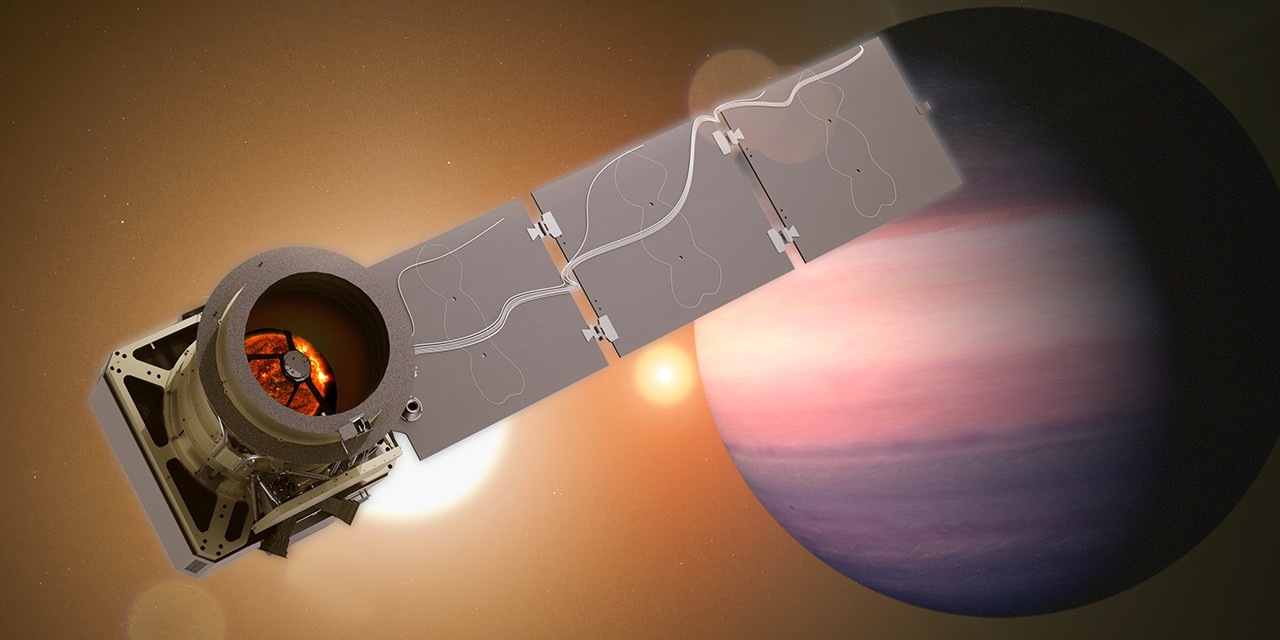
Exoplanet research has also seen remarkable progress with the study of WASP-121b, an ultra-hot Jupiter-like planet. Utilizing the James Webb Space Telescope's NIRSpec instrument, researchers have observed atmospheric differences in the planet's twilight zones. The presence of hot winds moving from the morning to the evening side reveals complex atmospheric dynamics that challenge our understanding of exoplanetary climates.
Such findings highlight the diverse nature of exoplanets and their atmospheres, prompting scientists to reconsider existing models and theories. As exoplanet detection and characterization techniques advance, we are likely to encounter more surprising climatic phenomena that could reshape our concepts of habitability beyond Earth.
Cosmic Origins and the Role of Jupiter
In a related study, NASA scientists have proposed new theories on the distribution of life's essential elements in the early solar system. By examining meteorite compositions, the study suggests that Jupiter played a crucial role in dispersing key elements like phosphorus and nitrogen across the solar system. This theory challenges previous assumptions about how Earth acquired the building blocks for life.
The implications of this research extend to our search for life beyond Earth, as it suggests that the formation conditions conducive to life might be more common than previously thought. Understanding how these elements are distributed could guide future missions in the hunt for extraterrestrial life.
As we continue to push the boundaries of space science, each discovery opens new avenues for exploration and understanding. The interconnected nature of these recent findings—from asteroid missions to galactic observations—illustrates the collaborative spirit driving modern space exploration.