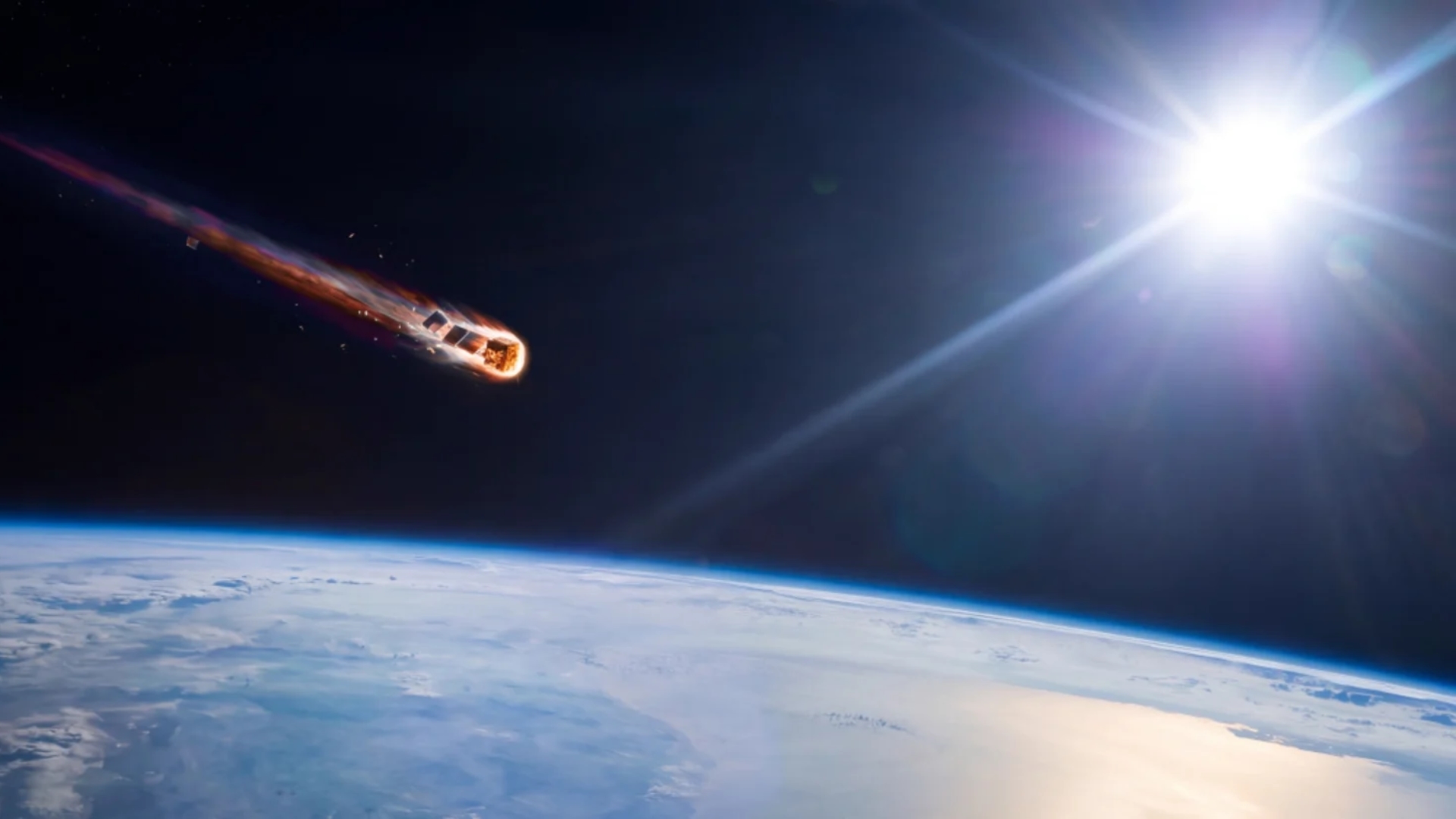
Every year, a significant number of retired satellites are deliberately directed back toward Earth to burn up in the atmosphere. This practice, carried out to mitigate the growing problem of space debris in low-Earth orbit (LEO), is now under scrutiny for potentially creating a new environmental challenge. Japanese space company Astroscale has recently initiated a project to investigate the consequences of these incinerating satellites on the Earth's atmosphere.
The congestion of space debris in LEO has been a pressing issue for decades. As more countries and private companies launch satellites to support communication, weather monitoring, and scientific research, the orbits surrounding our planet become increasingly crowded. This accumulation of defunct satellites, spent rocket stages, and other debris poses a collision risk for operational satellites and the International Space Station. In response, space agencies have developed guidelines for de-orbiting satellites at the end of their operational lifespans.
Although the fiery re-entry of satellites is an effective way to reduce space debris, questions have arisen about the environmental impact of the process. When a satellite enters the Earth's atmosphere at high velocity, it heats up due to friction, resulting in the vaporization of its materials. However, the exact composition and distribution of the byproducts created during this incineration are not well understood. Concerns have been raised about the potential release of harmful substances, such as aluminum and other metals, into the atmosphere, which could have implications for atmospheric chemistry and climate.
Astroscale's project aims to determine the nature and extent of these emissions. By collaborating with scientists and researchers, the company seeks to develop a comprehensive understanding of the re-entry process and its environmental implications. The goal is to gather empirical data that can guide future satellite design and end-of-life disposal strategies, ensuring that they are both safe and environmentally sustainable.
This initiative aligns with a broader, growing focus on sustainable practices in space activities. As humanity's presence in space expands, so too does the responsibility to minimize its impact on both space and terrestrial environments. The findings from Astroscale's research could inform international policy and lead to the development of new technologies that minimize harmful emissions during satellite re-entry.
Looking ahead, the challenge of balancing satellite utility with environmental stewardship will require innovative approaches. This includes designing satellites with materials that either burn up completely without leaving harmful residues or developing technologies to safely guide them back to Earth without atmospheric incineration. Additionally, improving collision avoidance strategies and enhancing debris tracking and removal efforts remain crucial components of a comprehensive space sustainability strategy.
As the space sector continues to grow, initiatives like Astroscale's project are essential in ensuring that progress does not come at the expense of the environment. By addressing the potential risks associated with satellite re-entry, the space community can take proactive steps to safeguard not only the orbital environment but also the planet's atmosphere, ultimately fostering a more sustainable future for space exploration and utilization.