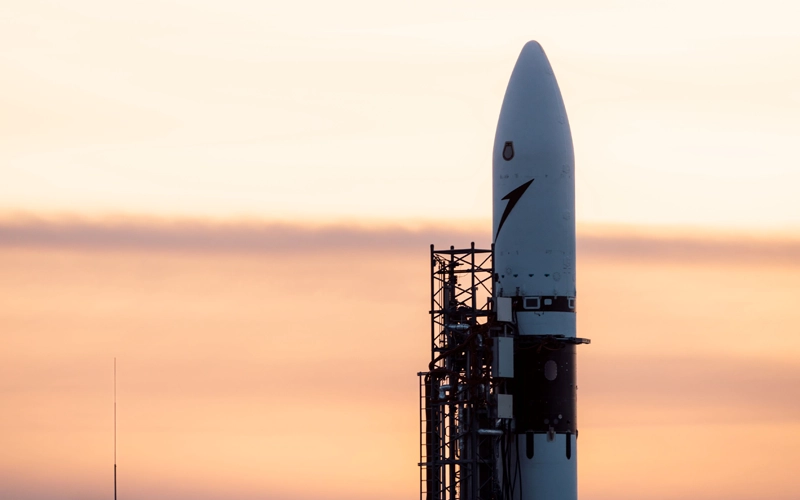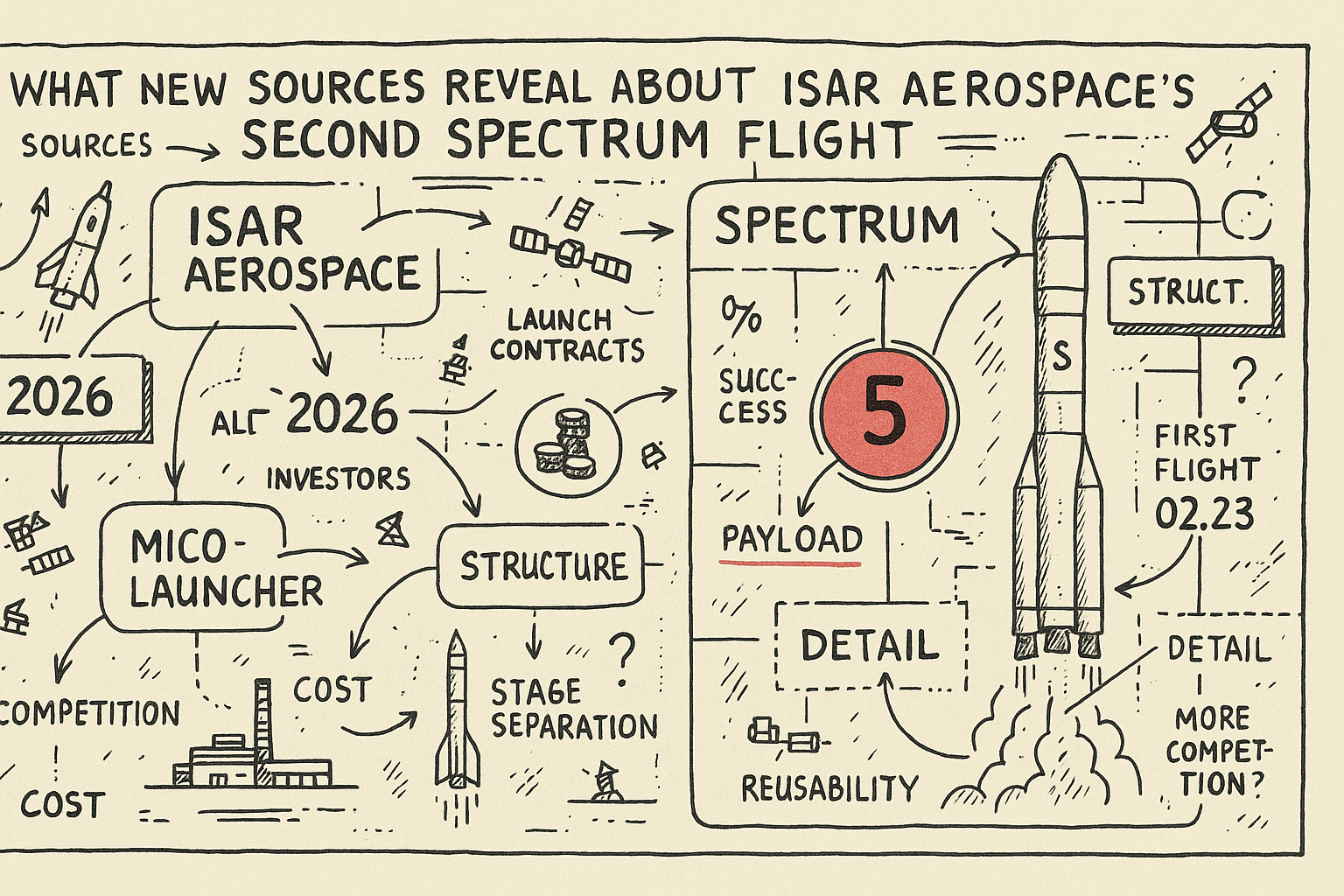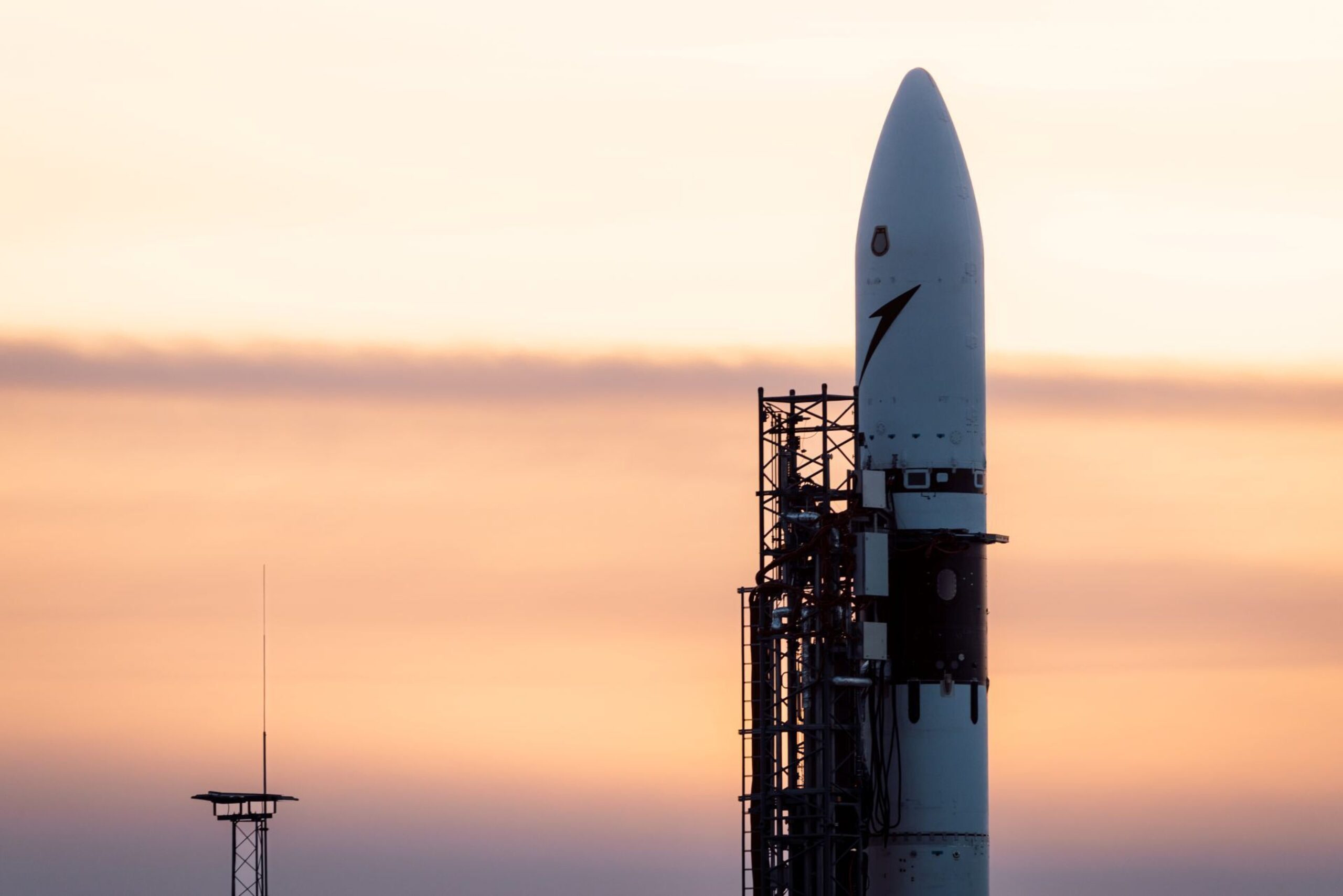
Isar Aerospace will launch ADRAS-J2 aboard Spectrum to remove a large orbital debris
On 1 September 2026 Isar Aerospace signed a contract with Astroscale Japan to provide launch services for ADRAS-J2, a debris‑removal demonstration supported by the Japan Aerospace Exploration Agency (JAXA). The mission will fly on Isar Aerospace’s Spectrum launcher from the Andøya Spaceport in Norway, with a planned launch window between 2027 and 2028.
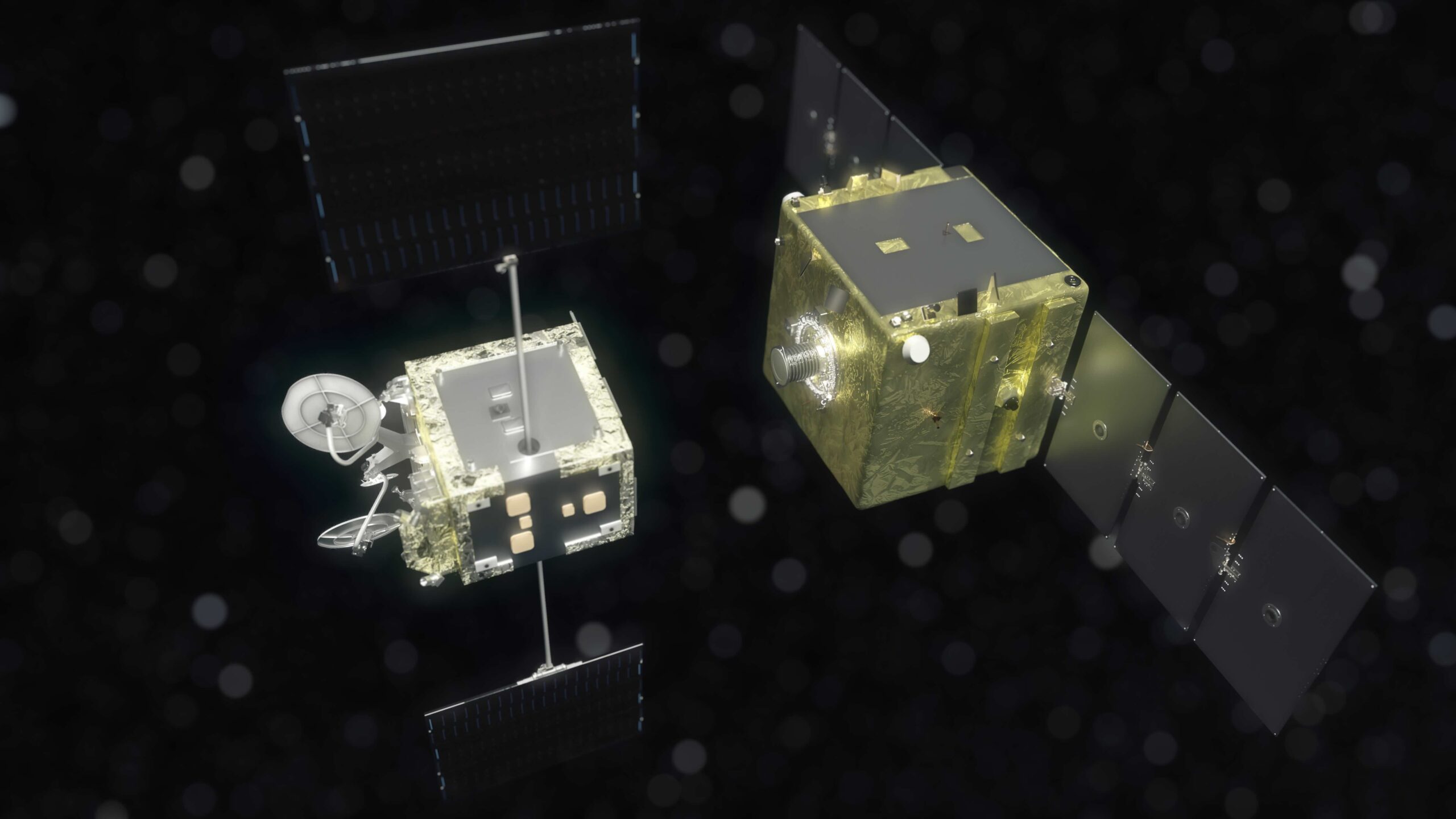
ADRAS‑J2 (Astroscale Debris Removal and Servicing — Japan, second mission) is part of JAXA’s Commercial Removal of Debris Demonstration (CRD2) programme, created to develop and demonstrate commercial technologies to remove space debris. The mission aims to approach, safely rendezvous with and capture an object in orbit that was not designed for servicing or retrieval.
The target identified for ADRAS‑J2 is an upper rocket stage roughly 11 metres long, 4 metres in diameter and with a mass of about 3 tonnes. According to the announcement, the mission will attempt one of the more complex operations needed to remove large debris from Earth orbit: capturing an object that lacks features intended for docking, grappling or active control.
For Isar Aerospace the contract represents a continued relationship with the Astroscale group. In March 2026 Astroscale UK previously selected Spectrum for the launch of its ELSA‑M demonstration mission, and ADRAS‑J2 will become a second contract between the companies. Isar Aerospace is preparing a second flight of Spectrum, a launcher that has experienced several schedule slips: its first orbital flight was expected in early 2026 but was postponed, and at the time of the announcement no official date had been set for an upcoming launch, although Isar stated the next flight should occur before the end of 2026 according to the company’s latest official declarations.
Removing large, uncontrolled debris is technically demanding. ADRAS‑J2 must be able to autonomously or semiautonomously approach a tumbling or uncooperative object, perform close‑proximity operations, and execute a capture manoeuvre. The mission will test hardware and operational concepts for visiting objects that lack standardised interfaces or capture aids — a category that includes many spent upper stages and defunct satellites.
JAXA’s CRD2 programme aims to stimulate commercial solutions for debris removal. Demonstrations such as ADRAS‑J2 are intended to prove techniques that could later be applied to operational services for mitigating collision risk in densely populated orbital regions. The ADRAS‑J2 mission therefore contributes to the growing portfolio of commercial demonstrations that agencies and companies are using to explore active debris removal methods.
The choice of Spectrum and the Andøya launch site reflects Europe’s expanding commercial launch activity. Spectrum is a medium‑class launch vehicle developed by Isar Aerospace; its upcoming flights are being watched closely because they are intended to establish the company’s access to orbit. For Astroscale and JAXA, securing a dedicated launch vehicle and a committed launch site are key steps to ensure mission planning and rendezvous timelines can be met.
ADRAS‑J2 also sits within a broader context of recent European and international space activity. In late August 2026, the European launcher and satellite landscape saw renewed attention following operational steps by other programmes. Demonstrations of debris removal and rendezvous and proximity operations are increasingly common features in agency and commercial roadmaps as orbital congestion grows and the case for active debris removal strengthens.
Several uncertainties remain. The exact launch date within the 2027–2028 window will depend on the readiness of both the ADRAS‑J2 spacecraft and Spectrum’s flight cadence, including Isar Aerospace’s ability to complete the pending Spectrum flight that has been delayed from earlier schedules. The mission outcome is also inherently uncertain: approaching and capturing an object not designed for servicing remains a demonstration of new capabilities rather than a guaranteed operational technique.
If successful, ADRAS‑J2 will demonstrate capture methods for large, uncontrolled debris and help validate commercial approaches under JAXA’s CRD2 framework. For Isar Aerospace, the mission would add to its manifest and showcase Spectrum as a supplier for complex, national or agency‑backed demonstration missions. For Astroscale and JAXA, ADRAS‑J2 represents another step toward practical tools and business models for reducing collision risk in Earth orbit.
Sources:AstroSpace.it — “Isar Aerospace lancerà con Spectrum ADRAS‑J2, missione di Astroscale per rimuovere un detrito spaziale”, 1 September 2026.