Orbital selects Reflex Aerospace as exclusive platform partner for Orbital-1
Orbital, an Los Angeles-based orbital data center startup, announced on 10 September 2026 that it has selected German satellite manufacturer Reflex Aerospace as the exclusive platform partner to build the flight-proven spacecraft bus for Orbital-1, the company’s first satellite in a planned constellation of up to 100,000. The companies expect the Orbital-1 mission to target a 2028 launch.
Under the design-and-development agreement, Reflex Aerospace will supply the “brains” of the spacecraft—the flight-tested bus—allowing Orbital’s engineering team to concentrate on the compute payload. Orbital’s stated plan is to integrate a stack of GPUs sized to run a full Nvidia Vera Rubin rack, leveraging the thermal environment of space for passive cooling with large radiators and extensive solar arrays for power.
Orbital founder and CEO Euwyn Poon told Payload that “space is the only place we can scale compute,” adding that terrestrial data centers are constrained by competing resources. The deal with Reflex was brokered in part through a shared investor, Human Element; the connection led Orbital and Reflex to align on engineering philosophy during a trip to Germany, making Orbital the first U.S. customer for Reflex Aerospace, according to the announcement.
One concrete technical change disclosed in the announcement is that Orbital more than doubled its per-satellite power target, from approximately 100 kW to roughly 250 kW. Orbital frames that 250 kW figure as the peak power requirement to operate a full Nvidia Vera Rubin rack, and notes the value matches the reported peak computing payload on SpaceX’s AI1 vehicle, which features a peak computing payload of up to 250 kW. Poon said it “didn’t make sense to aim well below the watermark that becomes the benchmark in the next couple years.”
Orbital characterizes its competitive edge in the emerging orbital data center (ODC) sector as a combination of design choices and cost focus. The company plans to use commercial-grade parts—citing silicon solar cells instead of more expensive space-grade panels—and to adopt an automotive-style mass production line rather than the current hand-built satellite model. Poon told Payload that Orbital sees the future as a constellation of relatively small satellites, rather than a few very large platforms.
The ODC field is now crowded and well-funded. The announcement referenced recent funding and activity in the sector, including Starcloud’s $250 million raise at a $2.3 billion valuation and filings by SpaceX and Blue Origin for their own large constellations. Orbital’s approach appears designed to compete on unit cost and manufacturability at scale.
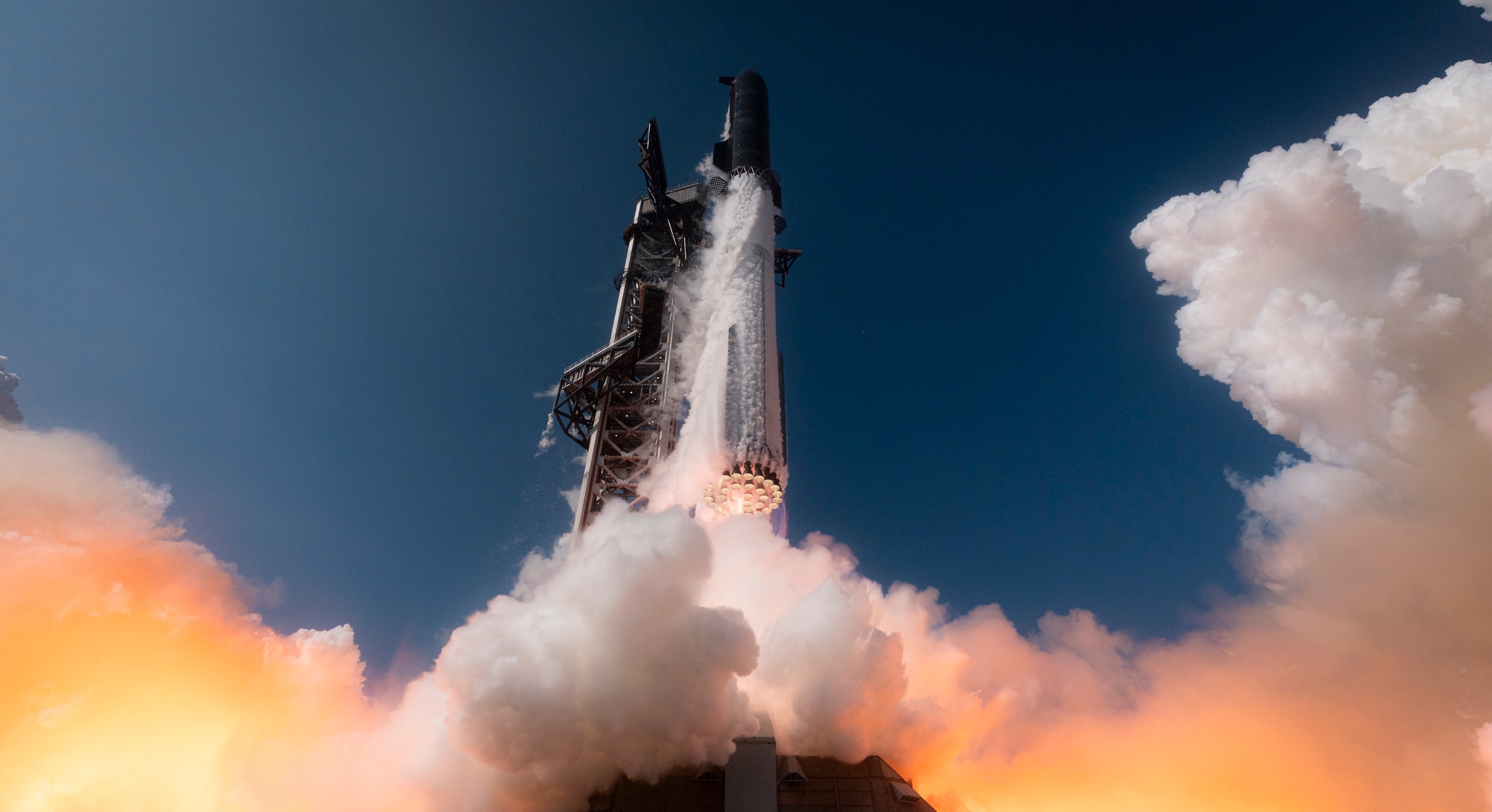
For launch, Orbital is planning around rides provided by SpaceX’s Starship to achieve economical access to orbit, though Poon said the company’s design is not dependent on Starship specifically. He stated that the company expects “the best design will win the launch slots” and that if Orbital’s approach proves competitive, it should be able to secure economically viable launches.
The strategic framing of the partnership is explicitly global. Poon described the transatlantic deal as part of a deliberately international build, with plans to pursue partnerships with different sovereigns and Southeast Asian manufacturing partners also on the company’s roadmap. The Reflex deal thus serves both as a technical choice—using a flight-tested bus—and as a signal of multinational industrial cooperation.
Several practical challenges remain visible from Orbital’s announcement. Delivering 250 kW of usable power on a small satellite platform requires large deployables and efficient thermal rejection; integrating a full Nvidia Vera Rubin rack into a spacecraft entails questions about radiation tolerance, fault tolerance, and on-orbit maintenance or replacement strategies. Orbital’s plan to lean on commercial-grade parts and mass production, while potentially reducing cost, will need to demonstrate reliability in LEO environments over multi-year mission lifetimes.
The Orbital–Reflex agreement also illustrates a broader dynamic in the space industry: a shift from bespoke, hand-built satellites toward modular platforms and higher-volume manufacturing with cross-border supply chains. The choice of Reflex—a European manufacturer—and the involvement of investor Human Element highlight how startups are mixing international industrial capabilities to meet ambitious scaling targets.
Looking forward, Orbital’s timeline places Orbital-1’s launch in 2028, with the longer-term ambition of a constellation up to 100,000 satellites. That ambition situates Orbital alongside several other companies pursuing large LEO constellations for communications, sensing and computing. Orbital’s public statements emphasize that matching or exceeding forthcoming industry benchmarks—in this case a roughly 250 kW per-satellite compute capability—will be central to competing in a market where both technical performance and per-unit economics matter.
As Orbital and Reflex work through design and development, the aerospace community will watch for engineering milestones, production demonstrations, and any updates on launch procurement. For now, the contract marks a concrete industrial step: a Los Angeles startup has chosen a German platform supplier to host a high-power compute payload in LEO, targeting a first flight in 2028.