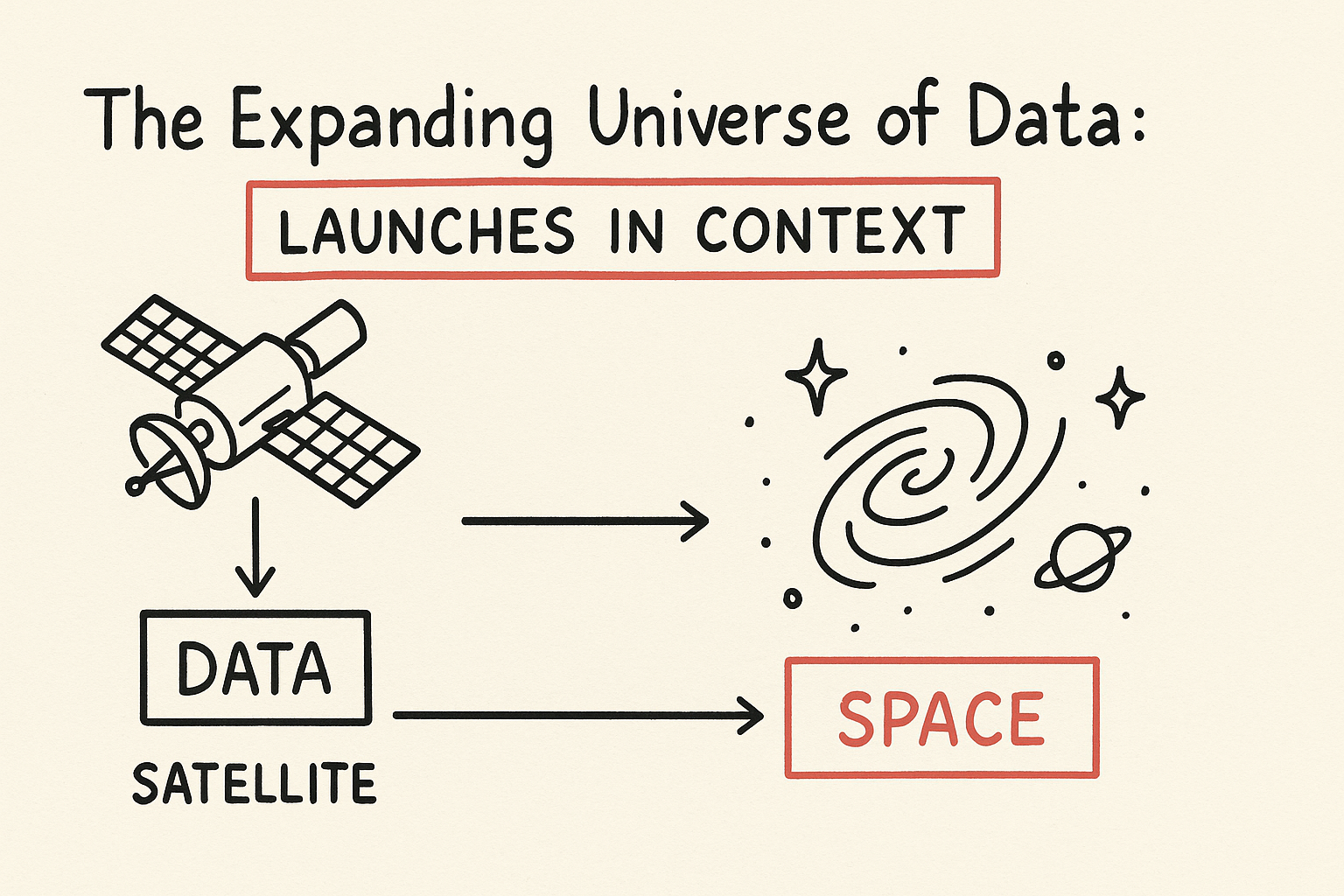
The concept of 'launches' in the realm of space exploration has evolved significantly over the decades. No longer confined to the imagery of fiery rockets breaking through the stratosphere, launches today encompass a broader spectrum of activities, including the acquisition and utilization of satellite data. This shift marks a new chapter in space science, one that emphasizes data-driven discoveries and strategic collaborations.
The Data-Driven Frontier
NASA's recent award of contracts to acquire commercial satellite data exemplifies this evolution. By integrating data from commercial satellites with its own, NASA is enhancing its observational capabilities, providing more comprehensive insights into Earth's systems. This move underscores a broader trend in space exploration: the shift from solely launching hardware to the strategic deployment and acquisition of data. As NASA expands its data portfolio, it positions itself to better address global challenges, from climate change to disaster response.
Collaboration in the Cosmos
The integration of commercial satellite data also highlights the increasing importance of collaboration between public agencies and private enterprises. This partnership model not only accelerates technological advancements but also democratizes access to space data. As satellite technology becomes more sophisticated and widespread, researchers and policymakers can leverage high-resolution imagery and data analyses to inform critical decisions, ensuring that space exploration benefits a broader audience.
This collaborative approach is mirrored in other areas of space science. For instance, the NASA Fermi Mission's study of supernova remnants reveals the potential of collaborative research in unlocking cosmic mysteries. By studying the remnants of sibling supernovae, scientists can gain insights into stellar evolution and cosmic processes—an endeavor that requires the pooling of data, expertise, and resources from multiple entities.
Surprising Interconnections
Perhaps one of the more surprising aspects of recent developments is the interconnectedness of seemingly disparate phenomena. For example, the discovery of merging galaxy clusters by the Hubble Space Telescope provides a unique vantage point to study the universe's evolution. These cosmic collisions, while far removed from the daily operations of satellite data acquisition, share an underlying theme of data synthesis and collaboration.
This interconnectedness extends to the study of stars and planets. Investigations into star systems, such as those where sun-like stars may have ingested exoplanets, remind us that data from various sources—be it optical, X-ray, or radio—are critical in piecing together the narrative of our universe. Such research underscores the importance of diverse data streams, much like the diverse sources of satellite data that inform our understanding of Earth.
Future Implications
As we look to the future, the implications of this data-driven approach to space exploration are profound. The ability to synthesize data from a myriad of sources will undoubtedly lead to more nuanced insights and discoveries. Furthermore, the democratization of data access, fueled by partnerships between governmental and commercial entities, will empower a new generation of researchers and enthusiasts to contribute to the field.
This paradigm shift also poses challenges. Ensuring data accuracy, managing data privacy, and navigating the legal frameworks of data sharing are critical issues that need to be addressed. However, the potential benefits—ranging from enhanced scientific understanding to improved policy decisions—make this a worthwhile endeavor.
In conclusion, the landscape of 'launches' in space science is rapidly evolving. It's not just about rockets soaring into the sky; it's about the strategic deployment and acquisition of data that propel us towards new frontiers. As we continue to unlock the mysteries of the cosmos, it is this data-driven approach that will guide our journey, revealing the interconnectedness of all things in the universe.