The European Space Agency (ESA) has announced a delay in the final drop test for its Space Rider program, a reusable spaceplane designed to provide Europe with independent access to space. Originally scheduled for early 2026, the test was postponed due to an anomaly detected during the captive ascent phase in May, pushing the new timeline to October 2026.
Space Rider represents a significant leap for ESA in the realm of reusable spacecraft. The vehicle is intended to carry payloads to low Earth orbit (LEO) and return them safely to Earth, offering a platform for scientific experiments, technology demonstrations, and other commercial applications. This capability aligns with a growing global trend towards reusable space technology, exemplified by the success of other agencies and companies in this domain.
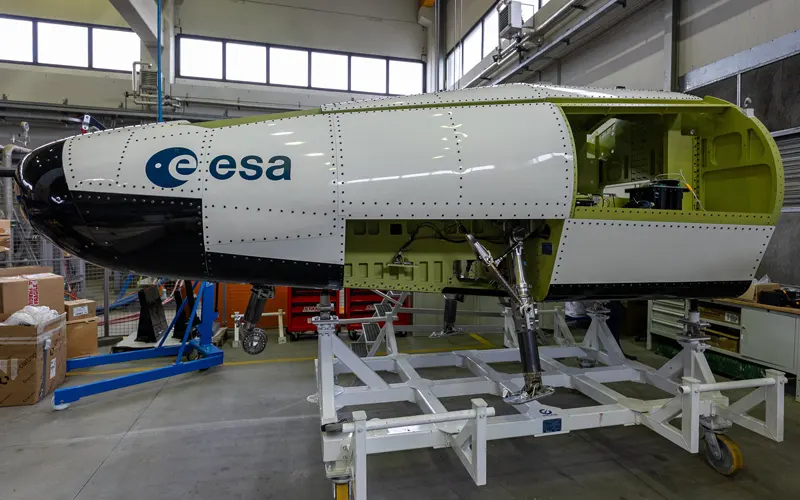
The aborted test in May was part of a planned series of evaluations involving the Descent and Landing Test Model, a full-scale mock-up of the Space Rider’s Re-entry Module. This model replicates the actual vehicle's size, mass, aerodynamic properties, and landing gear, providing a realistic test environment to assess its performance. In previous years, ESA had conducted successful drop tests with a 3,000-kilogram mass simulator, marking significant milestones in the program’s development.
During the press briefing held after the 347th ESA Council meeting, Lucía Linares, ESA’s head of strategy and institutional launches for space transportation, stated that while an exact date for the rescheduled test could not be provided, it would occur after the summer and before the year ends. The delay, as clarified by an ESA spokesperson, is not solely due to the anomaly but also due to test site availability constraints, which have pushed the schedule to no earlier than October 2026.
The specific nature of the anomaly remains undisclosed as investigations continue. What is known is that the issue arose during the captive ascent phase, executed with the help of a CH-47 Chinook helicopter, which lifts the test model to the desired altitude for release. Despite the setback, the test vehicle was safely recovered, allowing for ongoing analysis and preparations for the next attempt.
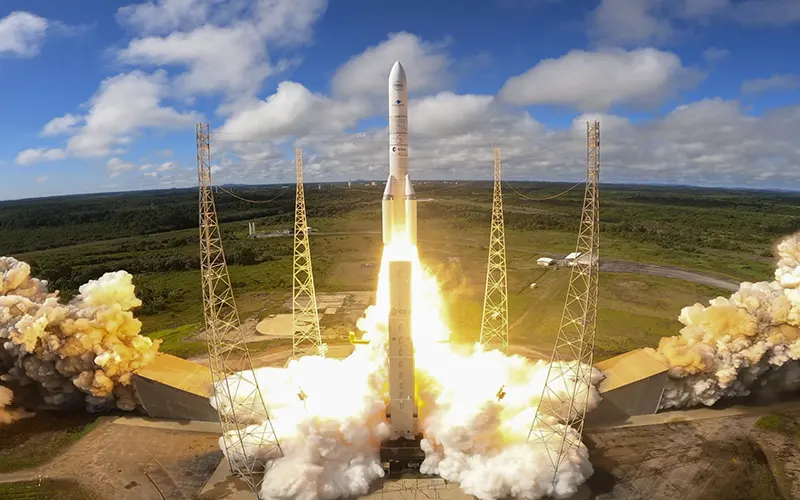
Looking forward, the Space Rider is slated for its inaugural flight in the first quarter of 2028, launching aboard a Vega C rocket. The current delay still provides ESA with over a year of margin to address any issues and conduct the necessary tests to ensure the vehicle's readiness. This timeline allows ESA to refine the design and operational parameters, contributing to the reliability and success of the mission.
The development of Space Rider is pivotal not only for ESA but also for the European space industry as a whole. It opens new opportunities for scientific research and commercial ventures by providing a cost-effective and versatile platform for accessing and returning from space. The ability to reuse the vehicle for multiple missions enhances its economic viability, aligning with global trends toward sustainability and efficiency in space exploration.
As the investigation into the anomaly progresses, the space community eagerly anticipates updates on the Space Rider program. This delay highlights the challenges inherent in developing cutting-edge space technologies, where rigorous testing and validation are crucial to mission success. It also underscores the importance of flexibility and adaptability in project timelines, especially when dealing with complex engineering and logistical hurdles.
The Space Rider program, with its potential for broad applications, remains a key component of ESA's strategic vision for the future. As ESA works towards the rescheduled test, the focus will be on ensuring the robustness and reliability of the vehicle, ultimately paving the way for a successful first mission and beyond.