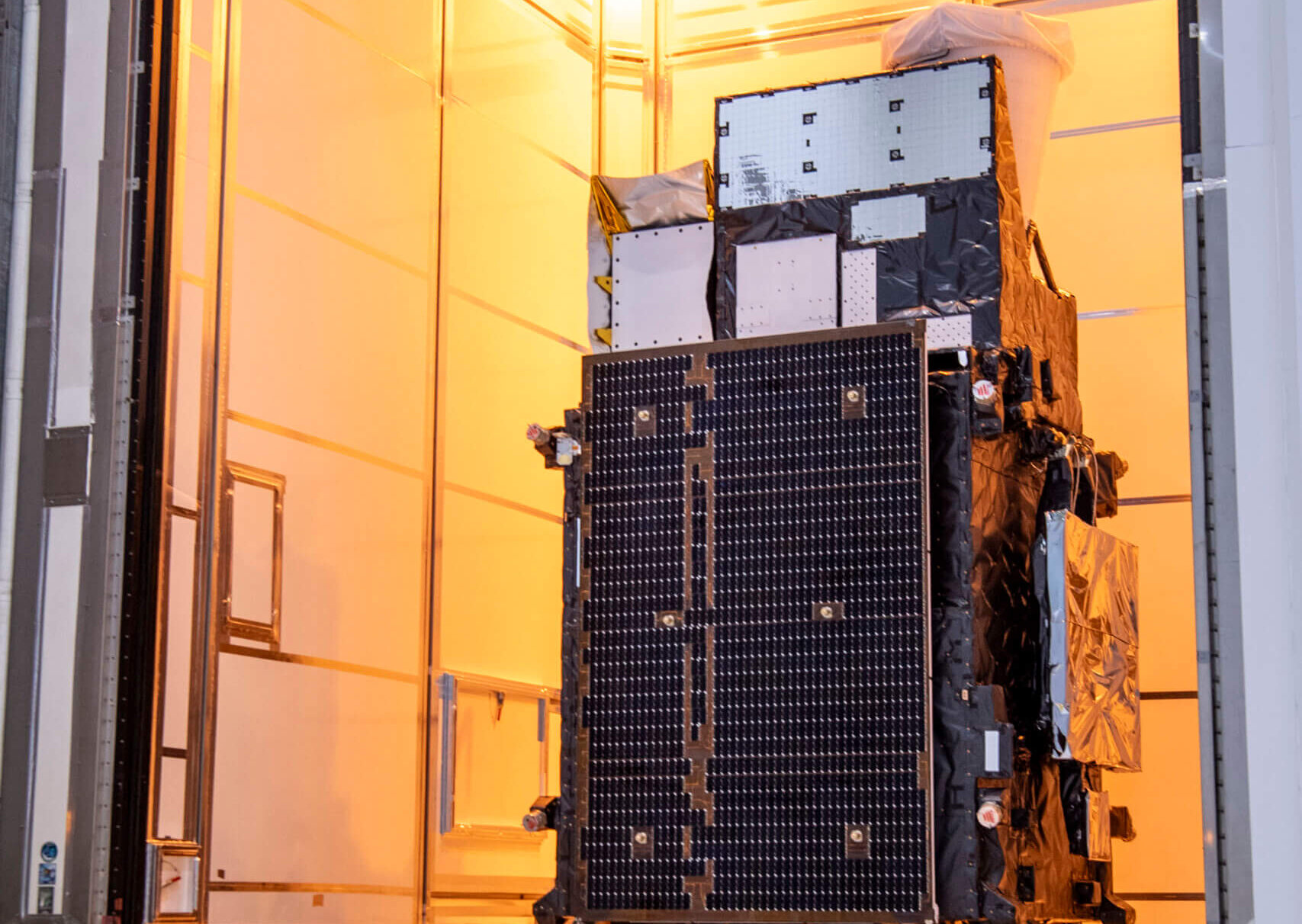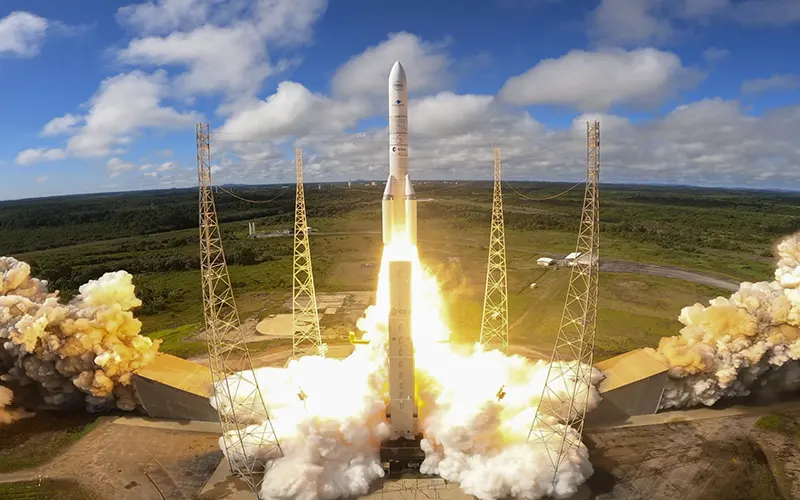
The European Space Agency (ESA) has awarded a contract to Arianespace for the launch of its innovative Henon CubeSat, a mission that promises to break new ground in the realm of space exploration. Scheduled for early 2027, the Henon CubeSat will hitch a ride on an Ariane 6 rocket, sharing its journey with ESA's PLATO telescope, a mission designed to seek out Earth-like exoplanets.
This launch marks a significant step for ESA, as it represents the first time a CubeSat will independently venture into deep space, directly communicate with Earth, and maneuver to its final destination without assistance from a larger spacecraft. Built by Italy's Argotec, Henon aims to reach a distant retrograde orbit around the Sun, a feat that demands complex maneuvering capabilities.
The mission's complexity sets it apart from previous CubeSat endeavors, such as NASA's Mars Cube One (MarCO) CubeSats launched in 2018. Although MarCO's 'Wall-E' and 'Eve' spacecraft communicated directly with Earth and performed trajectory corrections, they primarily executed a ballistic flyby of Mars. In contrast, Henon will employ a miniaturized electric propulsion system to navigate its intricate path, demonstrating advancements in propulsion and autonomous operations for small spacecraft.
ESA's choice of the Ariane 6 rocket, a symbol of Europe's reasserted sovereign launch capabilities, follows a feasibility study conducted with Arianespace. Roger Walker, Head of CubeSat missions at ESA, mentioned that Henon served as a reference case in the study, which explored the capacity to accommodate multiple CubeSats as secondary payloads. The study concluded that up to four 16U CubeSats could be feasibly launched on this architecture, marking a significant stride in maximizing the utility of Ariane 6 flights.
The launch of Henon as a secondary payload alongside PLATO further underscores the versatility of the Ariane 6, which has been pivotal in restoring Europe's independent access to space. This development is part of a broader trend highlighted in ESA’s annual Report on the Space Economy, which notes a surge in global space activities. Europe's reestablished capabilities, with the Ariane 6 and Vega C rockets returning to active service, contribute significantly to this momentum.
As ESA prepares for Henon's ambitious mission, it continues to leverage the potential of CubeSats for scientific exploration. This approach aligns with the broader industry trend of utilizing smaller, more cost-effective satellites to achieve scientific and technological breakthroughs. The Henon mission is poised to deliver valuable insights into solar storm monitoring, a critical area of study that holds implications for understanding space weather and its effects on Earth's technological infrastructure.
In conclusion, the selection of Ariane 6 for the Henon CubeSat launch represents a pivotal moment for ESA and the broader space exploration community. By pushing the boundaries of CubeSat capabilities, this mission not only promises to enhance our understanding of deep space phenomena but also underscores Europe's growing influence and autonomy in the global space industry.