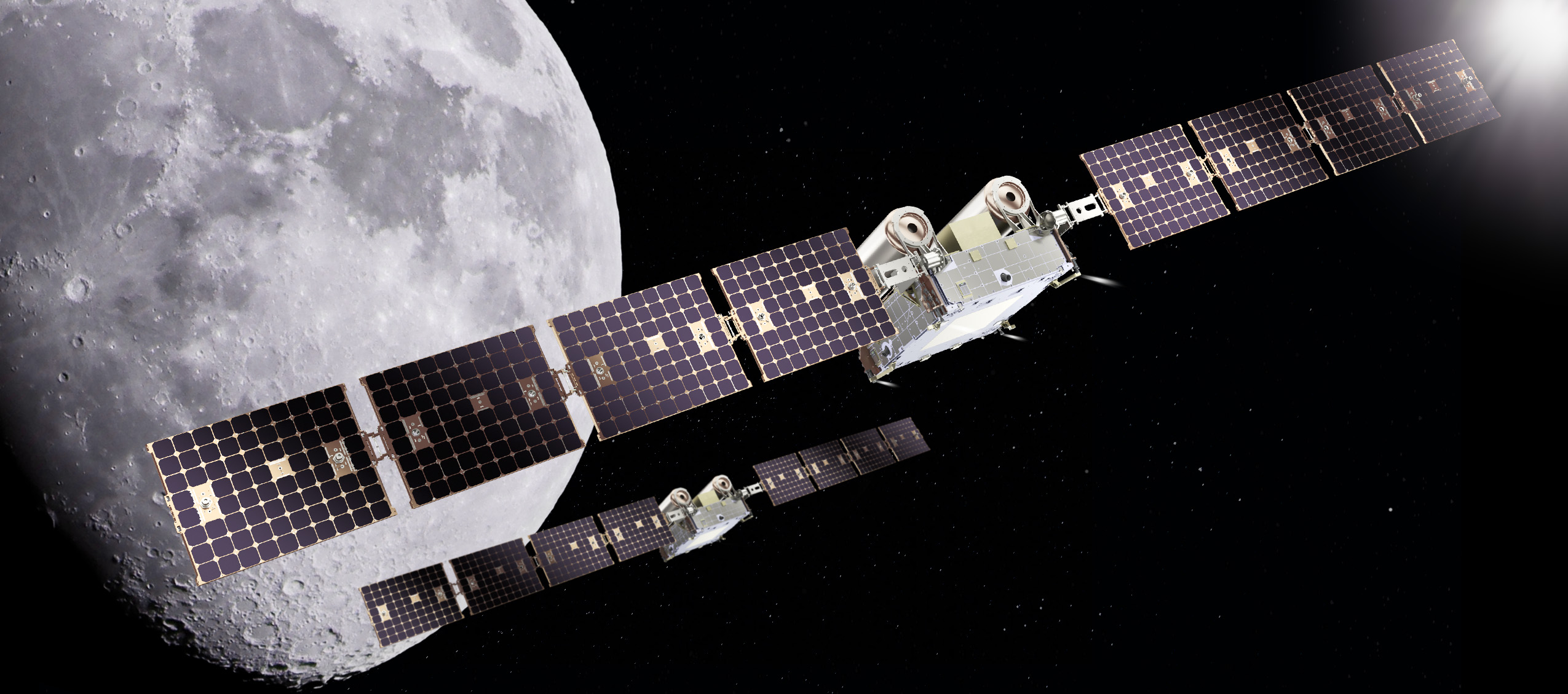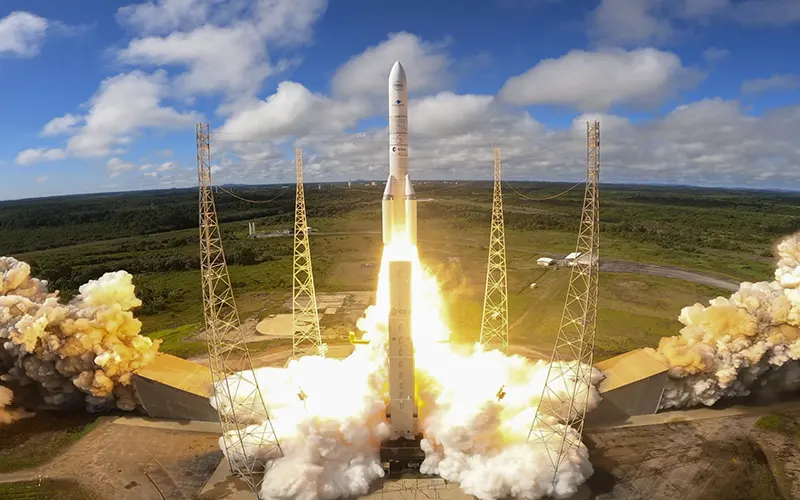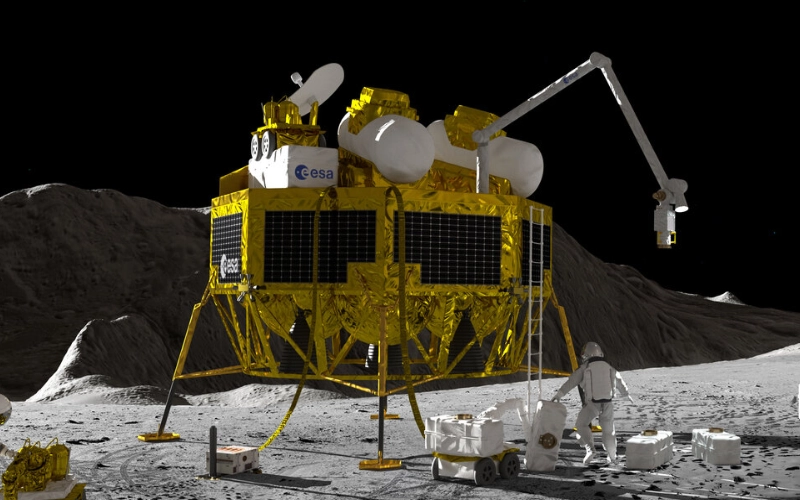
The European Space Agency (ESA) is undertaking significant adaptations of its Ariane 6 rocket to support future launches of the Argonaut lunar lander, envisioned to use nuclear power systems. This move represents a substantial step in enhancing the capabilities of European space missions, particularly those targeting the Moon.
The Argonaut lander, ESA's ambitious project, is designed to deliver up to 1,500 kilograms of cargo to the lunar surface. The upcoming missions will require modifications to the Ariane 6 rocket, specifically its Block 2 configuration, to safely accommodate the Radioisotope Power System (RPS) that is planned for future missions. However, these adaptations will not be necessary for the first mission, as it will not carry a radioisotope power system.
The Ariane 6 Block 2, featuring P160C boosters and the Vulcain Aft Bay evolution, serves as the current baseline configuration for Argonaut missions. This configuration marks a shift in performance requirements, as ESA initially anticipated the need for the now-shelved Ariane 6 Block 3 variant, a more capable configuration. A joint task force, active from 2023 to 2024, assessed the lander's launch requirements, leading to this decision.
ESA's initiative to integrate nuclear power into its lunar missions is facilitated by its ENDURE program, which focuses on developing European radioisotope heating and power systems. The program's milestone includes a demonstration flight scheduled for 2028 aboard the Rosalind Franklin mission to Mars. This mission will utilize a European-developed americium-241 radioisotope heating unit, underscoring ESA’s commitment to advancing nuclear technologies in space exploration.
The shift to nuclear power systems for lunar missions is not merely a technical evolution but a strategic one. Radioisotope power systems offer significant advantages for long-duration missions in environments where solar power is impractical or insufficient, such as the Moon's polar regions. These systems provide a reliable energy source, essential for sustaining operations and scientific experiments during prolonged lunar nights.
The adaptation of the Ariane 6 for nuclear-powered missions is part of a broader trend in space exploration, where agencies worldwide are increasingly considering nuclear technologies to extend the reach and capability of their missions. The integration of nuclear power into spacecraft design is seen as pivotal to future deep space exploration efforts, including potential human missions to Mars and beyond.
ESA's decision to proceed with these adaptations reflects a growing confidence in nuclear technologies and their role in future space missions. The ongoing development of the Argonaut lander and its nuclear power systems demonstrates ESA's commitment to pushing the boundaries of what is possible in lunar exploration. This effort not only enhances ESA's capabilities but also contributes significantly to the global pursuit of sustainable and long-term lunar exploration.
As ESA moves forward with these plans, the successful integration of nuclear power systems into the Argonaut missions could set a precedent for future space endeavors, highlighting the importance of innovative energy solutions in the quest to explore our solar system.