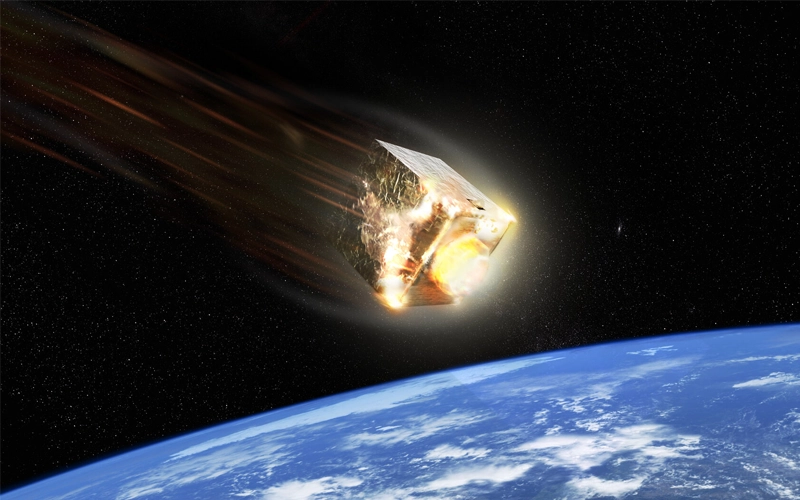
The European Space Agency (ESA) has achieved a major milestone with its Draco mission, which recently passed its Critical Design Review (CDR). This achievement enables the mission to move into full-scale manufacturing, integration, and testing ahead of its planned launch in 2027. The CDR, completed in August 2026, validated the design of all of Draco’s systems, affirming the mission's readiness to proceed to the next stages of development.
The Draco mission, officially known as the Destructive Reentry Assessment Container Object, is a pioneering effort by ESA to collect and analyze data from a satellite as it disintegrates during atmospheric reentry. This mission is crucial for enhancing current models that predict how spacecraft break apart and burn up when they re-enter Earth's atmosphere, thereby improving the safety and accuracy of future reentry predictions.
Stijn Lemmens, ESA's Draco project manager, expressed satisfaction with the progress, noting that the mission passed its CDR just a year after the previous review, maintaining its tight schedule. “It’s been impressive to see these new technologies being developed and tested successfully in so little time,” Lemmens remarked.
The mission's development is being spearheaded by Spain’s Indra Group. This followed their acquisition of Deimos Space in October 2024, after which ESA awarded Deimos a €17 million contract to develop Draco. The mission is set to launch in 2027, when it will be placed on a trajectory that leads to a destructive reentry by its launch vehicle’s upper stage, approximately 1,000 kilometers above Earth.
Once in position, Draco will re-enter Earth’s atmosphere about 12 hours post-launch. During its descent, nearly 200 sensors and four cameras aboard the spacecraft will meticulously record data related to the reentry process. This information will be crucial for refining models of spacecraft fragmentation and atmospheric interaction.
The collected data will be stored in a 40-centimeter reentry capsule. This capsule is designed to deploy a parachute after reentry, slowing its descent enough to establish a connection with a geostationary satellite. This vital link will allow the transmission of data back to Earth within a narrow 20-minute window before the capsule splashes down and the mission concludes.
The data gathered from Draco’s mission could significantly impact how space agencies and companies plan for end-of-life strategies for satellites and other spacecraft. By providing a clearer understanding of how different materials and structures behave during reentry, it becomes possible to optimize designs for safer disintegration, reducing the risk of debris reaching the surface or impacting existing satellites.
Historically, understanding spacecraft reentry has been a challenge for scientists and engineers. While models exist, they often rely on limited real-world data. Draco represents a step forward in resolving this issue by providing detailed empirical data that can refine existing models and contribute to the development of safer space missions.
Looking ahead, the success of Draco could inspire similar missions and collaborations among international space agencies. As space traffic increases, with more satellites and missions launched each year, understanding and managing the lifecycle of these objects becomes increasingly critical. ESA’s Draco mission could set a precedent for future projects aimed at ensuring the safe and sustainable use of space.