The U.S. Space Force is embarking on a significant restructuring of its satellite control capabilities by launching a new competition for mobile satellite-control antennas. This initiative comes in the wake of the cancellation of a previous $1.7 billion contract with AeroVironment, as the Space Force pivots towards a more commercial procurement strategy under the Satellite Communication Augmentation Resource program, or SCAR.
The decision to reset the program is rooted in the need to address the growing capacity constraints of the Satellite Control Network (SCN), a global system of military ground stations responsible for tracking, monitoring, and commanding U.S. satellites. Traditionally, these network terminals have relied on large, mechanically steered dishes, which are limited in throughput as they typically communicate with one spacecraft at a time. As the number of military satellites continues to increase, the demand for more efficient and scalable solutions has become pressing.
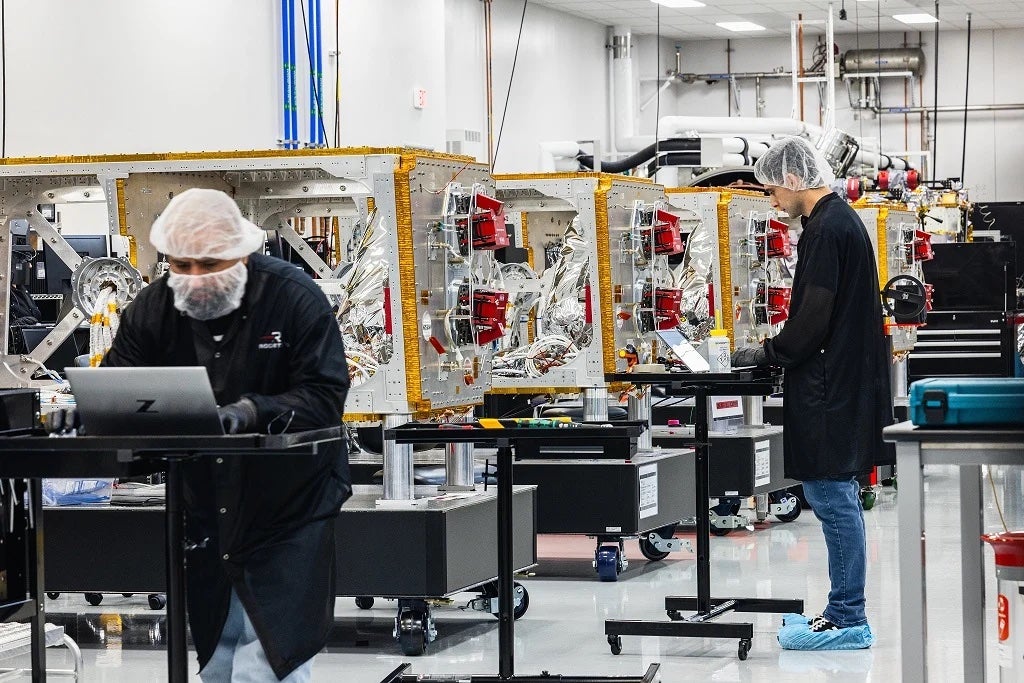
Under the new approach, the Space Force is seeking electronically steered phased-array antennas that can be produced at scale. The aim is to transition from a single-vendor arrangement to an open competition that emphasizes commercially derived systems. This shift is expected to introduce additional vendors and highlight factors such as manufacturing capacity, supply-chain resilience, and fixed-price production.
The Commercial Solutions Opening (CSO) serves as the first step in this refreshed procurement strategy. It is anticipated to attract both established defense contractors and newer commercial entities. AeroVironment, which intends to submit a version of its BADGER antenna originally developed under the SCAR agreement, remains a key player in the competition. Additionally, the competition opens opportunities for emerging companies like Northwood Space, a California startup that has been actively positioning itself as a supplier of ground infrastructure for satellite command-and-control and data communications.
Northwood Space, having recently secured $100 million in funding, is developing two main products: Portal, a modular phased-array ground station capable of supporting multiple simultaneous satellite links, and another phased-array system designed for similar applications. Earlier this year, Northwood won a $49.8 million contract from the Space Force through the Joint Antenna Marketplace, a separate initiative allowing the military to leverage commercial antenna capacity alongside government-owned ground stations.
The pivot towards commercially derived phased-array systems marks a significant evolution in military satellite communications infrastructure. Electronically steered phased-array antennas offer considerable advantages over traditional mechanically steered dishes, including the ability to manage multiple satellite connections simultaneously, thereby enhancing network efficiency and scalability.
This move represents a broader trend in military and aerospace acquisitions, where the emphasis is increasingly placed on harnessing commercial innovations to bolster national defense capabilities. By adopting systems that are commercially available and scalable, the Space Force not only aims to boost its operational flexibility but also seeks to reinforce supply chain resilience against potential disruptions.
Looking ahead, the success of the SCAR program's new iteration could serve as a model for other military branches and international allies seeking to modernize their satellite control infrastructures. As the global landscape of space operations becomes more competitive and congested, the ability to quickly and efficiently command and control satellite assets is likely to remain a critical priority.