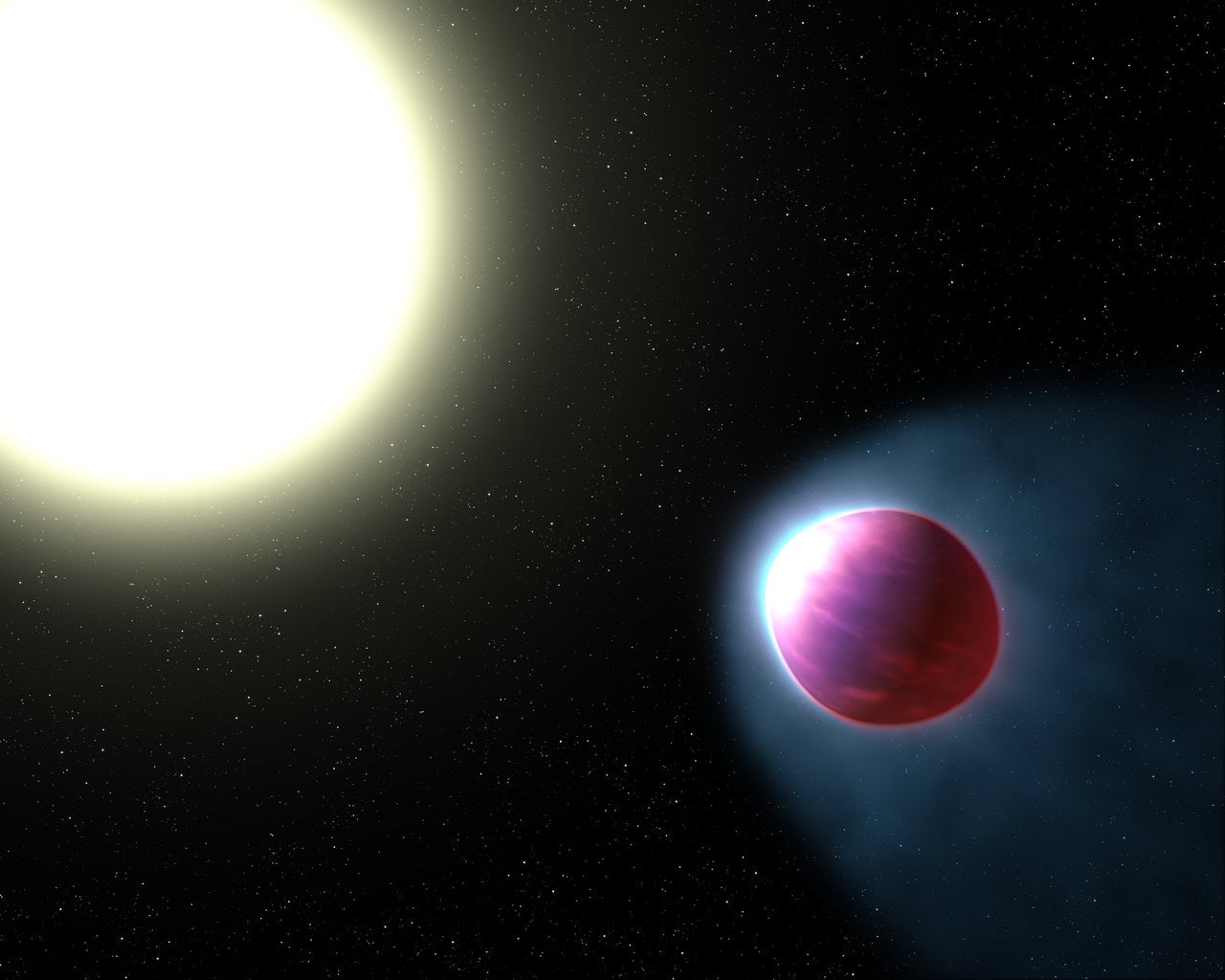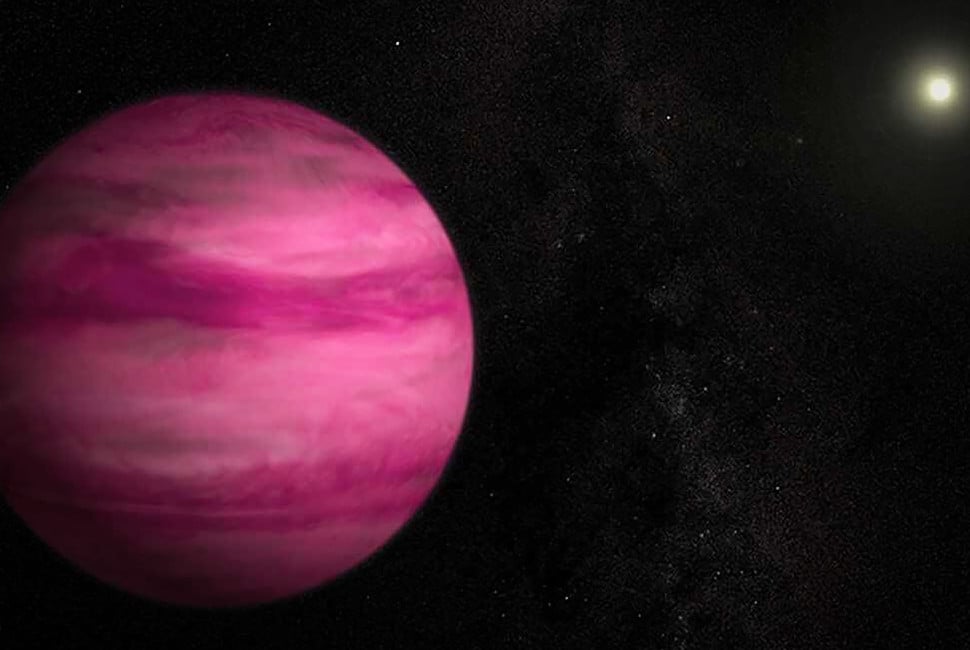
In a groundbreaking revelation, astronomers have discovered salt clouds in the atmosphere of GJ 504 b, commonly known as the Pink Planet. This celestial body, located 57 light-years from Earth, has intrigued scientists since its discovery in 2013 due to its unusual characteristics and elusive nature. It has now been thrust back into the spotlight thanks to new observations made possible by the James Webb Space Telescope (JWST).
The Pink Planet, GJ 504 b, was initially observed through direct imaging, marking it as the coldest known planetary-mass companion with a striking rosy-hazed atmosphere. At that time, its faintness posed a significant challenge for astronomers attempting to study its atmospheric composition and definitive classification, leaving it ambiguously categorized as a "planetary-mass companion." The ambiguity stems from its proximity to the mass boundary between gas giants and brown dwarfs, those objects that are not quite massive enough to ignite nuclear fusion and become stars.
Thanks to the capabilities of the JWST, a team led by Aneesh Baburaj, a NASA FINESST postdoctoral associate at Northwestern University's Center for Interdisciplinary Exploration and Research in Astrophysics (CIERA), has successfully obtained the first spectroscopic readings of GJ 504 b’s atmosphere. This international collaboration included researchers from the University of California San Diego, Caltech, MIT, the Lunar and Planetary Laboratory at the University of Arizona, the European Space Agency, the Gemini Observatory/NSF NOIRLab, and the Space Telescope Science Institute, among others. Their findings, published in the Astronomical Journal, revealed the presence of salt clouds, a first for a cold planetary-mass object.
Baburaj expressed the team's excitement over the data, noting the uniqueness of the spectrum they obtained. He stated, "The Pink Planet is the coldest companion ever discovered using ground-based instruments. Many teams all around the world performed follow-up observations to study its light, but it was too faint for ground-based instruments. That made it a perfect target for JWST. When we finally obtained its spectrum, it immediately looked interesting. But once we started digging deeper into the data, we realized it was not like anything we have analyzed before."
This discovery is significant as it provides direct evidence of atmospheric phenomena that were previously hypothesized but not observed in such celestial bodies. Salt clouds can influence the thermal structure and dynamics of the planet's atmosphere, offering insights into its formation and evolution. The findings also raise intriguing questions about the atmospheric processes that could lead to such cloud formation in a planet situated at the boundary of gas giants and brown dwarfs.
Historically, the study of exoplanet atmospheres has been a complex field, with direct imaging techniques only recently beginning to uncover the intricate details of distant worlds. The JWST represents a leap forward in this journey, allowing astronomers to access unprecedented levels of detail in their observations. The data from GJ 504 b further enriches our understanding of exoplanetary systems, pushing the boundaries of what is known about planetary formation and atmospheric composition.
Looking ahead, this discovery opens new avenues for research and observation. The presence of salt clouds on GJ 504 b may lead scientists to re-evaluate the atmospheric conditions of similar planetary-mass companions and even giant exoplanets. As researchers continue to analyze the JWST's findings, the Pink Planet will likely be the subject of ongoing study, possibly revealing more about the complex interplay of elements in its atmosphere.
The exploration of GJ 504 b exemplifies the collaborative nature of modern astronomy, where global teams pool their expertise and resources to unravel the mysteries of the universe. As these efforts continue, they promise to illuminate the hidden facets of our cosmic neighborhood, offering a deeper understanding of the diverse worlds that reside beyond our solar system.