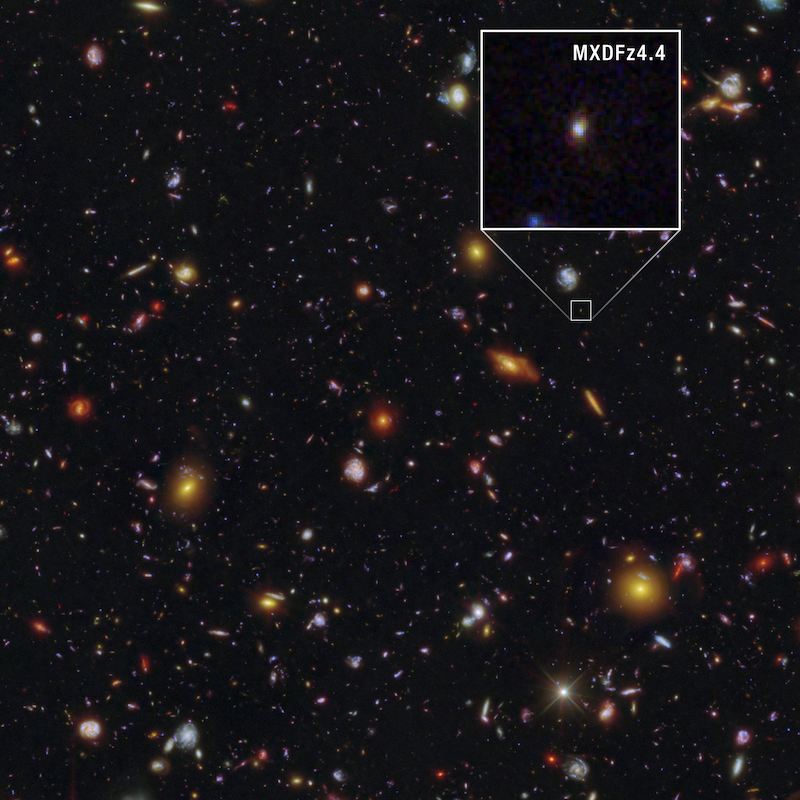
The universe's early years were shrouded in a dense fog of hydrogen gas, obstructing ultraviolet light and making it difficult for the cosmos to be observed as we do today. This period, known as the Era of Reionisation, represents a pivotal phase in cosmic history when the universe transitioned from opaque to transparent. Recent observations by astronomers have identified a galaxy, MXDFz4.4, which provides significant insights into this transformation.
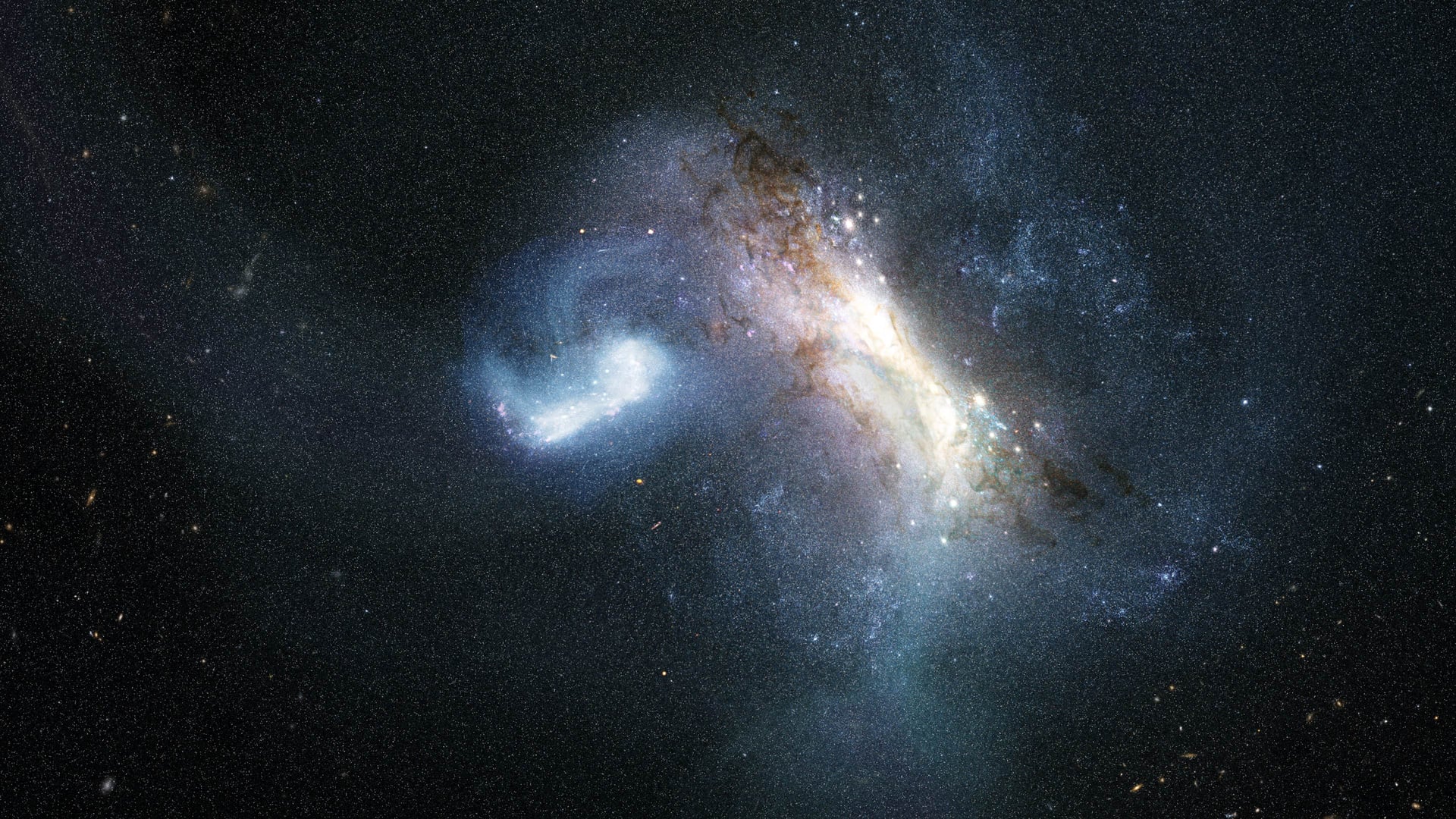
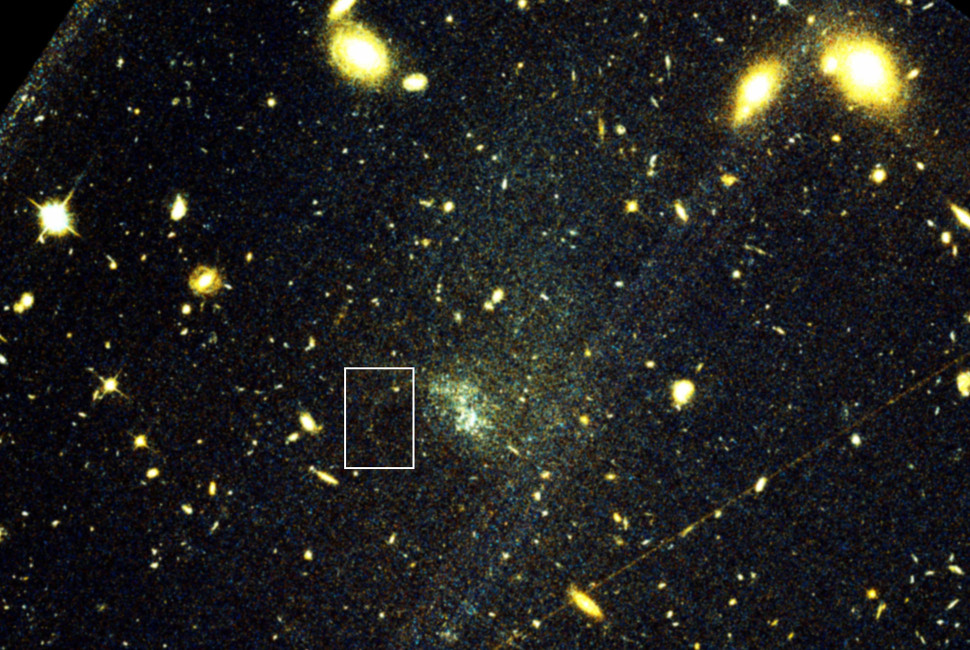
MXDFz4.4, as seen by the Hubble Space Telescope, appears as it was just 1.4 billion years after the big bang, situated right in the midst of the foggy early universe. What makes MXDFz4.4 particularly remarkable is its ability to emit ionising light, specifically ultraviolet radiation, which was previously thought to be impossible to detect due to the dense fog of the early universe. The detection of such light challenges previous assumptions, as it was expected that the early universe's gaseous fog would absorb this radiation long before it could reach Earth.
This galaxy, although a hundred times smaller than the Milky Way, is a powerhouse of star formation. It forges new stars at a rate ten times faster than our galaxy. These young, hot, and massive stars create an intense furnace, allowing anywhere from half to all of the emitted ultraviolet light to escape into space, effectively piercing through the surrounding gas. This phenomenon indicates that MXDFz4.4 could be a key player in the reionisation process, clearing its neighbourhood of the cosmic fog.
The lifecycle of these massive stars also contributes to the clearing process. They burn bright and die young, often exploding as supernovae within a few million years. Each supernova explosion carves out a significant void in the surrounding gas, providing additional pathways for light to escape. Essentially, MXDFz4.4 is actively blasting its environment clear of obscuring material.
The journey of light from MXDFz4.4 to Earth is a testament to the capabilities of modern telescopes. The light travelled over 12 billion years, with its wavelength stretched from ultraviolet to visible light due to the expanding universe. The Hubble Space Telescope captured this light, while additional observations from the James Webb Space Telescope provided details on the galaxy's mass and historical context. The Very Large Telescope in Chile further aided by determining the precise location of MXDFz4.4.
This discovery is significant because it represents the closest look yet at the moment when the universe began to clear. Previously, the earliest galaxy observed leaking ionising light was positioned 1.6 billion years post-big bang. MXDFz4.4 pushes this boundary further back, suggesting that there could be numerous other similar galaxies awaiting discovery in the cosmos. These small but mighty galaxies likely acted as lamps, burning away the fog and allowing the universe to become visible.
The implications of MXDFz4.4's discovery extend beyond just understanding the Era of Reionisation. It prompts a reevaluation of the roles that small, intense star-forming galaxies played in shaping the universe. As astronomers continue to explore the deep field, they anticipate finding more of these cosmic furnaces, each contributing to the grand tapestry of cosmic history.