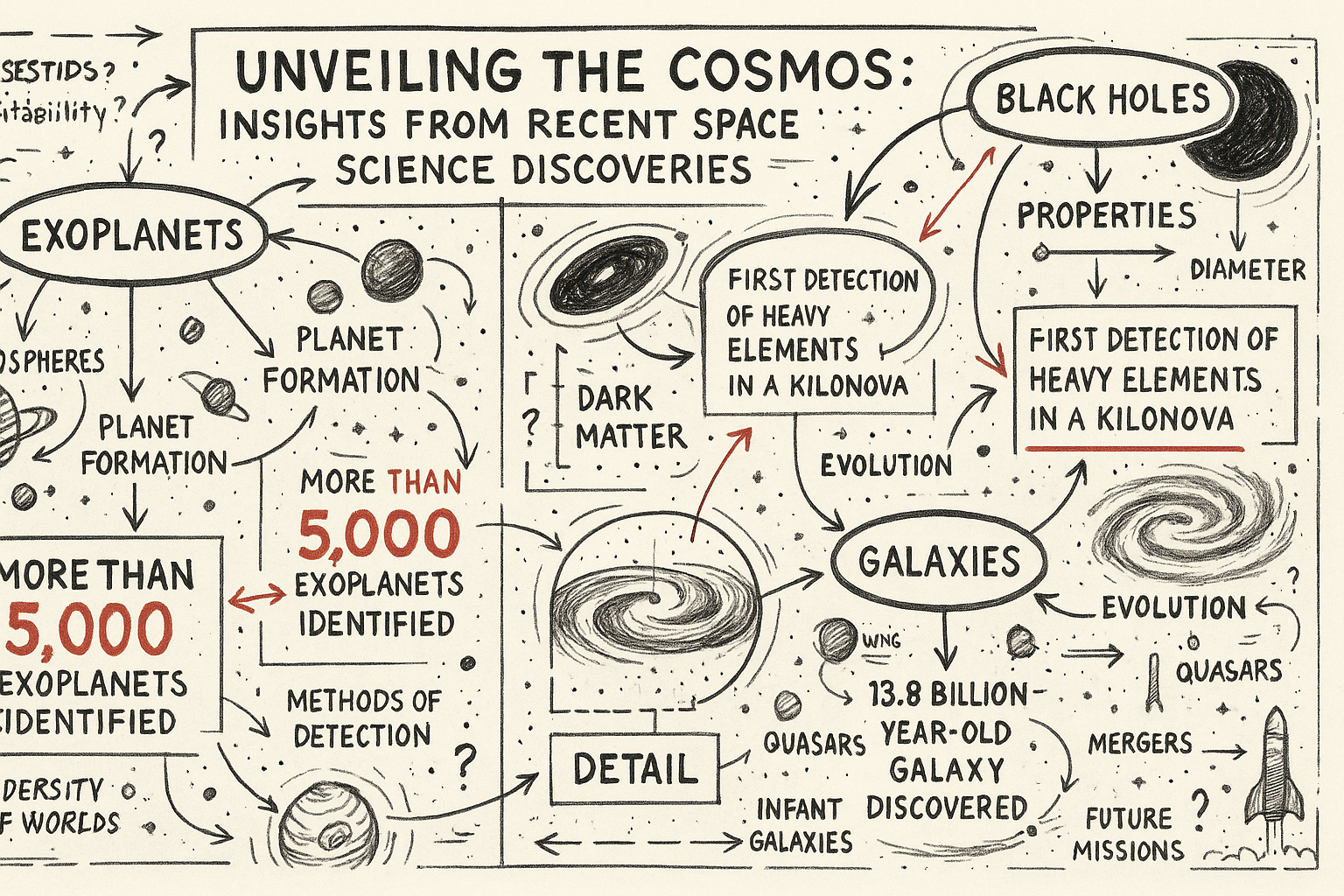
Space exploration and observation have long been the harbingers of human curiosity, offering glimpses into the vast, mysterious universe that envelops us. Recent developments in space science have not only advanced our understanding of astrophysical phenomena but also challenged prevailing assumptions, spotlighting the dynamic interplay of cosmic forces and their implications for life on Earth.
Probing the Sun's Secrets with Proba-3
The European Space Agency's Proba-3 mission, dedicated to studying the solar corona, has resumed operations after overcoming a software anomaly. This mission employs formation flying with two satellites to create an artificial eclipse, allowing unprecedented observation of the sun's corona. Understanding these solar outer layers is crucial as they influence space weather, which can disrupt Earth's communications and power grids. The restoration of Proba-3 marks a significant step forward in solar physics, enabling us to better predict and mitigate the effects of solar activity.
Binary Black Holes and the Event Horizon
In a groundbreaking achievement, scientists have captured the sound of colliding black holes, effectively 'hearing' the event horizon for the first time. Using gravitational waves, researchers have probed the enigmatic boundary where nothing, not even light, can escape a black hole's pull. This discovery not only confirms Einstein's predictions but also enriches our understanding of these cosmic giants, providing insights into the fundamental nature of gravity and the universe's fabric.
Solar Blasts: Expanding Magnetic Clouds
A recent study led by the University of Iowa has documented a solar blast's magnetic cloud expanding significantly as it traveled towards Earth. This phenomenon, detected by strategically positioned spacecraft, underscores the dynamic nature of space weather. As these clouds can affect satellite operations and Earth's magnetosphere, understanding their behavior is essential for safeguarding technological infrastructure and anticipating geomagnetic storms.
Euclid's Dual Role: Mapping Galaxies and Hunting Exoplanets
The Euclid telescope, launched by the European Space Agency, has delivered a trove of data from the Milky Way's core. While its primary mission is to map the universe's dark matter and dark energy, Euclid's capabilities extend to exoplanet research. By studying small, distant planets, Euclid is set to revolutionize our knowledge of planetary formation and the potential for life beyond Earth. This dual role not only exemplifies the telescope's versatility but also underscores the interconnectedness of cosmic phenomena.
Life's Resilience: Microorganisms on Mars
Experiments simulating Martian conditions have revealed that certain Earth pathogens can survive extreme environments, challenging our perceptions of life's resilience. This finding has profound implications for astrobiology and planetary protection, as it suggests that life, or its precursors, could persist on other celestial bodies, potentially contaminating them. This discovery necessitates stringent protocols for future Mars missions to prevent biological cross-contamination.
Listening to the Universe: South African Telescope's Breakthrough
The MeerKAT radio telescope in South Africa has detected the most distant hydroxyl megamaser, a natural space laser, furthering our understanding of galactic mergers. Located over 8 billion light-years away, this discovery opens new avenues in radio astronomy, allowing scientists to study the universe's early epochs and the processes driving galaxy formation and evolution.
These recent advancements in space science not only deepen our comprehension of the universe but also highlight the intricate interdependencies of cosmic events. As we continue to explore, each discovery serves as a reminder of the infinite possibilities that lie beyond our terrestrial confines, urging humanity to look upward and venture further into the cosmos.