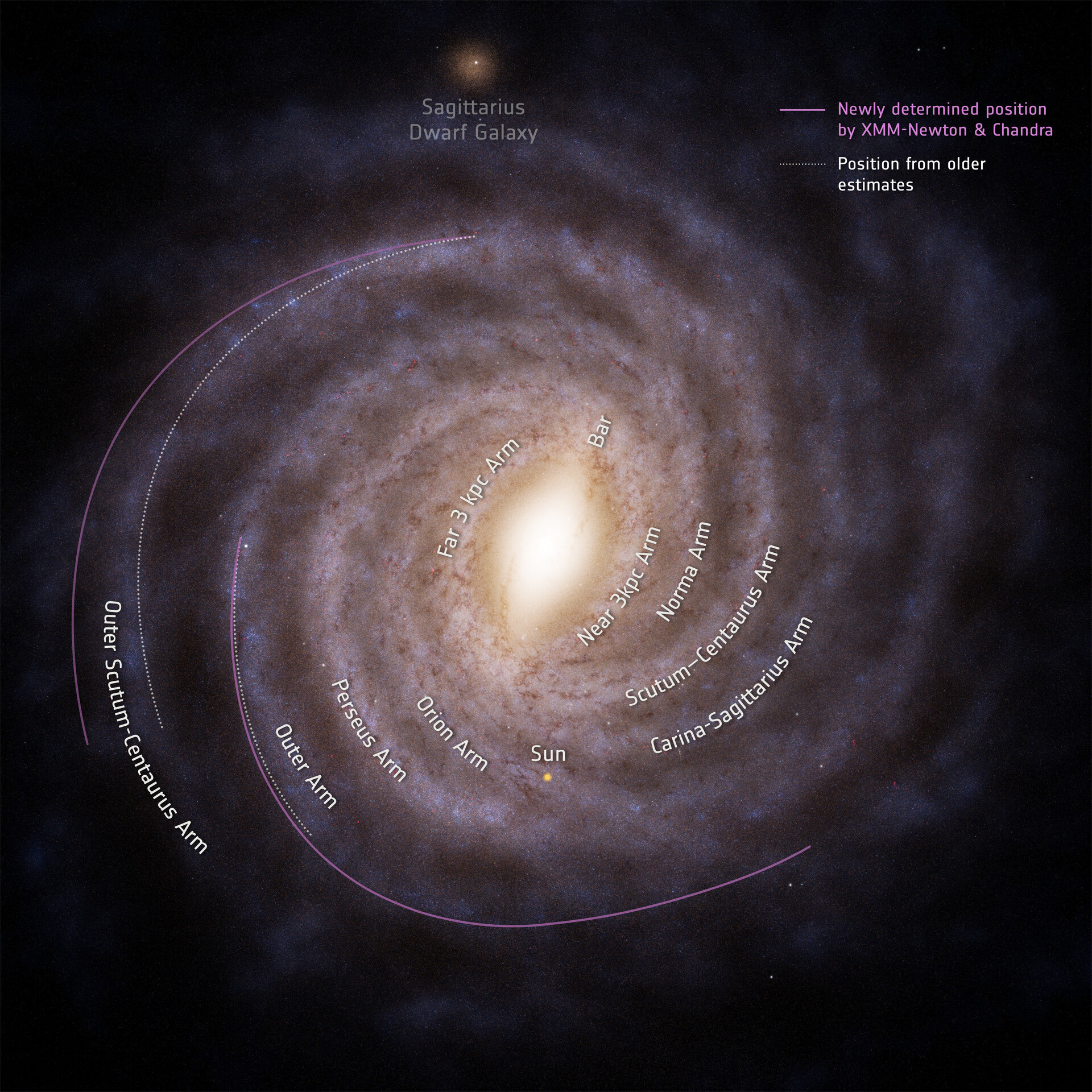
The European Space Agency's XMM-Newton and NASA's Chandra X-ray space telescopes have made significant strides in mapping the Milky Way's structure, particularly its outer spiral arms. Recent findings suggest these arms are up to 10% farther away than previously estimated, thanks to detailed observations of cosmic phenomena.
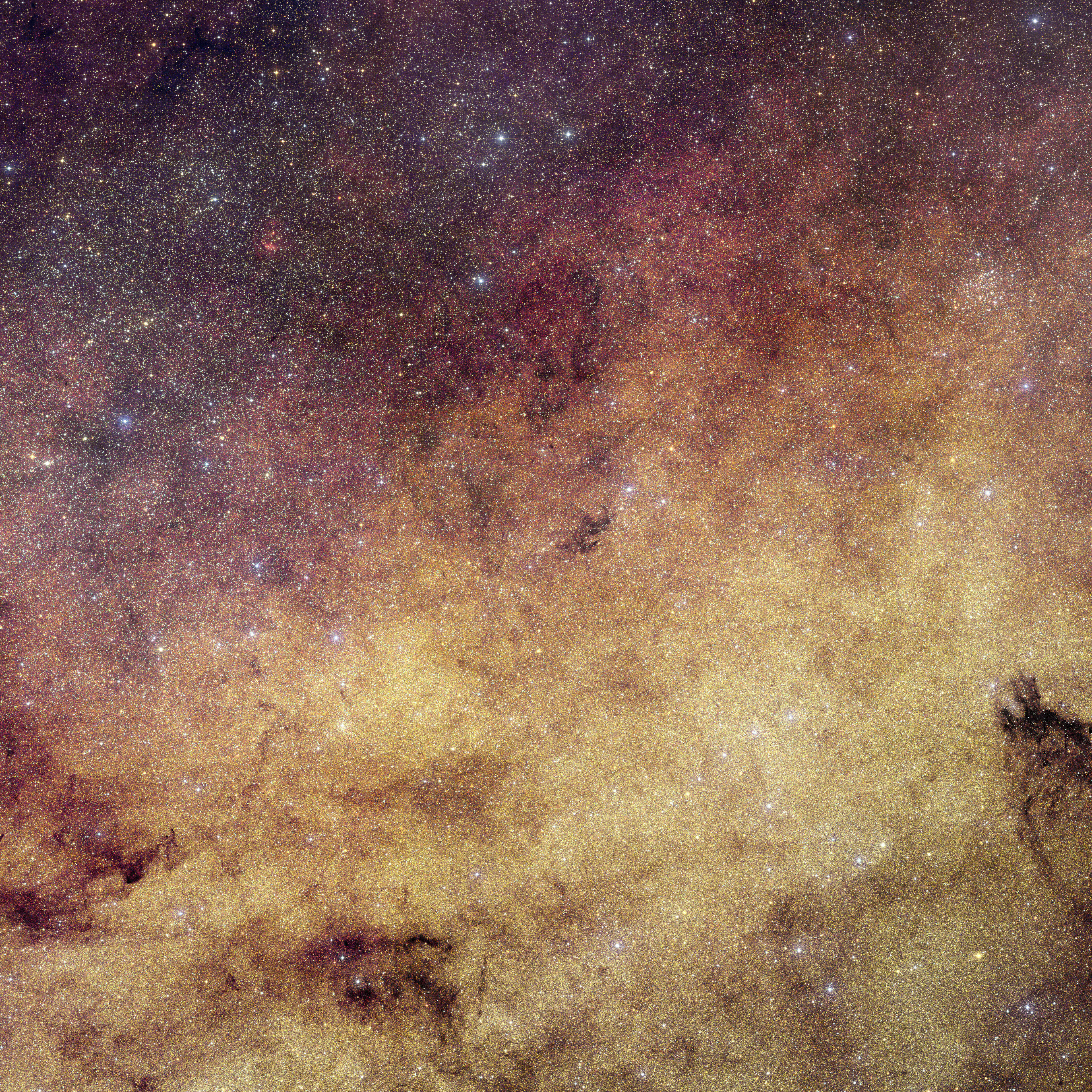
Mapping the structure of our galaxy, particularly its outer regions, poses unique challenges. Observing the Milky Way from within its disk is problematic as the solar system is deeply embedded within it, obstructed by dense cosmic dust clouds. Yet, recent advancements have been propelled by the European Space Agency's Gaia space telescope, which has been instrumental in detailing the Milky Way's structure by measuring precise distances to its stars. This has resolved longstanding debates, such as confirming the presence of four spiral arms.
Building on this foundation, the new research conducted by XMM-Newton and Chandra offers a novel approach to mapping the galaxy's extremities. The study, led by Beatrice Vaia of the Istituto Nazionale di Astrofisica (INAF) in Italy, utilized the aftermath of three gamma-ray bursts (GRBs) from distant galaxies. These powerful explosions sent X-rays echoing through the Milky Way's outer arms, creating bright rings formed by the scattering of X-rays by dust grains in these regions. By analyzing these echoes, scientists could directly measure distances to these outer arms, a method that reduces the potential for error inherent in previous indirect modeling techniques based on galactic rotation.
This breakthrough highlights the continued evolution in our understanding of the Milky Way. Historically, astronomers have relied on indirect methods to infer the structure of our galaxy. The ability to directly measure distances to its outer reaches represents a significant advancement. These findings not only refine our map of the galaxy but also have broader implications for our understanding of galactic dynamics and evolution.
The importance of accurately mapping the Milky Way cannot be overstated. It provides critical insights into the formation and evolution of spiral galaxies, offering a comparison point for studying other galaxies. The more precise our maps, the better we can understand the complex gravitational interactions that shape galaxies over billions of years.
Looking forward, these findings open new avenues for further exploration and study. They underscore the potential of combining data from multiple space observatories to achieve a comprehensive view of cosmic phenomena. As technology advances and more sophisticated instruments are developed, our understanding of not just our galaxy, but the universe as a whole, will continue to grow.
The collaborative efforts between agencies like ESA and NASA exemplify the global nature of astronomical research. As we refine our techniques and technologies, the mysteries of the Milky Way become increasingly within reach. These discoveries remind us of the vastness and complexity of the universe, encouraging continued exploration and study.