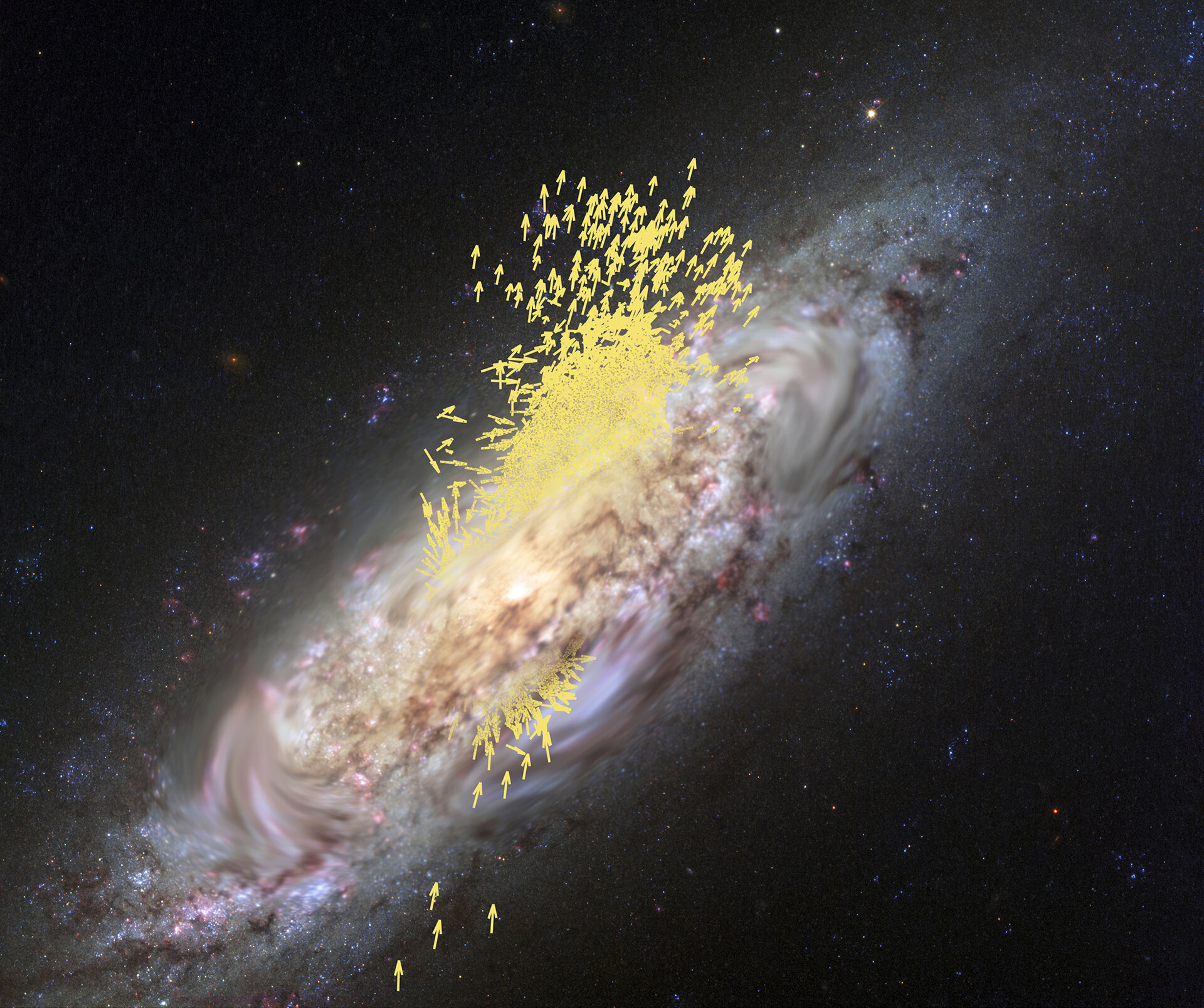
The intricate dance of stars and galaxies across the cosmos is a spectacle that continues to intrigue astronomers. Recent research has added a fascinating chapter to the Milky Way's history, suggesting that our galaxy underwent a dramatic disk flip billions of years ago. This monumental event may help explain some of the puzzling characteristics of the Milky Way, particularly the disparate rotational speeds of its thin and thick disks.
The Milky Way is composed of two main disk structures: a thin disk, which houses most of the galaxy's stars, and a thick disk, which is more sparsely populated with older stars. Observations from the European Space Agency's Gaia mission have shown that the thick disk rotates much more slowly than the thin disk. Understanding why these differences exist has been a longstanding mystery for astronomers.
Recent findings, presented at the Royal Astronomical Society's National Astronomy Meeting in Birmingham by a team of researchers from Durham University, provide a compelling explanation. Led by astronomer Kirill Batrakov, the team utilized the Auriga suite of cosmological simulations to investigate the evolutionary history of galaxies similar to the Milky Way. These simulations include complex factors such as dark matter, supernovae, and gravitational interactions, beginning from the period shortly after the Big Bang.
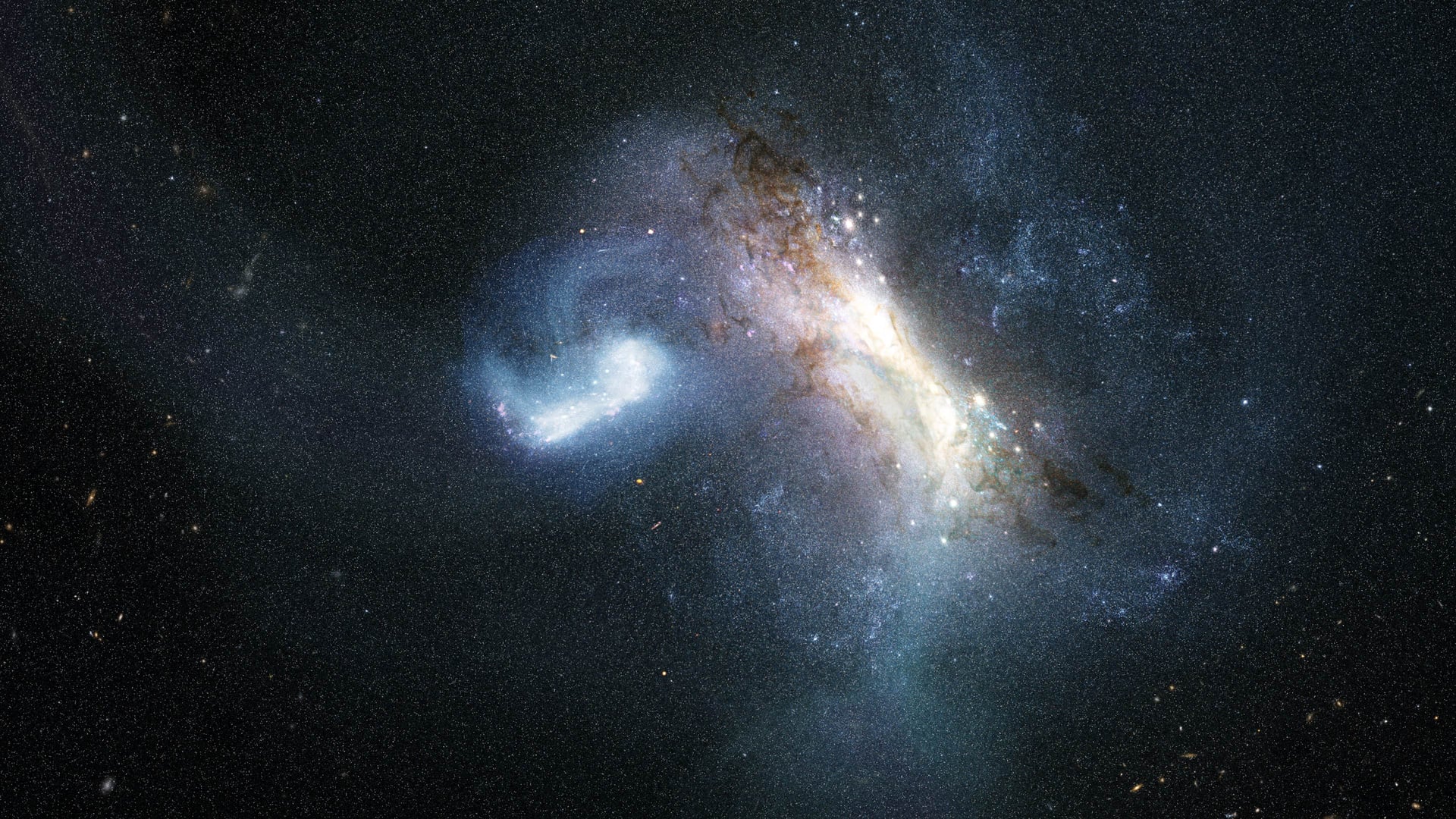
By simulating 25 Milky Way-like galaxies, the researchers discovered that those with slowly rotating stellar halos, like our own, had experienced significant galactic mergers and subsequent disk flips. A major merger, with another galaxy, caused the Milky Way's disk to change its orientation by more than 90 degrees, a process known as a disk flip. This flip is believed to have occurred approximately 10 billion years ago, following a head-on collision with a smaller galaxy, often referred to as Gaia-Enceladus.
The aftermath of this collision and disk reorientation can be observed in the characteristics of the Milky Way's thick disk. The stars in this disk are older, metal-poor, and follow eccentric orbits, evidence of their origin in a different galaxy before being assimilated into the Milky Way. The slow rotation of the stellar halo, a legacy of the ancient merger, is a crucial piece in understanding this cosmic event.
"Because we live inside the Milky Way, we can study it in more detail than any other galaxy, which makes it a key testbed for understanding galaxies more broadly," said Kirill Batrakov. This profound insight into the Milky Way's history not only helps solve a mystery about our galaxy but also enhances our understanding of galactic evolution at large.
These findings are significant because they provide a new perspective on how galaxies evolve through mergers and the complex gravitational interactions that can lead to dramatic changes in their structure. The implications extend beyond the Milky Way, offering a model to study other galaxies that exhibit similar characteristics.
The research underscores the importance of technological advancements and large-scale data collection in astronomy. The Gaia mission, with its unprecedented mapping of over a billion stars, continues to be instrumental in uncovering the secrets of our galaxy. Such missions and simulations bring us closer to understanding the vast and dynamic universe we inhabit.
Looking forward, these insights could guide future studies aiming to unravel the histories of other galaxies with similar disk structures. As our observational capabilities continue to advance, more detailed and comprehensive models of galactic evolution will likely emerge, further illuminating the cosmic ballet of stars and galaxies throughout the universe.