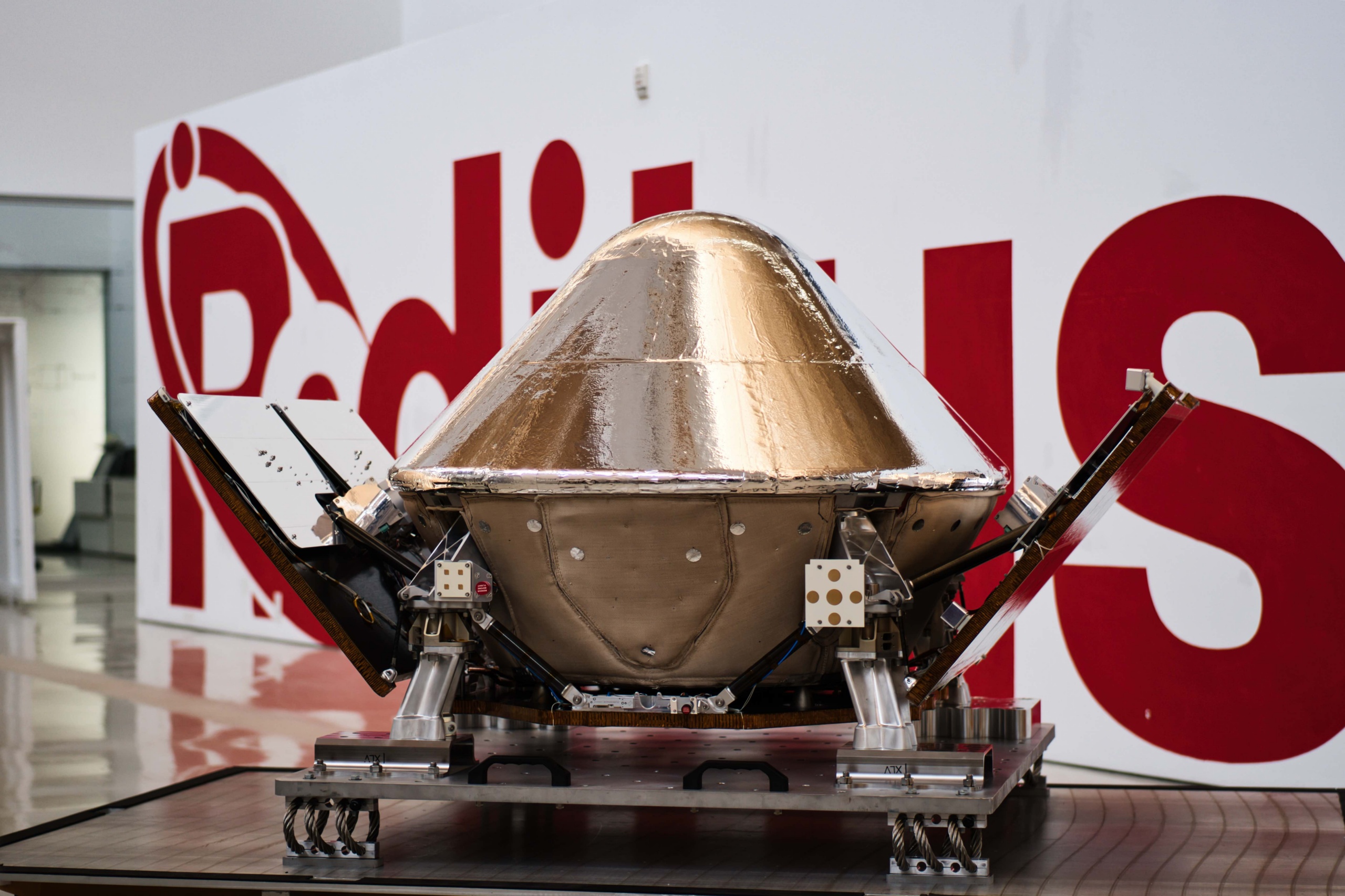
Reditus Space, an Atlanta-based startup, is poised to make a significant impact in the aerospace sector with the upcoming launch of its first reentry vehicle, named ENOS. The spacecraft, which combines the functions of a reusable microgravity research vehicle and a hypersonic test bed, is scheduled for its debut mission this fall. This development marks a pivotal moment for the two-year-old company, which has been steadily building its reputation in both commercial and defense sectors.
The ENOS vehicle, weighing approximately 200 kilograms or about the size of a small family fridge, is designed to operate on-orbit for extended durations—ranging from days to years—before initiating its own reentry and being recovered under parachute. This versatility is aimed at providing maximum mission flexibility, making it an attractive option for organizations conducting in-orbit science or testing hypersonic technologies.
Reditus CEO Stef Crum highlighted the dual capabilities of ENOS, stating that it can carry payloads for military testers to evaluate systems under hypersonic conditions, or serve as a Mach 25+ target vehicle for interceptors. "In the long term, our intent is to make reentry as regular an occurrence as launch," Crum explained. This vision reflects the broader trend in the aerospace industry towards increasing frequency and affordability of space missions, leveraging reusable technologies to drive down costs.
The company's approach to reusability is particularly noteworthy. Current reentry vehicles often rely on single-use heat shields that degrade under the intense conditions of atmospheric reentry. However, Reditus is developing a proprietary manufacturing system to create heat shields capable of surviving multiple missions, a key factor in achieving their goal of making reentry commonplace. This innovation is part of Reditus' strategy to capture a share of the growing market for Earth-return capabilities, which is expected to expand as the International Space Station phases out operations in the 2030s.
ENOS is set for a splashdown recovery off the coast of Florida this December, following a two-month orbital mission. While the first flight will involve largely single-use hardware, Reditus plans to enhance future iterations of the vehicle, increasing payload capacity and ensuring more systems can withstand reentry for refurbishment and reuse.
Beyond commercial applications, Reditus is actively engaging with various U.S. Department of Defense entities. The company is part of the Missile Defense Agency’s SHIELD contracting pool, focusing on the development of new technologies in support of strategic defense initiatives. Discussions with the Navy and the Air Force are also underway, with the latter considering ENOS as a "test bench" for advancing hypersonic technologies and mission profiles. A potential contract with the Air Force Research Laboratory is in the works, underscoring the vehicle's potential as a valuable tool for military applications.
The successful deployment of ENOS could pave the way for Reditus to transition towards a model of fleet operations, where the costs of each vehicle are spread over multiple missions. This approach could significantly enhance the economic viability of frequent space missions, making Reditus a competitive player in both the commercial and defense sectors.
As the space industry continues to evolve, innovations like those being pursued by Reditus Space are crucial in shaping the future of space exploration and defense. The ENOS vehicle represents a bold step forward in the quest for more resilient and cost-effective space technologies, with implications that extend far beyond its immediate applications.