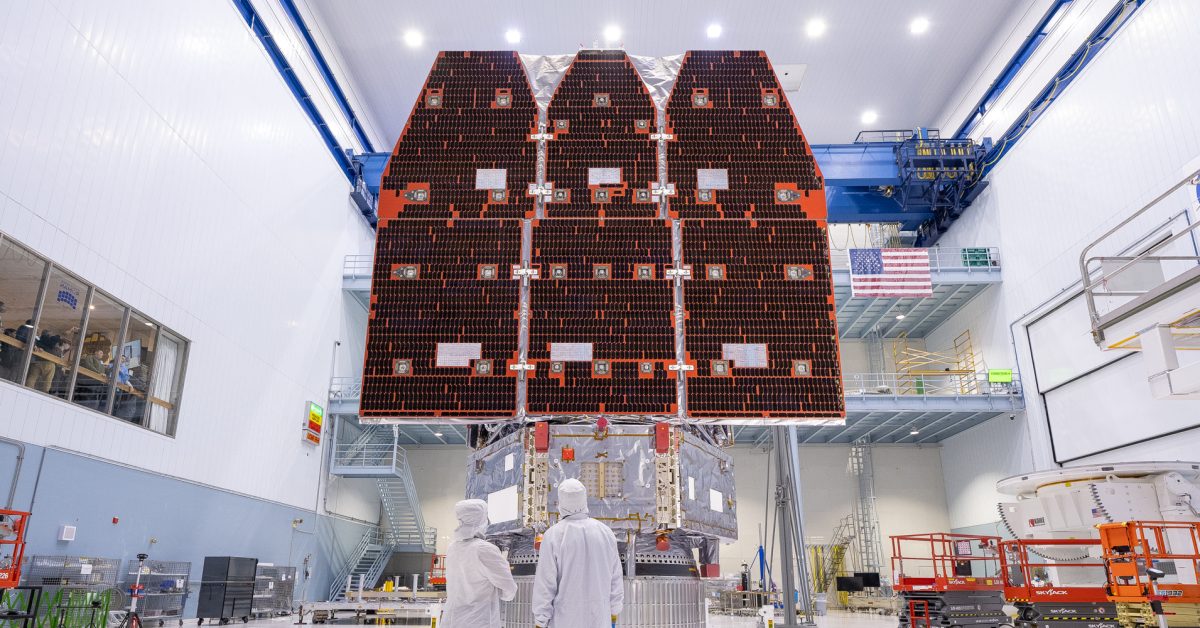
The U.S. Federal Communications Commission (FCC) has recently approved a groundbreaking yet contentious project by Reflect Orbital, a California-based startup, to launch the Eärendil-1 satellite. This initiative aims to test the feasibility of reflecting sunlight to Earth's nightside, sparking a significant debate between technological innovation and environmental stewardship.
The Eärendil-1 satellite is set to launch by the end of 2026 as part of a SpaceX rideshare mission. This 142-kilogram satellite features an 18-meter reflective surface made of glossy mylar plastic. Once deployed into a low Earth orbit between 600 and 650 kilometers in altitude, the satellite will reflect sunlight to a ground footprint approximately five kilometers wide. Reflect Orbital's CEO, Ben Nowack, expressed gratitude toward the FCC for supporting the testing of novel technologies, emphasizing the importance of demonstrating the technology’s efficacy and safeguards.
Reflect Orbital envisions a large-scale deployment of up to 50,000 satellites by 2035, aiming to provide "sunlight on demand" for various applications. These include enhancing solar farm productivity after sunset, illuminating nighttime construction sites, and aiding search-and-rescue operations. The ability to control and direct sunlight precisely forms the core of Reflect Orbital's commercial strategy.
However, the project has faced strong opposition from the astronomical community and environmentalists. The American Astronomical Society (AAS) and other experts have raised concerns about the potential for increased sky brightness, which could severely impact astronomical research. Tony Tyson, a distinguished research professor at the University of California, Davis, likened the Reflect Orbital plans to "a sky full of moons," warning about the scattering of sunlight that could hinder astronomical observations.
Moreover, the European Southern Observatory (ESO) has warned that the proposed constellation could increase background sky brightness by three to four times, limiting telescopes' ability to detect faint celestial objects. Environmentalists also argue that the artificial illumination could disrupt the natural diurnal cycles of plants and animals.
The FCC, in its approval, noted that concerns about optical reflectivity and light pollution fall outside its statutory purview, focusing instead on the allocation of radiofrequency spectrum. The agency acknowledged the public interest in fostering domestic space innovation, despite the nearly 1,900 public comments opposing the project.
Reflect Orbital has responded to these concerns by emphasizing its commitment to mitigating the impacts on astronomy and the environment. Tristan Semmelhack, the company's chief product officer, stated that the mission aims to prove the technology's ability to operate with precision, limiting brightness and duration, and coordinating with affected communities and scientific institutions.
This project highlights the ongoing tension between commercial space ventures and scientific endeavors. As the space industry continues to innovate rapidly, balancing technological progress with environmental and scientific considerations remains a critical challenge. The outcome of Reflect Orbital's Eärendil-1 mission may set precedents for future regulatory decisions and the deployment of large-scale satellite constellations.
The implications of this project extend beyond the immediate technological achievements, posing existential questions about humanity's role in altering natural phenomena and the ethical responsibilities that accompany such capabilities.