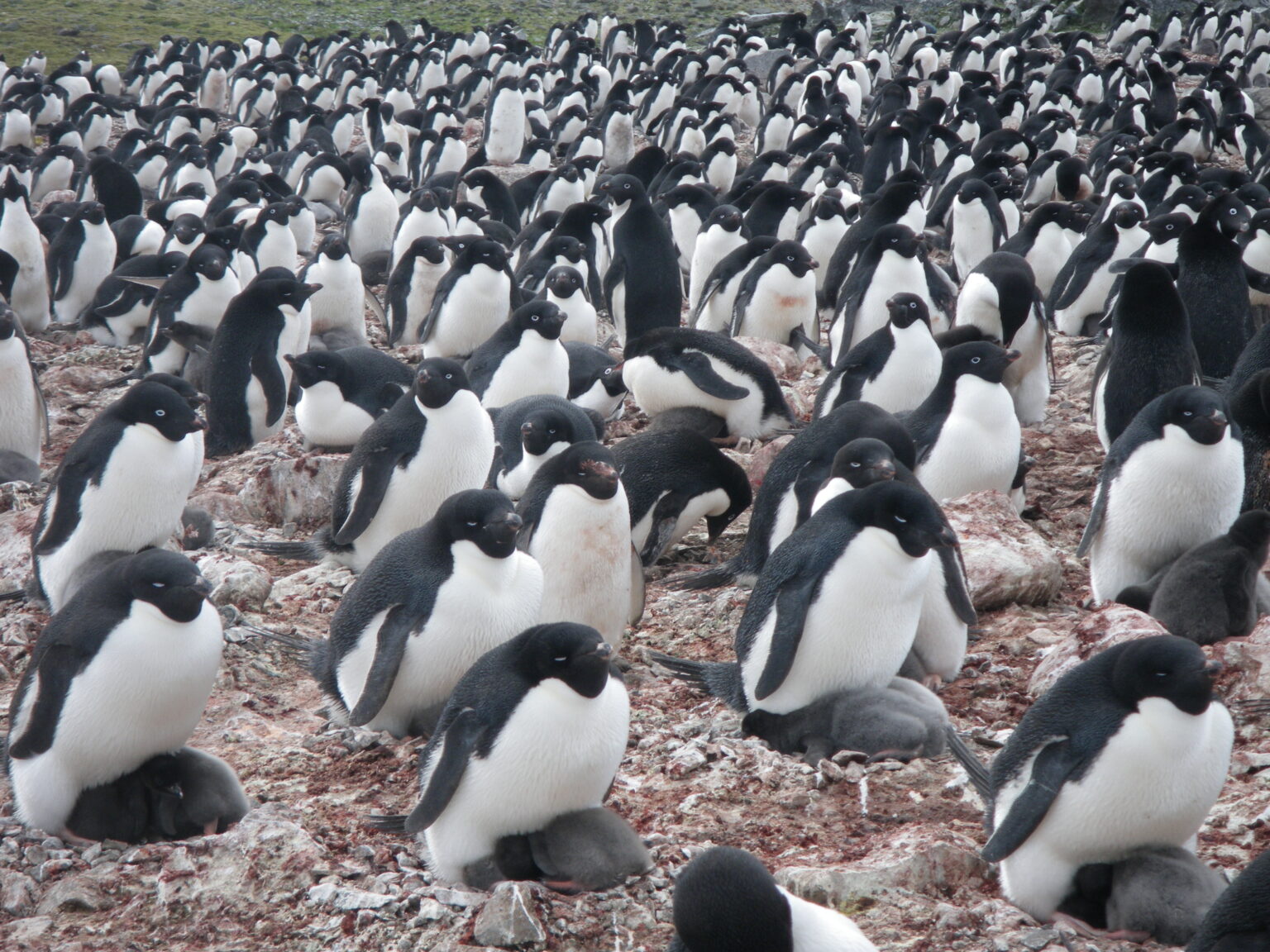
The Adélie penguin is an iconic species synonymous with the icy expanses of Antarctica. However, these penguins are facing a critical threat from climate change, as revealed by recent analyses using satellite imagery. A comprehensive study led by Clemson University, in collaboration with Stony Brook University, UC Santa Cruz, NASA, and other institutions, has utilized data from the NASA/USGS Landsat mission to understand the dietary adaptations of Adélie penguins over three decades. The findings, published in Current Biology, underscore the profound impact of environmental changes on these birds, as well as the innovative use of satellite technology in ecological research.
The study employed an ingenious method of analyzing the color and distribution of penguin guano, or feces, as captured in satellite images. This novel approach allowed scientists to reconstruct the dietary patterns of Adélie penguins from 1984 to 2013 by obtaining a "spectral signature" of the guano. The spectral analysis was conducted across visible and infrared wavelengths, providing insights into the penguins' consumption of fish versus krill, a small shrimp-like crustacean.
Adélie penguins traditionally feed on fish in regions abundant in sea ice. However, the study discovered that in areas where sea ice has diminished, these penguins increasingly rely on krill. This shift in diet is troubling, as krill is significantly less nutritious than fish, impacting the penguins' health and reproduction. Notably, colonies that have shifted to a krill-based diet are experiencing a decline, suggesting that the ongoing loss of sea ice is forcing these penguins into an unbalanced and less sustainable diet.
The implications of these findings extend beyond penguin health. They reflect broader changes within the Antarctic ecosystem, driven by the warming climate. The research highlights the critical role of sea ice in maintaining ecological balance, as it influences not only the availability of prey but also breeding and foraging behaviors of Antarctic wildlife.
Conducting such an expansive and detailed study would have been nearly impossible without satellite technology. Antarctica's vast, remote, and inhospitable environment poses significant challenges to traditional fieldwork, making satellite-based observations a powerful tool for scientists. The Landsat program's extensive archive of Earth observation images provided the necessary data to monitor these dietary shifts across the continent and over decades.
Dr. Michael Polito from UC Santa Cruz, a co-author of the study, emphasizes that this research opens new frontiers for wildlife monitoring from space. The ability to track food-web dynamics and population changes on such a scale offers valuable insights into how species are adapting—or struggling to adapt—to rapidly changing environmental conditions.
Looking ahead, the study's methodology could be applied to other species and ecosystems, offering a template for using space-based observations to understand the impacts of global warming on biodiversity. As climate change continues to alter habitats worldwide, satellite technology may become increasingly vital in conservation efforts, enabling more effective strategies to mitigate the impacts on vulnerable species.
The plight of the Adélie penguin serves as a stark reminder of the interconnectedness of climate and life on Earth. As global temperatures rise and sea ice continues to retreat, the survival of these charismatic birds—and countless other species—will depend on the world's ability to address the challenges posed by climate change.