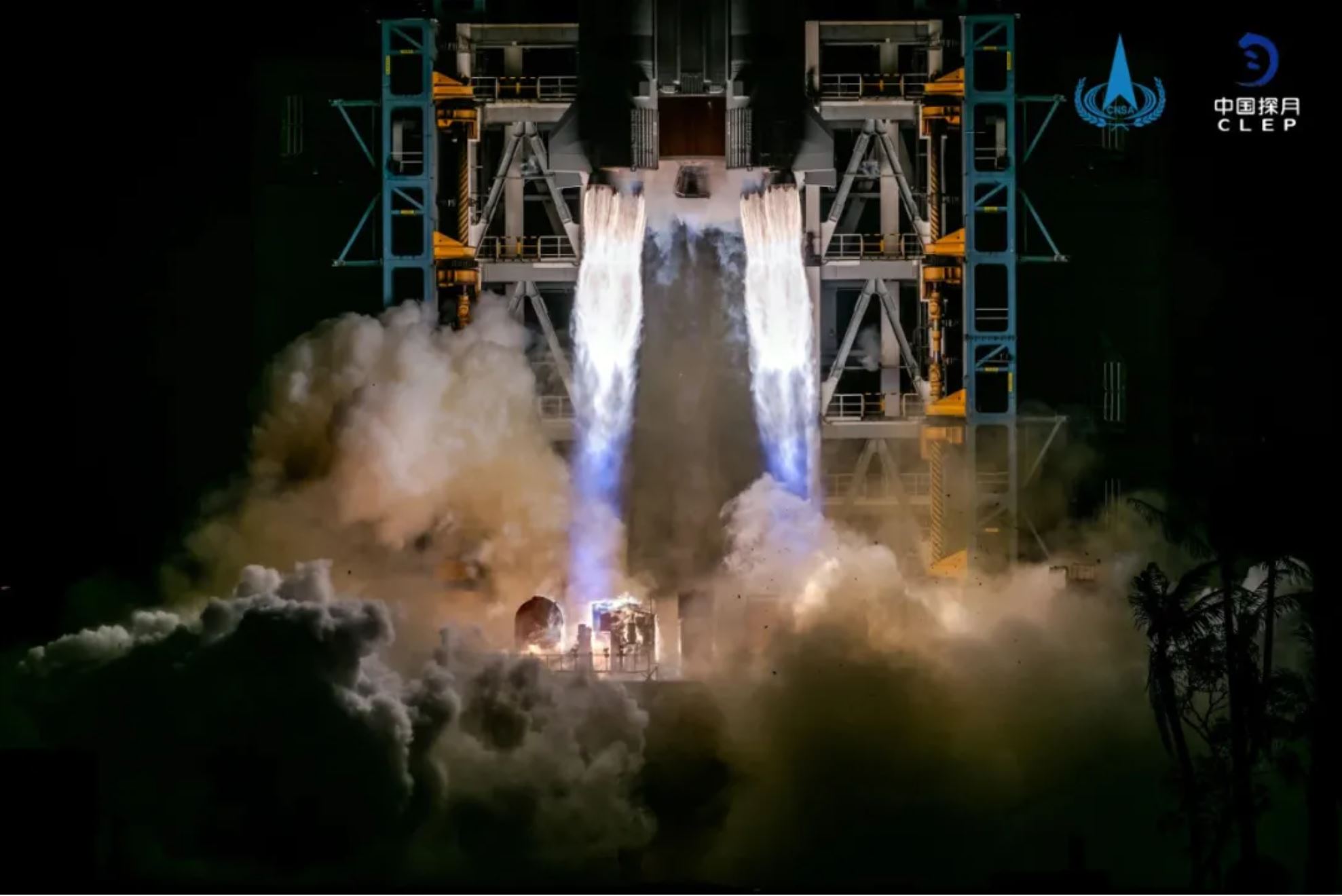
In a significant development for the aerospace industry, LegendSpace, a six-month-old Chinese startup, has successfully raised $29.5 million in angel funding. This sizable investment, announced on July 16, 2026, highlights the growing interest in leveraging artificial intelligence (AI) to innovate rocket engine development. Investors such as Vitalbridge, Yuanma Lüdong, Shangshi Capital, Crystal Stream Capital, and Oriental Fortune Capital have backed this initiative, with Gaohu Capital serving as the financial advisor.
The funds will be directed towards several critical areas. First, LegendSpace plans to put multiple liquid rocket engines through rigorous approval processes, ground testing, and hot-state verification. Second, the company aims to enhance its “Prime” intelligent research platform, which integrates AI simulation with metal additive manufacturing capabilities. Lastly, the investment will support the establishment of an industrial chain support and production testing system, paving the way for large-scale production.
LegendSpace positions itself as an “AI-native” developer and manufacturer of liquid rocket engines, rather than a conventional software firm. Its “Prime” platform, developed in collaboration with the Beijing Institute for AI for Science (AISI), represents a breakthrough in rocket engine development. Introduced at the Zhongguancun Forum in March, the platform seamlessly links AI-driven design generation with multiphysics simulation, additive manufacturing, and both cold- and hot-fire testing. This closed-loop system promises to compress engine iteration cycles from the typical span of years to just two weeks.
To date, LegendSpace has completed one full validation loop, moving from AI-assisted design through simulation to cold and hot testing. While specific hardware details remain undisclosed, this achievement marks a significant step forward in the application of AI to rocket engine development. The platform builds on DeepFlame, an open-source, GPU-native reacting flow simulation code from Peking University, with Mao Runze as the lead author of its foundational paper. Currently, a 2.5-ton-thrust liquid engine is in the trial production phase using 3D printing technology.
This ambitious venture places LegendSpace in the competitive landscape of rocket engine development, where companies like Venus Aerospace are also making strides. Venus Aerospace recently secured $91 million to scale its rotating detonation rocket engine technology, underscoring the broader industry trend towards innovative propulsion systems.
LegendSpace's initiative is part of a broader movement to harness AI in space technology, a field that has seen notable advancements in recent years. The use of AI to optimize design and testing processes offers the potential to significantly reduce costs and timeframes associated with rocket development. This could have far-reaching implications for space exploration and commercialization, potentially making space access more affordable and frequent.
While the startup has not disclosed its engine’s propellant combination or prospective customers, the establishment of a rocket engine test facility indicates its commitment to advancing towards operational readiness. As the company refines its technology and scales up production, it could play a pivotal role in shaping the future of rocket propulsion.
In summary, LegendSpace's successful funding round and innovative approach to rocket engine development highlight the transformative potential of AI in the aerospace industry. By drastically reducing development cycles, LegendSpace not only aims to disrupt traditional methods but also to contribute to the rapid advancement of space technology.