iSpace, a burgeoning Chinese launch vehicle manufacturer, has recently secured an initial batch of Series E funding to further its ambitions in the realm of reusable rocketry. According to reports from the Chinese financial news outlet STCN, this round has brought in approximately $148 million, equivalent to 1 billion yuan. The funding was largely supported by asset investment entities associated with China's major state banks, reflecting the national emphasis on strengthening the commercial space sector.
This financial boost follows an earlier impressive $729 million funding round in February of this year, underscoring iSpace's strategic importance and the confidence placed in its technological advancements. This earlier round was supported by government industrial funds, strategic ecosystem investors linked to the state, and a mix of municipal, provincial, and private equity investment vehicles.
The recent funds are earmarked for several key areas: the research and mass production of the Hyperbola-3 reusable launch vehicle, the capability to manufacture the Focus-2 methane-liquid oxygen engine, and the development of launch and sea recovery infrastructure. Additionally, the company is investing in pre-research for heavy-lift launch vehicle technology, which could play a crucial role in future space endeavors.
The Hyperbola-3 rocket, which represents iSpace's foray into liquid propellant technology, is poised for its debut flight by the end of 2026. In its reusable mode, the Hyperbola-3 can deliver up to 8,500 kilograms to low Earth orbit (LEO), while in expendable mode, it has a payload capacity of 13,400 kilograms. This first launch will include an attempted recovery of the first stage, a critical test for the company's reusable technology.
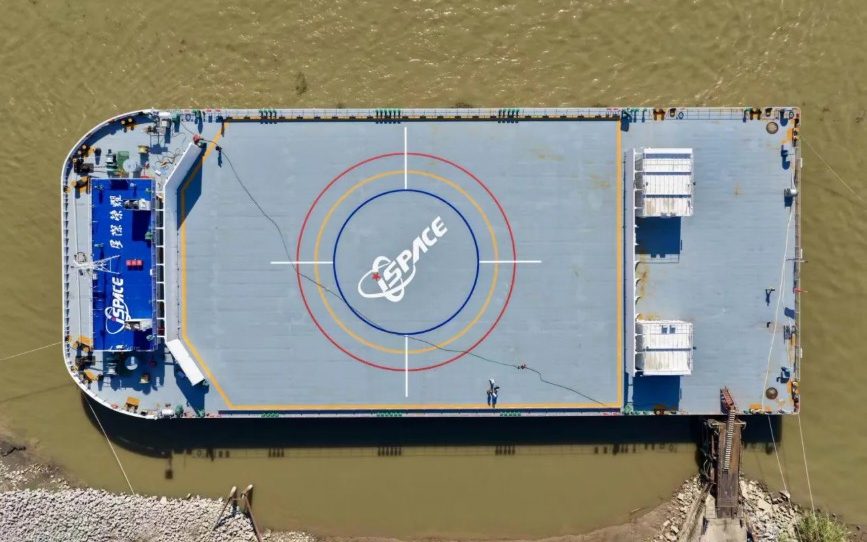
In August 2025, iSpace launched China’s first rocket recovery ship, the “Interstellar Return”. This vessel, measuring 100 meters in length and 42 meters in width, is designed to recover the first stage of the Hyperbola-3 and can accommodate other medium- and large-scale reusable rockets. The successful recovery of such stages could significantly reduce launch costs and increase the sustainability of space missions.
This initiative aligns with China's broader achievements in reusable rocketry, highlighted by the successful orbital booster recovery in July using a net-capture system. This system caught the first stage of a Long March 10B rocket, marking a milestone in China's space exploration efforts.
Looking towards the future, iSpace is preparing for an Initial Public Offering (IPO) on the STAR Market, targeted for the second half of 2027. This anticipated event is expected to follow the successful debut of the Hyperbola-3, positioning iSpace alongside other major Chinese launch companies like Landspace in the commercial space sector.
As the global space race intensifies, iSpace's advancements in reusable rocketry could bolster China’s standing as a leader in space technology. The successful deployment and recovery of the Hyperbola-3 would not only validate iSpace’s technological capabilities but also demonstrate the potential for cost-effective and sustainable space exploration. With these strategic investments and technological strides, iSpace is on a promising trajectory to contribute significantly to China's ambitions in space.