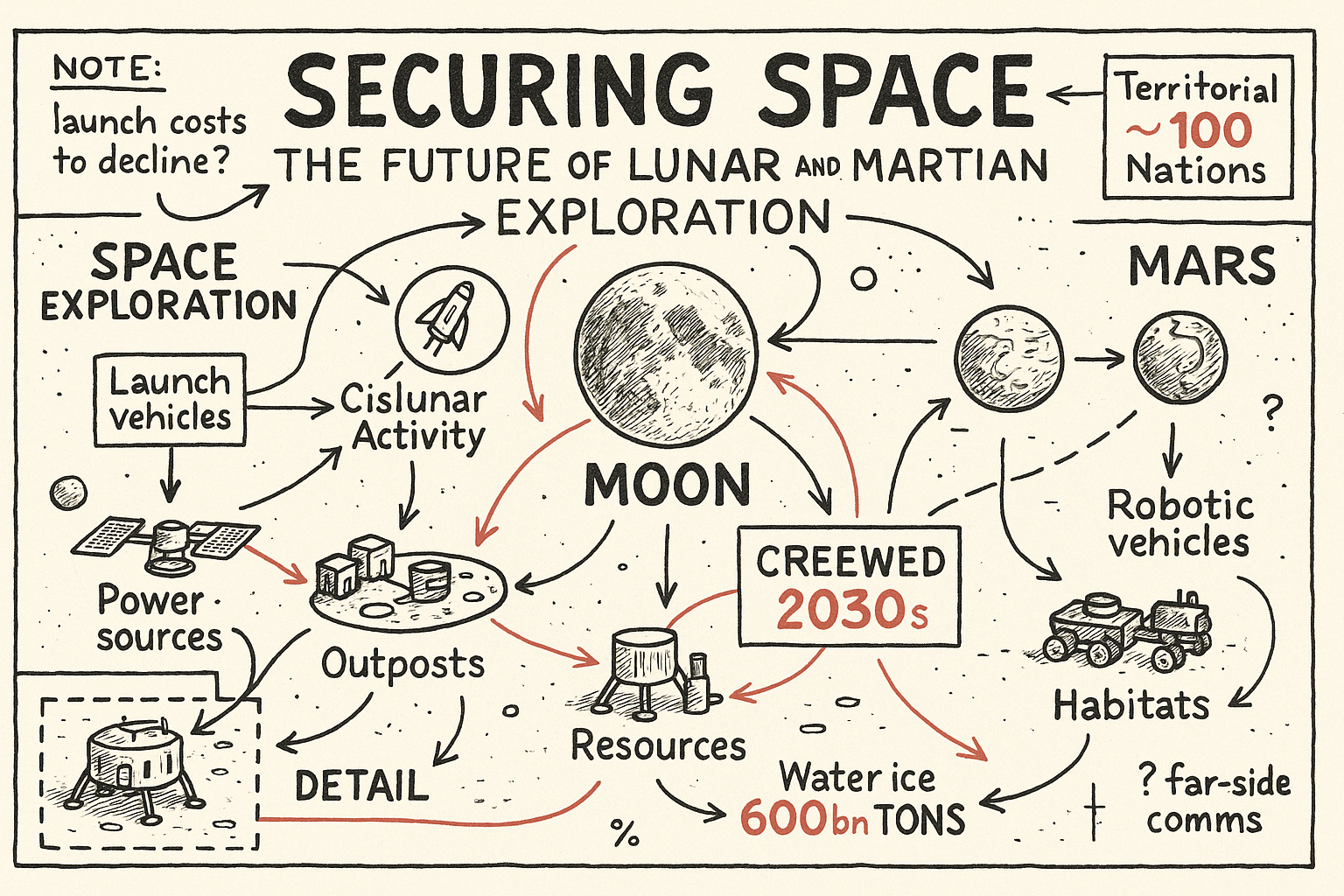
The realm of space exploration is at an inflection point, with technological advances unlocking unprecedented opportunities to explore and utilize extraterrestrial bodies. Yet, as we push the boundaries of what is possible, key questions arise about how to balance scientific advancement with the preservation of these pristine environments. Recent discussions about lunar research 'reserves' and protecting Mars from electrically charged storms exemplify this tension. The moon, long thought to be an arid, lifeless rock, is now understood to host water, primarily trapped within its interior. This revelation reshapes our understanding of lunar resources, potentially transforming the moon from a scientific curiosity to a vital resource hub for deeper space exploration.
As NASA selects 41 space technologies to address challenges for both Moon and Mars missions, the notion of 'research reserves' comes into sharp focus. While these reserves are intended to protect key scientific sites from contamination and resource exploitation, their implementation requires careful consideration. The concept draws parallels with Earth's conservation practices, where setting aside protected areas has proven successful in preserving biodiversity and ecosystems. However, translating this terrestrial model to off-world environments involves complex legal and ethical dilemmas.
The Moon: A Scientific Sanctuary?
The idea of designating the moon's far side as a scientific reserve underscores the urgency of protecting valuable research sites. The far side's unique geology and radio silence make it an ideal location for many scientific studies, including radio astronomy and geological research. Preserving it could ensure that future generations of scientists have access to pristine data, crucial for understanding the moon's history and broader cosmic phenomena.
Yet, the moon's potential as a stepping stone for Mars and beyond cannot be overlooked. Discoveries of water ice in permanently shaded regions (PSRs) have fueled ambitions for lunar bases, offering a potential source of life-supporting water and rocket fuel. The challenge lies in balancing these utilitarian goals with the scientific imperative to preserve the moon's natural state.
Protecting Mars: A New Frontier
On Mars, the challenges of exploration are compounded by its harsh environment. Electrically charged dust storms can envelop the entire planet, posing a significant threat to both robotic and human missions. These storms highlight the need for protective technologies, such as permanent magnets, to shield astronauts from hazardous conditions. However, they also raise questions about the feasibility of long-term habitation and the ethical implications of altering Martian weather patterns.
As NASA and other space agencies develop technologies to mitigate these risks, the question of planetary protection remains critical. Mars, like the moon, holds significant scientific value in its potential to reveal clues about the evolution of habitable planets. Understanding these processes is essential for determining the conditions under which life might arise elsewhere in the universe.
Future Implications and Ethical Considerations
The pursuit of space exploration is inherently tied to complex ethical considerations. Whether it's establishing lunar reserves or protecting astronauts from solar storms, each decision carries implications for future missions and the preservation of scientific integrity. As we stand on the cusp of a new era in space exploration, the surprising realization is that the very technologies that enable us to explore these worlds also necessitate a reevaluation of our responsibilities toward them.
Ultimately, the future of space exploration hinges on our ability to balance exploration with conservation. By establishing clear guidelines and robust international cooperation, we can ensure that the benefits of space exploration are shared equitably, and that the legacy we leave for future generations is one of both discovery and stewardship.