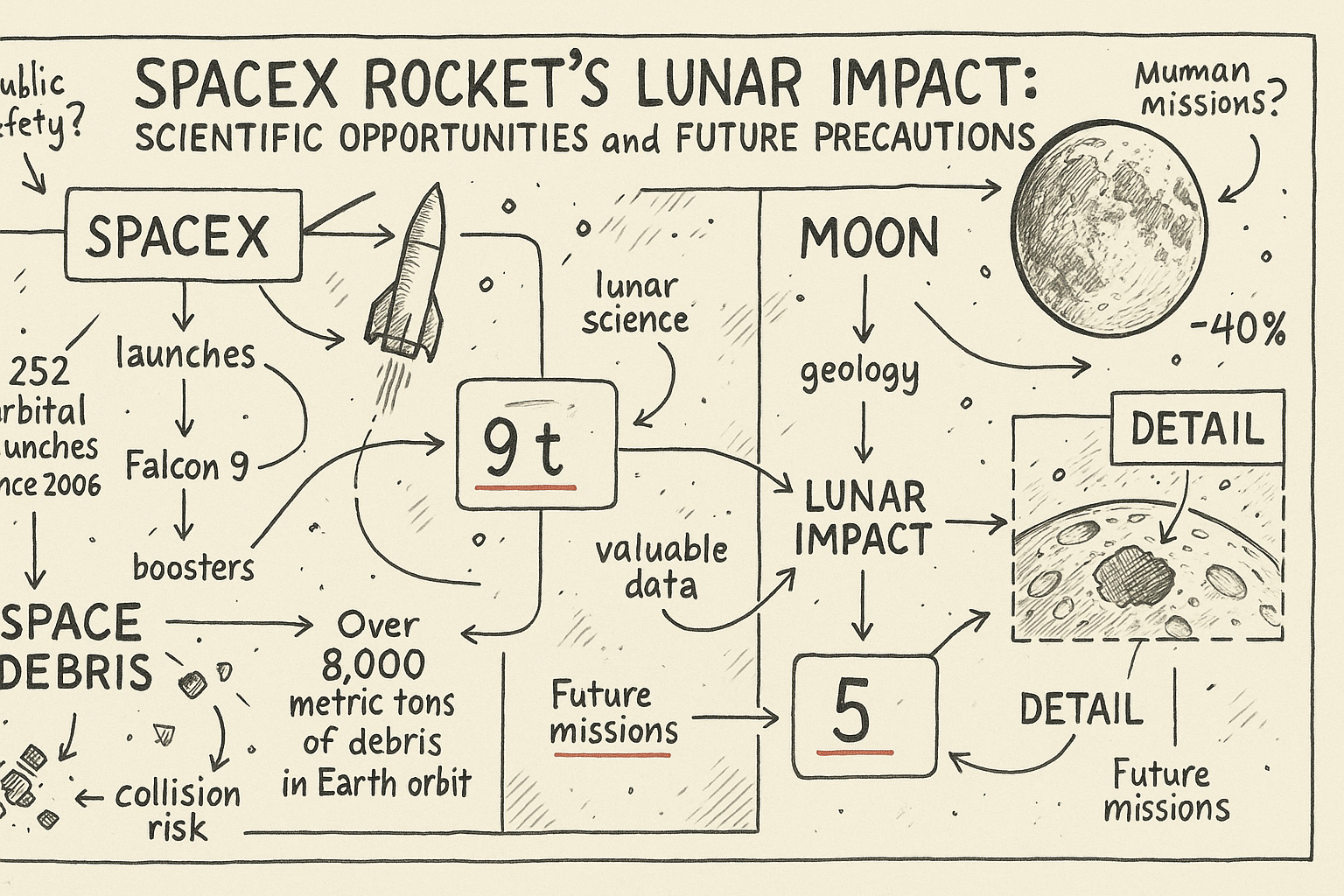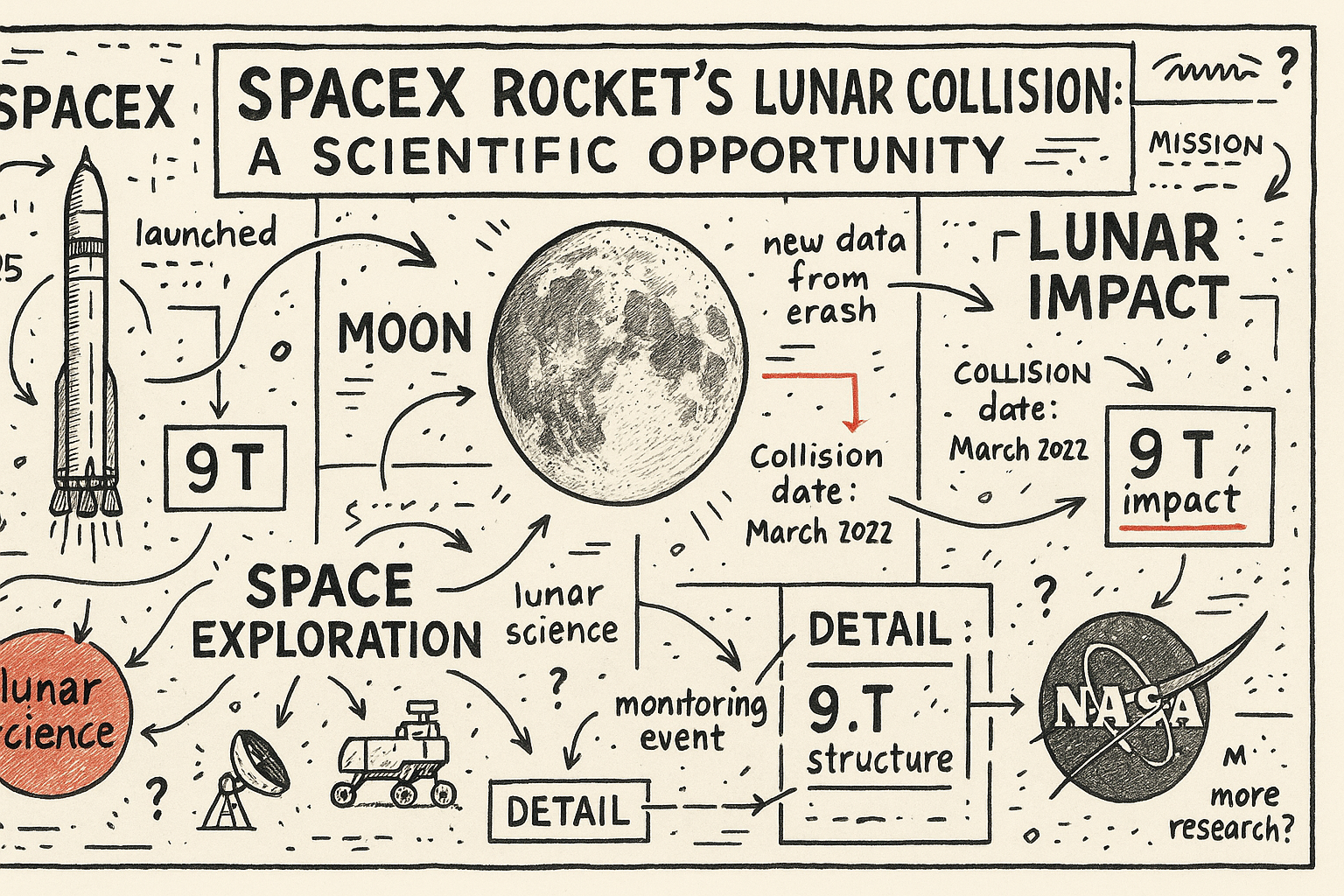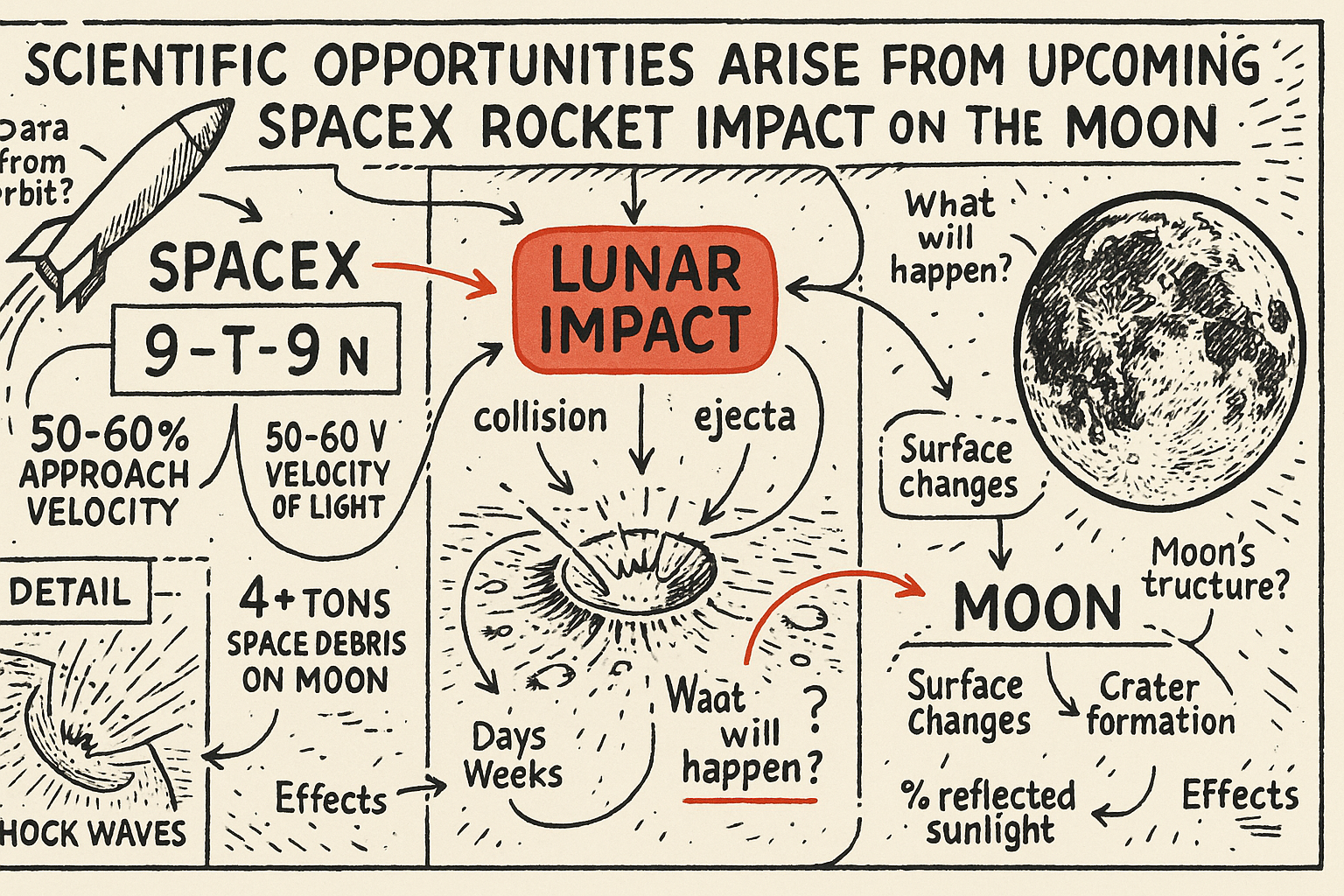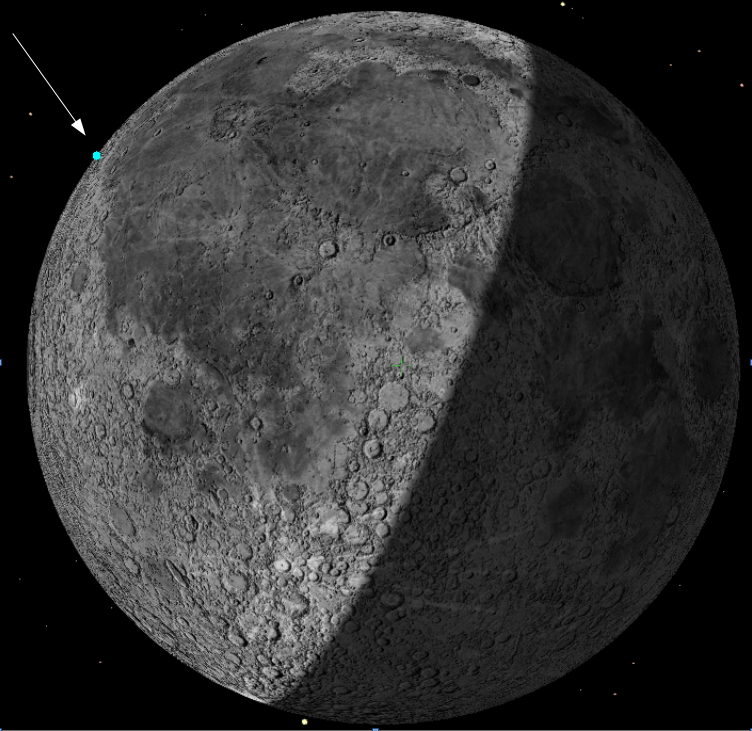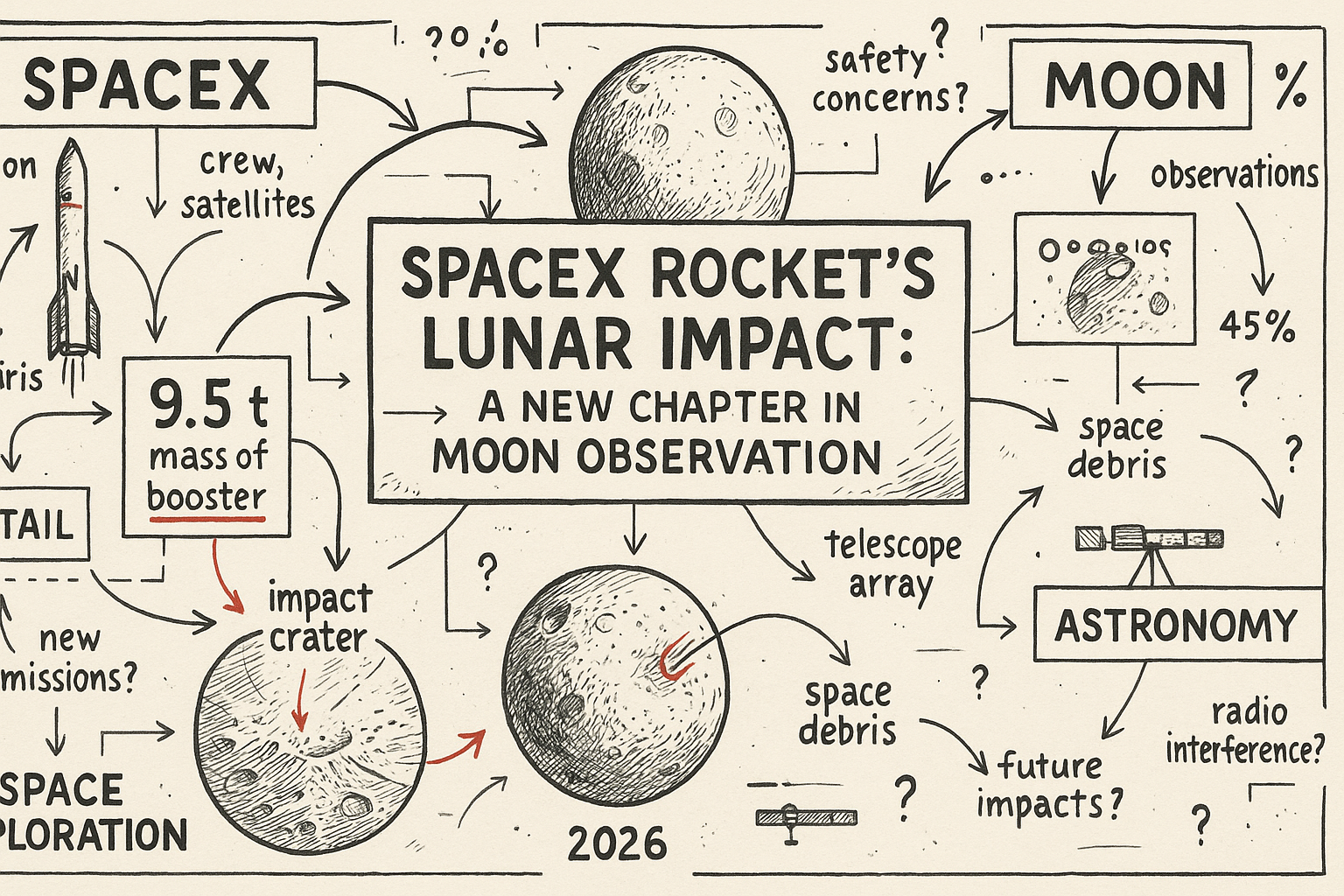
In the early hours of August 5, 2026, a unique celestial event is set to unfold as the second stage of a SpaceX Falcon 9 rocket is predicted to crash into the Moon's daylight side. This event, which has captured the attention of astronomers worldwide, promises to offer new insights into lunar impacts.
The Falcon 9 rocket, originally launched in January 2025, was tasked with delivering two commercial lunar landers: the United States' Firefly Blue Ghost-1 and Japan's ispace Hakuto-R Resilience. Since its launch, the rocket's trajectory has been meticulously tracked by Bill Gray, an independent astronomer known for his work in orbital dynamics and tracking software.
Gray's calculations, made public last September, indicated that the rocket stage would make a close encounter with the Moon on August 5, 2026. This prediction has prompted a coordinated effort among global observatories to capture the event. The potential for a visible flash upon impact, although unlikely, adds an element of anticipation to the observation efforts.
This impact is not just a spectacle; it is a scientific opportunity. The collision provides a chance to study the effects of impacts on the lunar surface, which can offer valuable data for future lunar missions. Understanding the dynamics of such impacts is crucial, especially as NASA and other space agencies plan to establish a more permanent presence on the Moon under programs like Artemis.
NASA's ongoing efforts to advance cislunar infrastructure, as part of its Artemis program, underscore the importance of understanding the Moon's environment. The agency's plans include deploying two maneuverable probes to lunar orbit to study the complex gravitational interactions in the region. These initiatives highlight the growing interest in lunar science and the strategic importance of the Moon as a stepping stone for deeper space exploration.
As telescopes around the world prepare to capture this unprecedented event, the scientific community eagerly awaits the data that will emerge from this accidental experiment. The impact of the Falcon 9 rocket stage on the Moon is a reminder of the intricate dance of celestial bodies and the opportunities for discovery that arise from seemingly routine space missions.