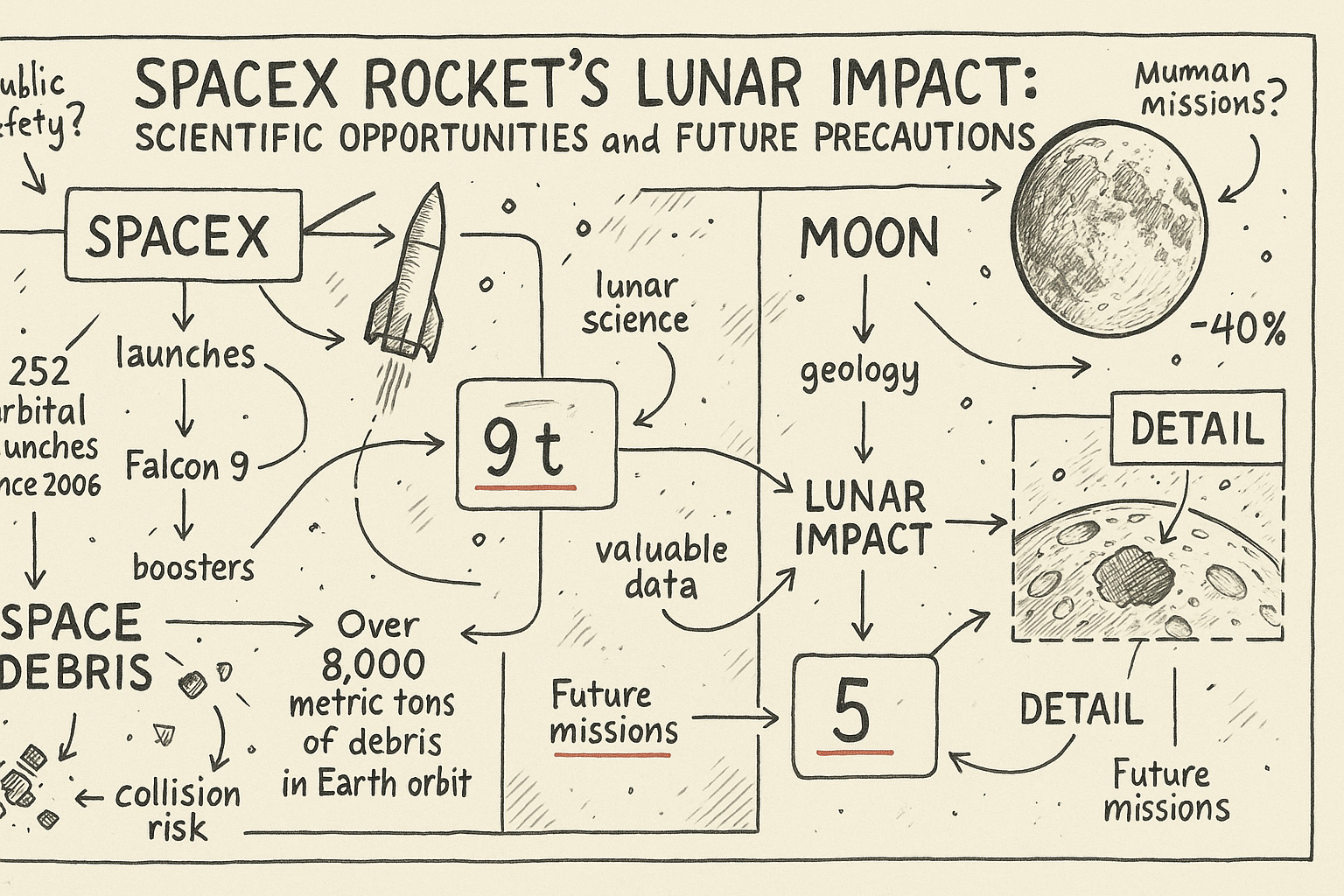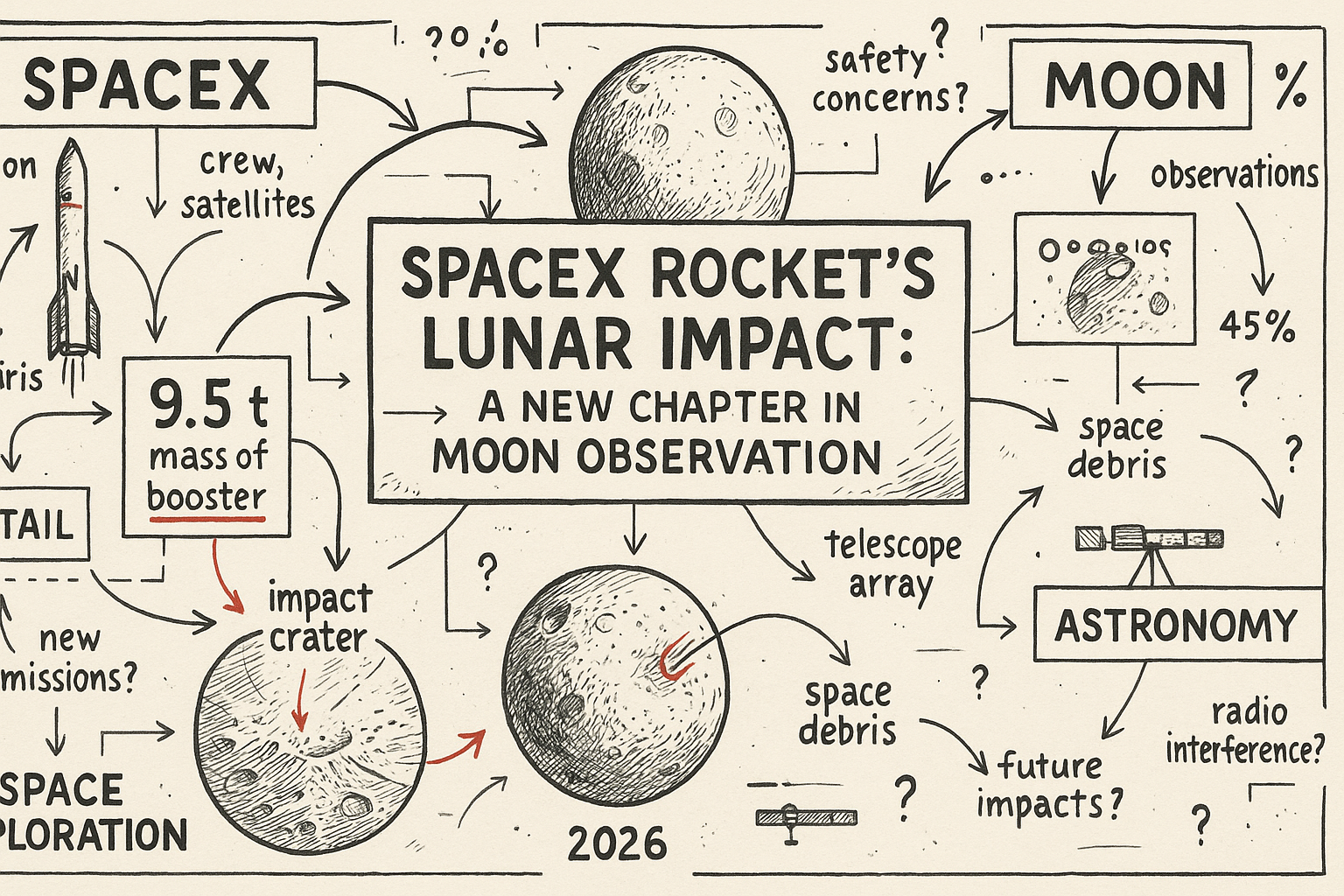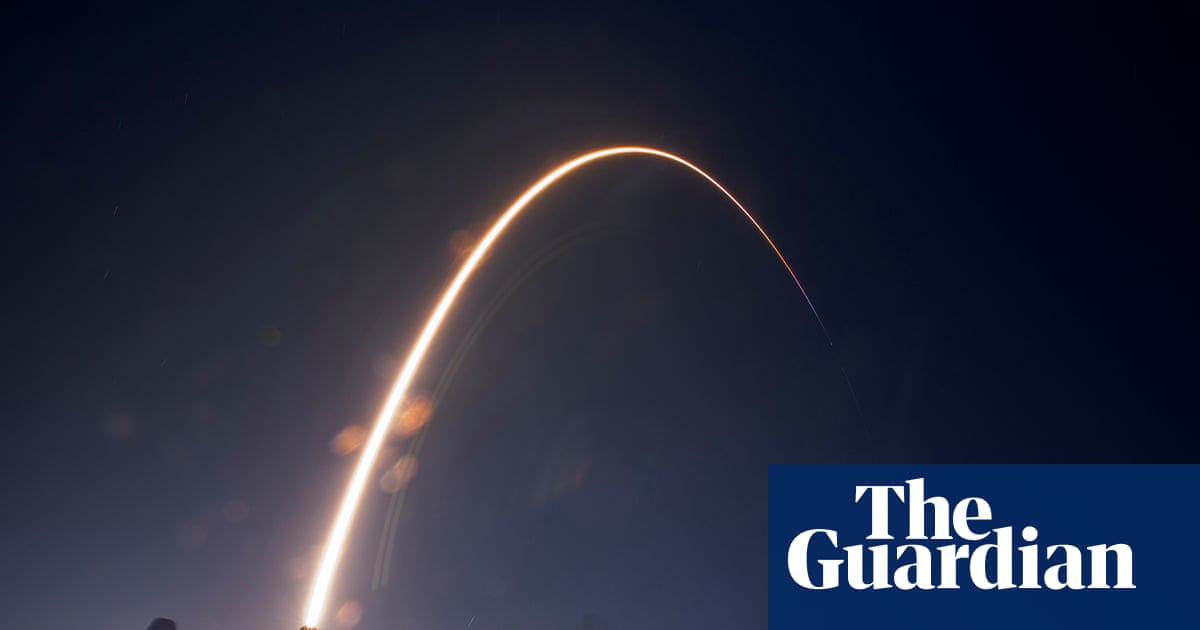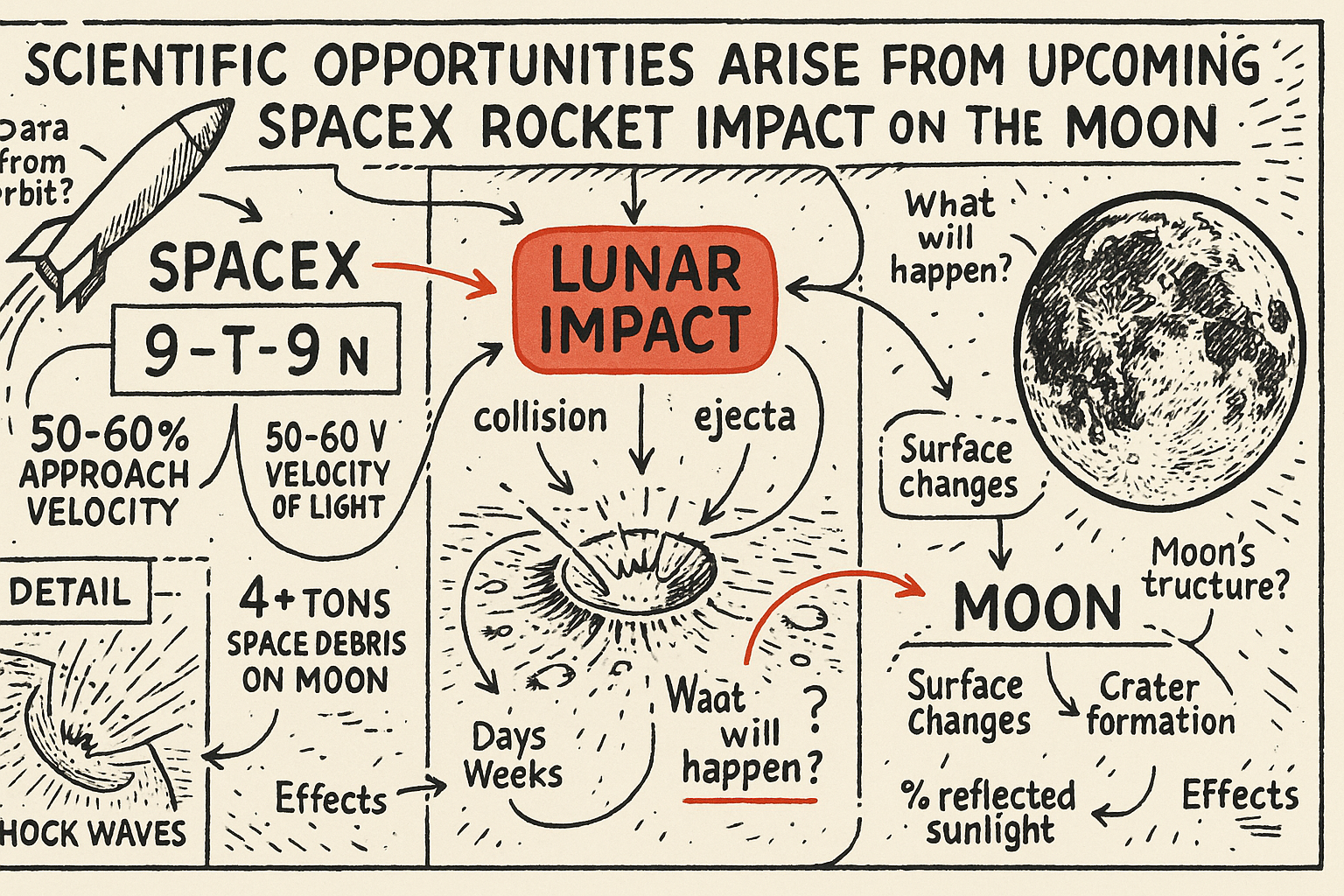
The upcoming impact of a SpaceX Falcon 9 rocket stage on the Moon, scheduled for August 5, 2026, presents a unique opportunity for scientific observation. The event is set to occur near the Einstein crater, with the rocket stage expected to strike the lunar surface at a speed of 8,700 km/h. This impact, while not unprecedented, is a rare occurrence that scientists are eager to study.
One of the key aspects of this event is the potential for direct observation. According to a report by Futura Sciences, the impact might be observable from certain locations on Earth, providing a unique opportunity for both professional and amateur astronomers to witness the event. The ability to observe such an impact directly is invaluable for scientists aiming to understand the effects of human-made impacts on the lunar surface.
William Jo and his team have created an animation predicting the evolution of the ejecta column density at the predicted impact site. This animation, along with other data, will help researchers analyze the impact's effects on the lunar surface. Such studies are crucial for understanding the Moon's geological history and the processes that have shaped its surface over billions of years.
In addition to the immediate scientific observations, this event ties into broader lunar research efforts. Recent studies, such as those involving the Chang'e-6 lunar samples, are reshaping our understanding of the Moon's history. These samples have provided new insights into the impact history of the Moon's far side, challenging previous notions about the timing and intensity of the Late Heavy Bombardment period. By comparing these new findings with data from the upcoming impact, scientists hope to gain a more comprehensive understanding of the Moon's geological past.
As the date approaches, scientists and space enthusiasts alike are preparing to make the most of this rare event. The impact not only offers a chance to study the Moon's surface but also serves as a reminder of the dynamic nature of our solar system and the ongoing interactions between human activity and celestial bodies. With the potential for new discoveries, the scientific community is eagerly anticipating the insights that this impact will bring.