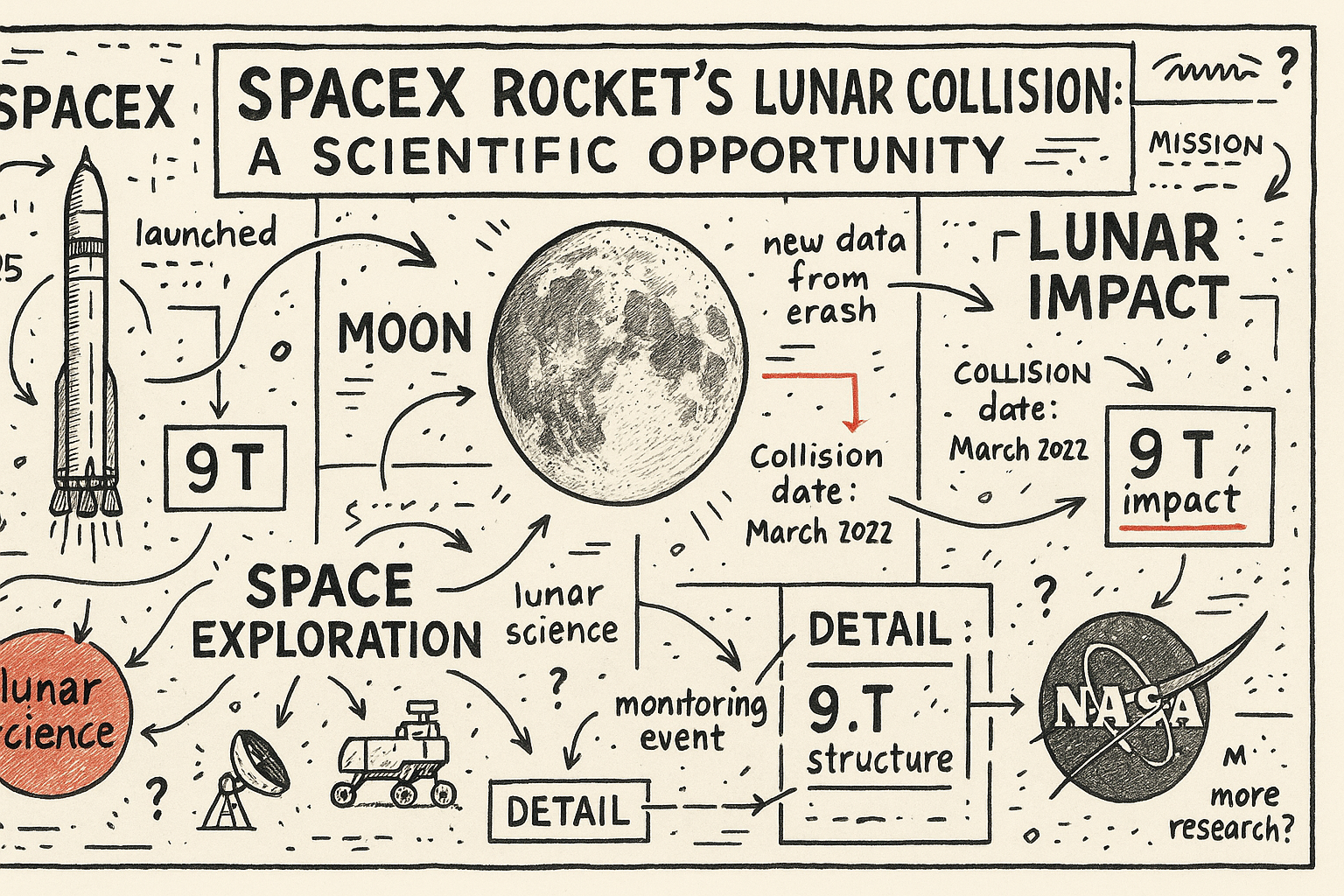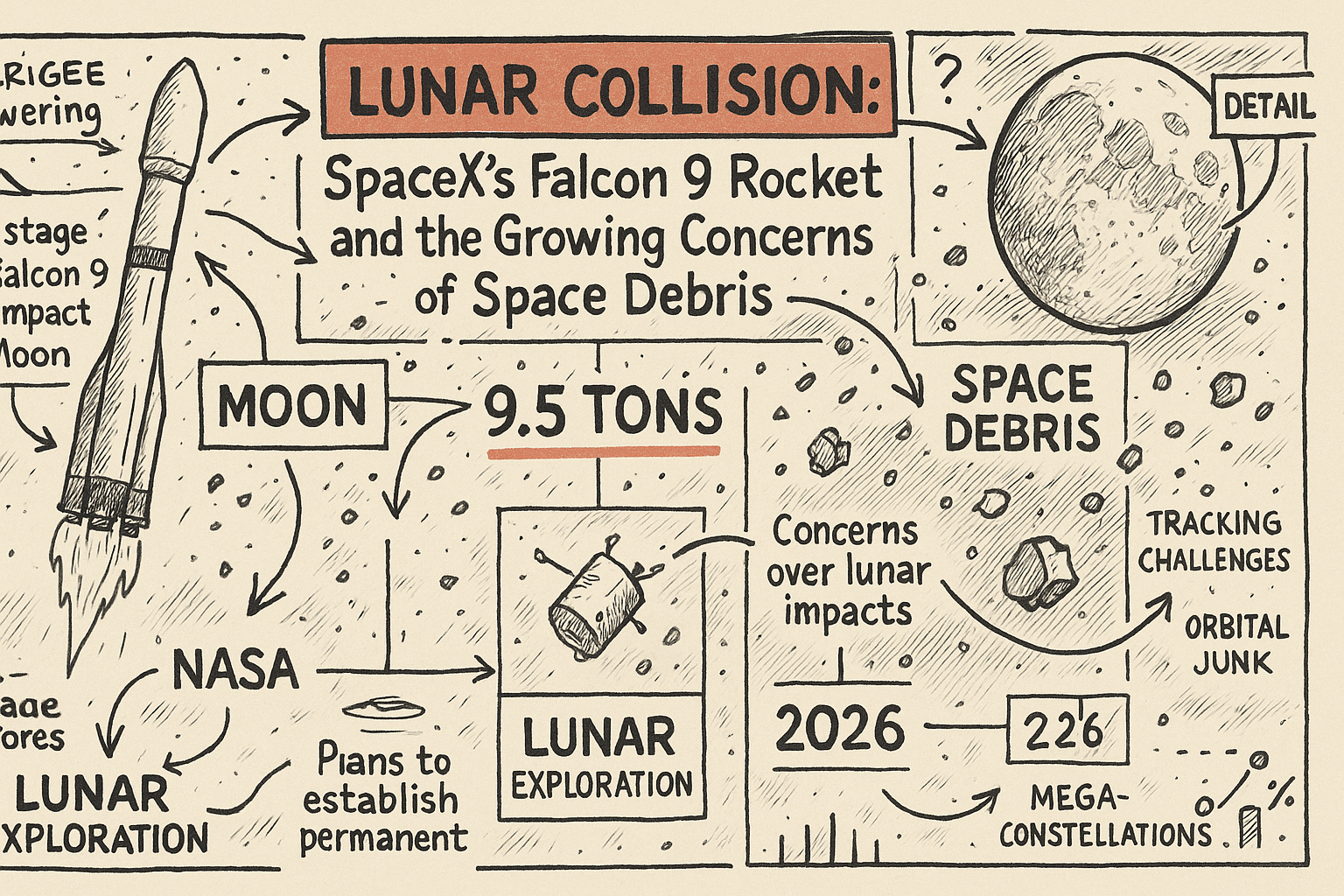
A piece of a SpaceX Falcon 9 rocket, weighing approximately four tonnes, has inadvertently collided with the moon, creating a new crater on the lunar surface. This event, occurring on August 5, 2026, was an unintended consequence of a 2025 mission, yet it offers a unique opportunity for scientific study.
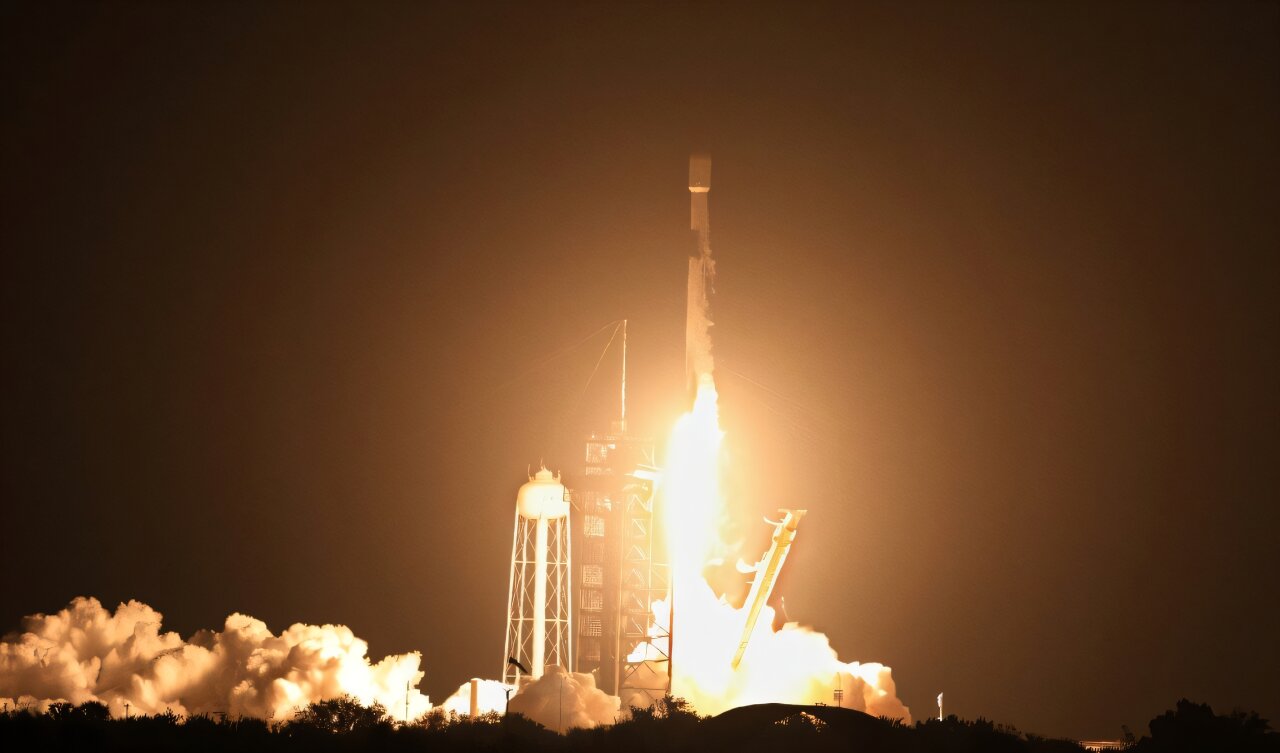
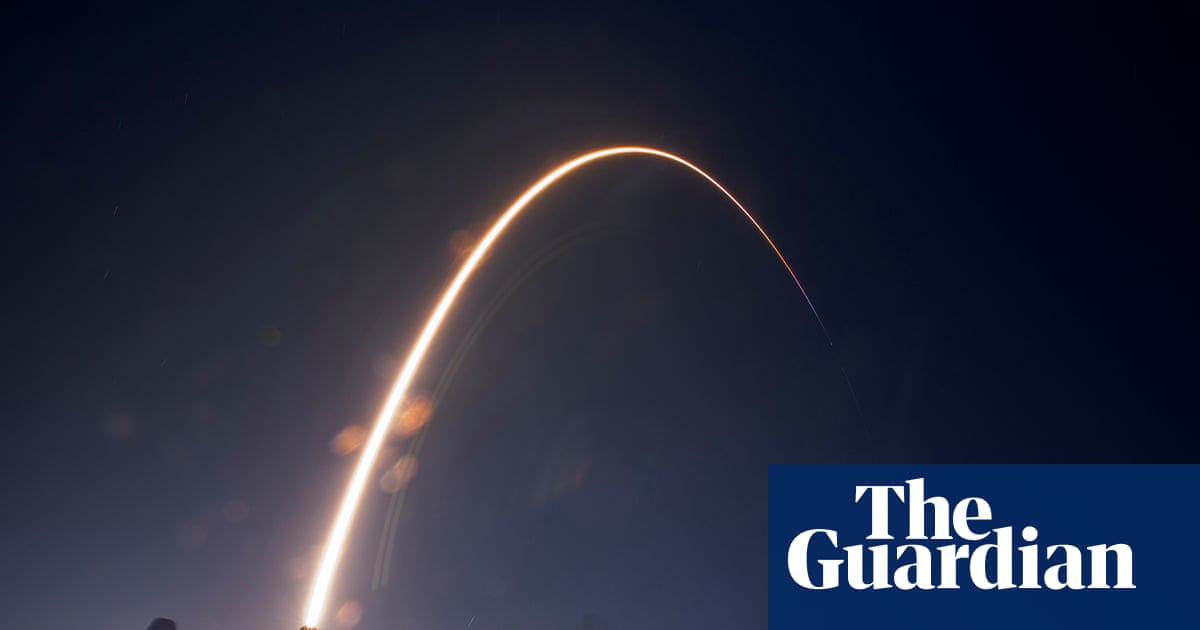
The Falcon 9 rocket, initially launched on January 15, 2025, had been tasked with sending a lunar lander from Firefly Aerospace towards the moon. However, the mission's requirements for reaching lunar orbit meant that more thrust was needed than typical Earth missions. Consequently, the rocket's second stage did not fall back to Earth but instead remained adrift in space. This stage has now crashed into the moon at an estimated speed of 5,400 mph (8,690 km/h).
The impact is believed to have occurred near the Einstein and Bell craters, a location that posed challenges for immediate visual confirmation from Earth. Despite the high velocity and the anticipated creation of a miles-long plume of lunar dust, observing the event in real-time was difficult due to its close proximity to the moon's edge as seen from Earth.
NASA has expressed interest in analyzing this incident to improve understanding of artificial impacts on the lunar surface. According to NASA spokesperson Jimi Russell, the impact is expected to form a crater approximately 60 feet (18 meters) wide and 12 feet (four meters) deep. The data collected from the event could provide valuable insights into the behavior of lunar dust and the mechanics of surface impacts.
This unintended impact is not a threat to Earth, but it highlights an ongoing issue with space debris. Rocket stages and other objects left in space after missions can pose risks to operational satellites and other space endeavors. Typically, rocket stages are designed to either burn up upon re-entry into Earth's atmosphere or fall into the ocean. However, missions requiring higher thrust, such as those targeting lunar orbits, can leave significant debris in space.
The incident opens up discussions about the potential scientific benefits of controlled impacts on the moon. Over millions of years, the moon has been bombarded with natural impacts, and studying these events has provided astronomers with a wealth of information. A controlled impact, albeit unintended, could allow for the collection of targeted data, contributing to our understanding of the moon's composition and the effects of impacts.
NASA plans to use ground-based telescopes and space-based assets to monitor the impact site and collect data. This will help refine techniques for tracking space debris and assessing its impact potential. The information gathered could also aid in the planning of future lunar missions, providing insights into the stability and composition of the lunar surface.
As space exploration activities increase, the management of space debris becomes more crucial. The incident underscores the need for effective tracking and management strategies for objects in orbit, especially as humanity's ambitions extend further into the solar system.
While this collision was not planned, the data derived from it could have significant implications for future missions and our understanding of lunar geology. As NASA and other space agencies continue to explore the moon, insights from events like these will be instrumental in shaping the future of space exploration.