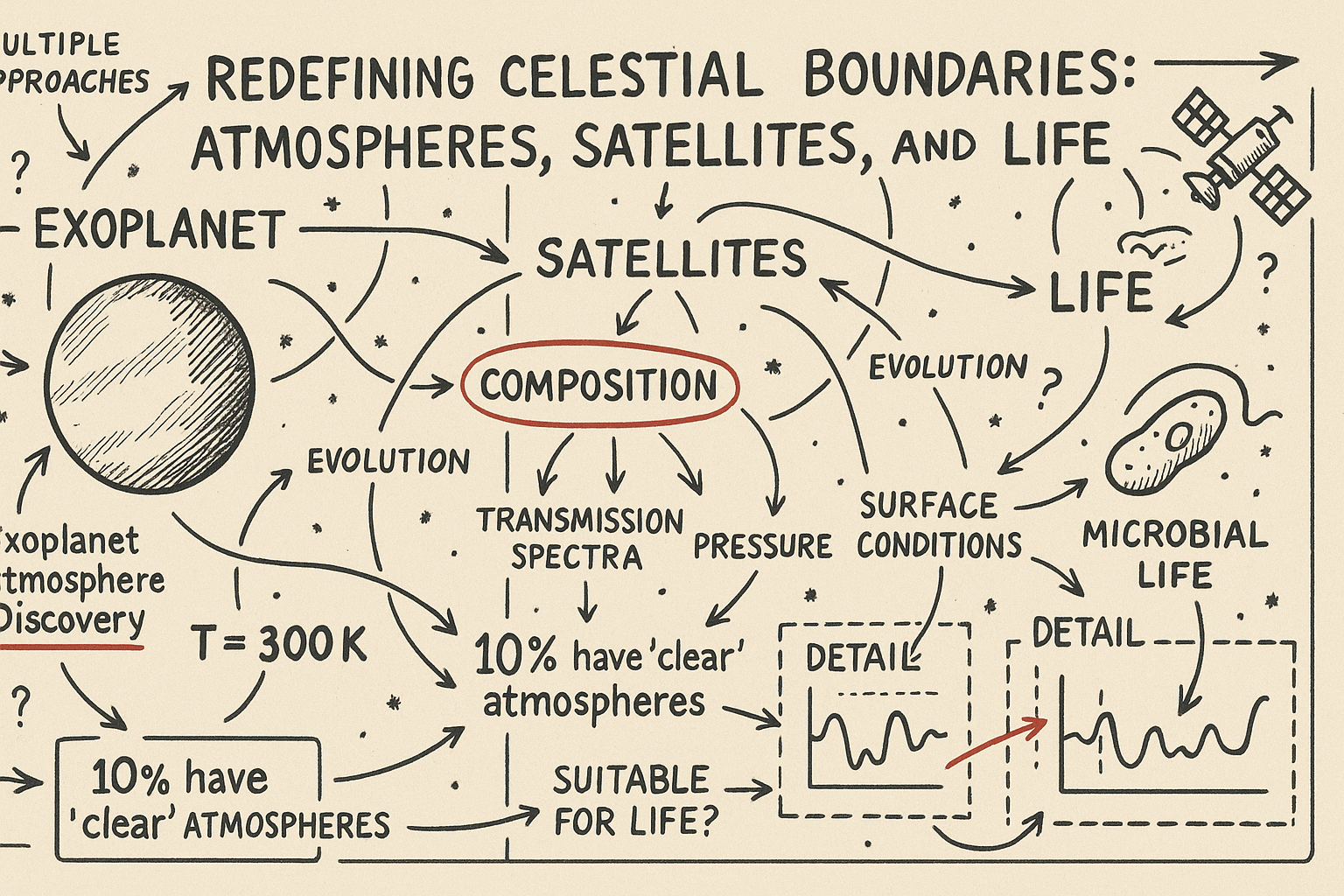
The cosmos continues to surprise astronomers with discoveries that challenge our understanding of planetary bodies and the potential for life beyond Earth. Recent findings present a tapestry of new insights, from the first confirmed atmosphere on a rocky planet in a habitable zone to the uncharted territory of exosatellites.
Atmospheric Evidence on LHS 1140 b
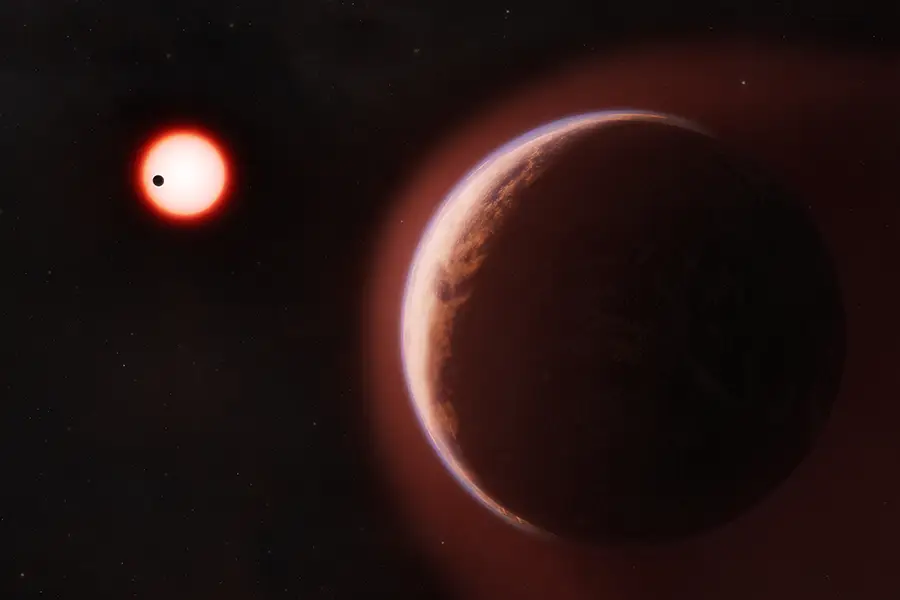
The discovery of an atmosphere around LHS 1140 b, a rocky exoplanet situated 48 light-years from Earth, marks a significant milestone in exoplanet research. For the first time, helium escaping from an exoplanet's atmosphere has been detected, suggesting a stable atmosphere that might have persisted for billions of years. This finding, reported by both Coelum and ScienceDaily, offers a promising site for future studies on habitability and atmospheric retention in exoplanets.
The First Exosatellite
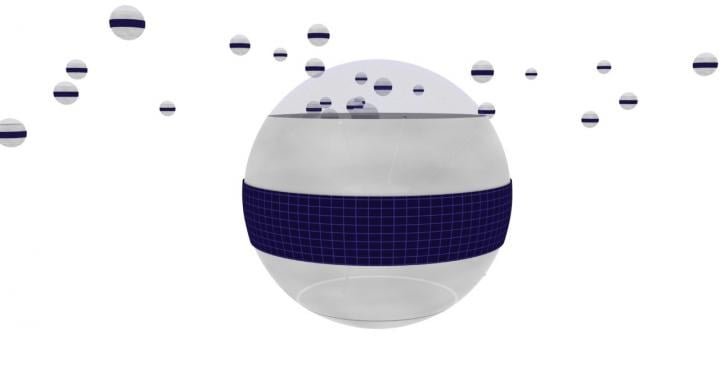
In an unexpected twist, astronomers using the Very Large Telescope have identified what appears to be the first 'exosatellite'—a gas giant orbiting not a planet, but a brown dwarf in the system CD-35 2722. This discovery, which has been tentatively classified as an 'exosatellite,' invites us to reconsider our definitions of celestial bodies. The implications are profound, as it suggests a hierarchical system that transcends traditional planet-moon dynamics, as detailed in Media INAF.
Microlensing: A New Method of Discovery
Adding to these groundbreaking developments is the unexpected discovery of an exoplanet through microlensing by TESS. Traditionally, TESS identifies exoplanets by observing transits, yet this time it detected a super-Jupiter through the gravitational lensing effect—a method more commonly associated with ground-based telescopes. This breakthrough, covered in Media INAF, showcases the potential of space telescopes in adopting new methodologies for exoplanet discovery.
Organic Molecules in Space
On the biochemical frontier, the identification of erythrose, a sugar molecule, in interstellar space suggests that the basic building blocks of life might be widespread in the universe. Detected near the center of the Milky Way, this finding from the Centro de Astrobiología supports theories that life's precursors could be seeded across planets, potentially accelerating the emergence of life.
Historical Context and Future Implications
The discoveries of atmospheric retention on rocky planets and the presence of complex organic molecules challenge the historical understanding of planetary systems established since the Copernican heliocentric model. As our definitions of planets and satellites evolve, so too do our strategies for exploring them. The potential for life beyond Earth continues to captivate scientists and the public alike, driving future missions and technological advancements.
Looking ahead, the changing landscape of exoplanet and satellite classification could influence how we prioritize targets for exploration. The ability to detect atmospheres and organic molecules remotely will likely shape the design of next-generation telescopes, such as the Extremely Large Telescope (ELT), anticipated to expand our observational capacities.