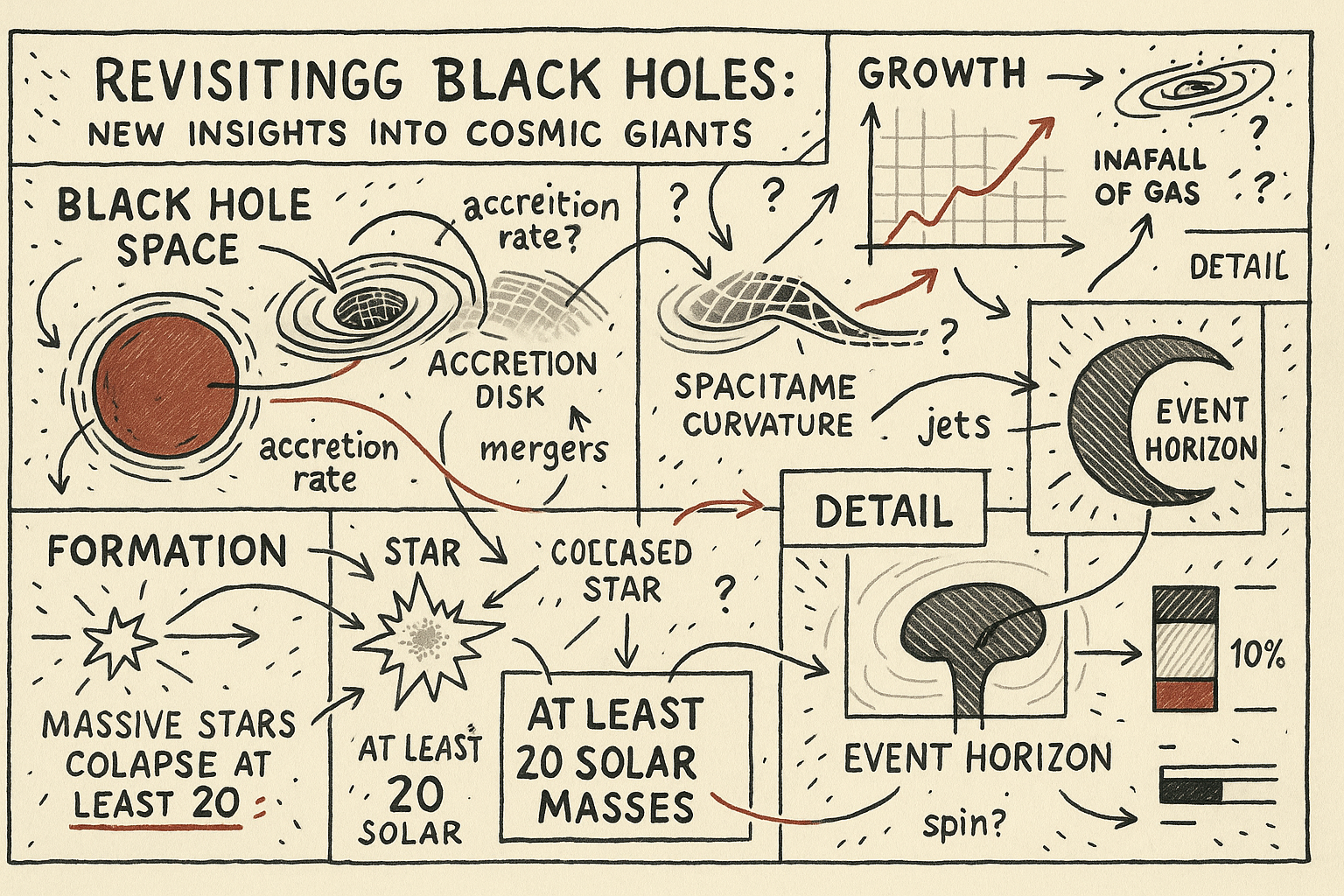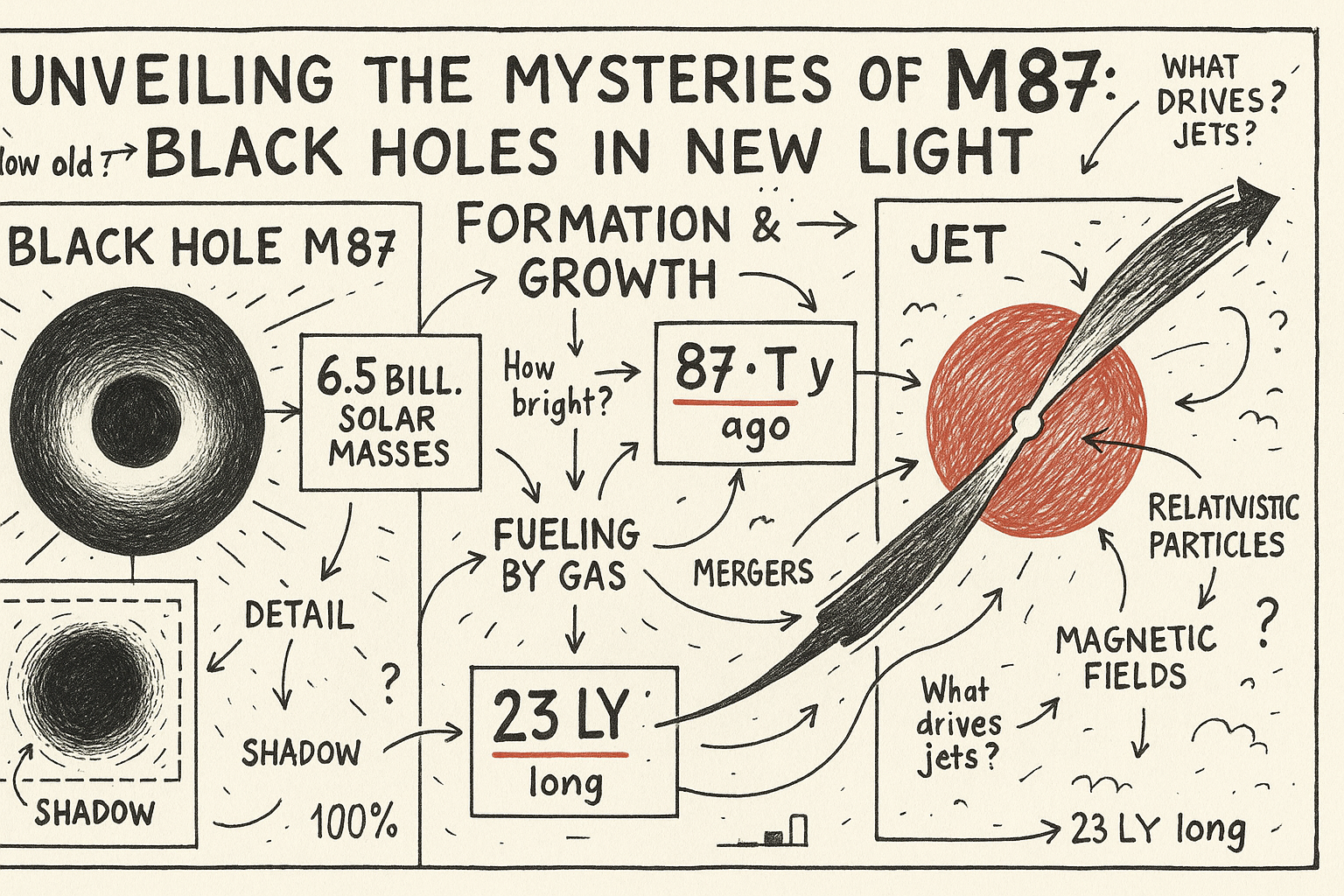
The universe’s most enigmatic entities, black holes, have long captivated scientists and the public alike. Recent advances in observational astronomy are providing unprecedented insights, particularly through the study of the supermassive black hole at the center of galaxy M87. This cosmic giant has been the focus of intense scrutiny, as new images and data reveal its stunning properties and deepen our understanding of black hole physics.
The Dawn of a New Observational Era
In 2019, the Event Horizon Telescope (EHT) collaboration announced a historic achievement—the first-ever image of a black hole, specifically the one at the center of M87. This groundbreaking image captured a glowing ring-like structure surrounding the black hole’s shadow, providing direct visual evidence of its existence. Fast forward to 2026, and researchers from the Shanghai Astronomical Observatory and their international partners have taken this discovery to new heights by conducting a spatially resolved dual-frequency spectral study using the EHT and the Global Millimeter VLBI Array (GMVA).
This dual-frequency imaging approach allows scientists to explore the physics of the black hole’s plasma with unprecedented detail. The results, as reported by multiple sources, have revealed new dimensions of the black hole’s structure and activity. By examining different frequencies, researchers can discern variations in the plasma surrounding the black hole, offering clues about the complex interactions at play.
Plasma Physics and Cosmic Jets
The study of black hole plasma physics has shown that these celestial bodies are far from static. The high-energy environment around M87’s black hole is characterized by intense magnetic fields and relativistic particles. These conditions generate powerful jets of particles that shoot out from the black hole at nearly the speed of light. NASA’s Chandra X-ray Observatory has provided the most detailed view yet of these relativistic jets, furthering our understanding of how such enormous structures can form and evolve.
These jets are not merely cosmic spectacles; they are crucial to the dynamics of their host galaxies. By redistributing energy and matter, they can influence star formation and galactic evolution. The sharp new X-ray images from Chandra have revealed intricate structures within the jets, offering hints about their composition and the magnetic fields driving them.
Black Holes as Cosmic Time Machines
In a nearby galaxy, a rapidly growing black hole is providing a glimpse into the universe's early days. This black hole exhibits characteristics akin to those expected in the early universe, with an unprecedented burst of radio emission. Such phenomena allow astronomers to study the processes that governed the growth of the first black holes, offering a window into a time when the universe was still forming its first stars and galaxies.
This connection between distant events and cosmic history is one of the most intriguing aspects of black hole research. It challenges our perceptions of time and space, suggesting that by studying these ancient objects, we can piece together the story of the universe itself.
The Surprising Role of Dual-Frequency Observations
One of the most counterintuitive insights from recent studies is the role that dual-frequency observations play in uncovering new aspects of black holes. While single-frequency images provide a snapshot of the black hole’s appearance, dual-frequency techniques reveal the dynamic processes that occur within its accretion disk and jets. This approach has highlighted the importance of multi-wavelength astronomy in painting a comprehensive picture of cosmic phenomena.
These advancements underscore the need for continued collaboration and innovation in astronomical research. As we push the boundaries of technology and observation, we inch closer to unraveling the mysteries of the universe’s most extreme environments.
In conclusion, the latest studies of the M87 black hole not only enhance our understanding of these enigmatic objects but also deepen our appreciation for the intricate tapestry of cosmic evolution. As technology advances, the secrets of black holes may one day be fully illuminated, offering profound insights into the nature of space, time, and the universe itself.