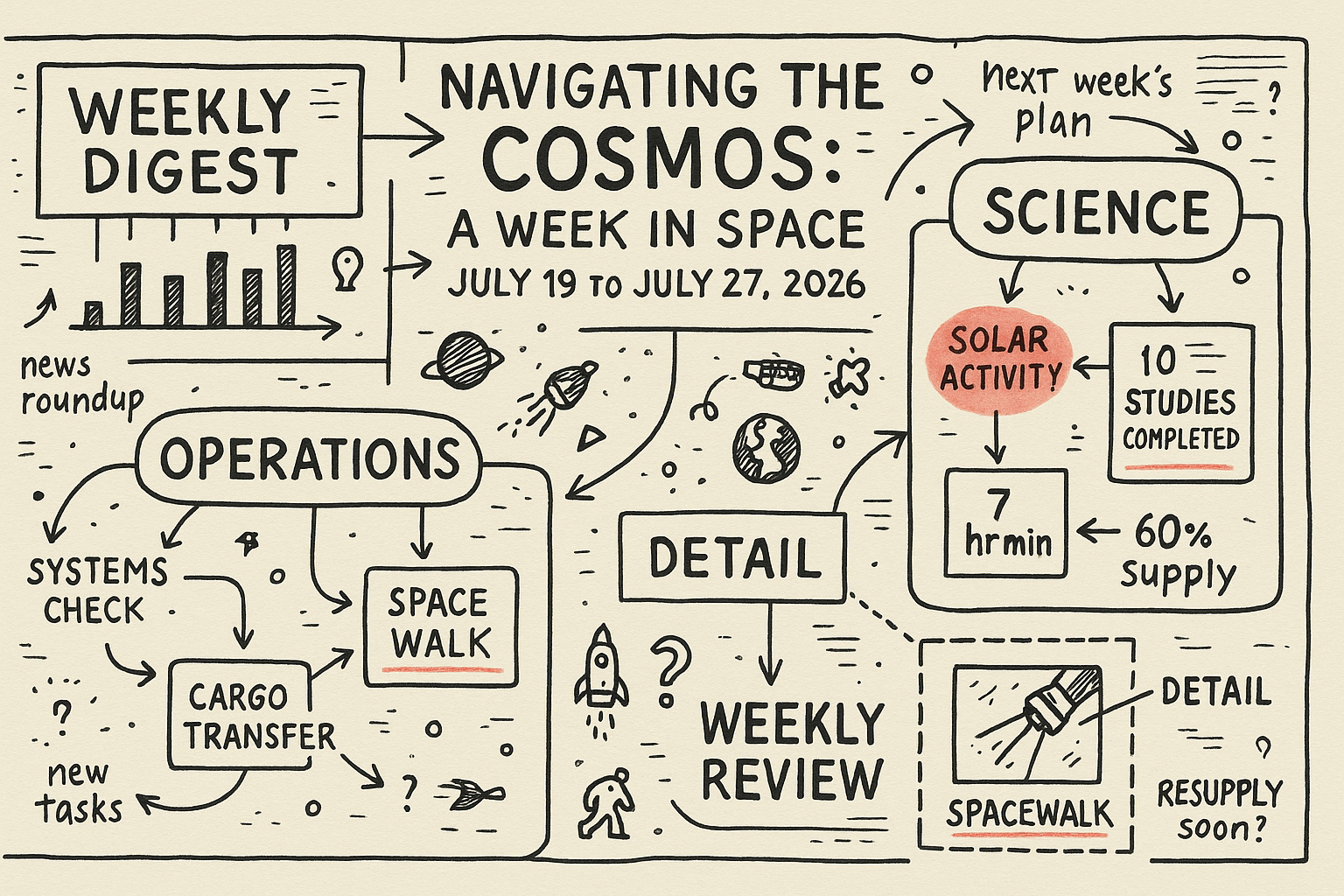
The cosmos was abuzz with activity this week, as the space community witnessed a blend of triumph and challenge. SpaceX's Starship, a cornerstone of modern space exploration, faced significant hurdles while continuing to forge a path for humanity's interstellar ambitions. Meanwhile, India's private sector made historic strides, marking a pivotal moment in the global space race. In tandem, groundbreaking scientific discoveries from NASA and other global missions enriched our understanding of the universe, propelling us into a future brimming with potential.
Launch Activity: Triumphs and Trials
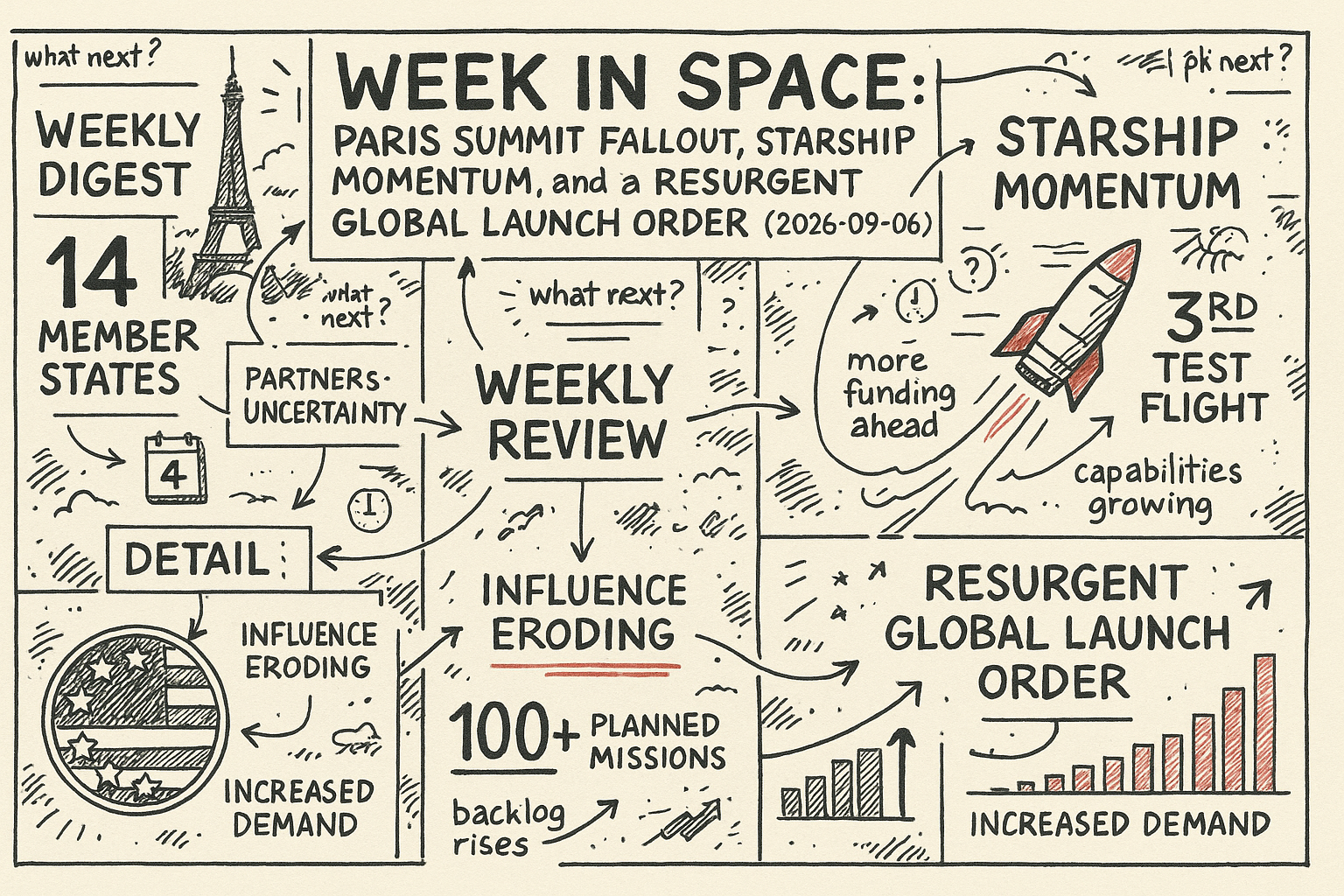
SpaceX's Starship, a vehicle designed to carry humans to Mars and beyond, encountered setbacks this week, as its 13th flight ended with a 'soft splashdown' in the Indian Ocean. This was a critical test of its landing capabilities, setting the stage for future innovations in space travel. Despite the challenges, SpaceX remains undeterred, with plans for a daring tower catch on Flight 14, aiming to further refine its landing processes. This ambitious step underscores SpaceX's relentless pursuit of excellence, which remains pivotal as it collaborates with NASA on the Artemis III mission to upgrade Starlink communications, enhancing lunar mission capabilities.
Beyond SpaceX, the global launch scene continued to evolve. Skyroot Aerospace's Vikram-1 launch marked India's first private orbital flight, a historic milestone that underscores the rapid expansion of India's private space sector. This achievement is not just a testament to Skyroot's innovation but also highlights the competitive and dynamic landscape of the global space industry. As India’s Department of Space grapples with talent retention challenges amidst this boom, it becomes clear that the interplay between public and private sectors will shape the future of space exploration in the region.
Exploration & Science: Unveiling the Cosmos
This week was also rich with discoveries that promise to reshape our understanding of the universe. NASA's Psyche mission, en route to a metal-rich asteroid, successfully completed a flyby of Mars, capturing stunning images and crucial data. This maneuver not only allowed for vital instrument calibration but also served as a prelude to the mission’s ultimate goal of exploring the asteroid Psyche, a potential key to understanding planetary cores.
Meanwhile, the James Webb Space Telescope (JWST) continued to push the boundaries of cosmic exploration. New findings from JWST revealed insights into the growth of a supermassive black hole amidst a network of young galaxies, offering a glimpse into the universe's formative years. These discoveries challenge existing models of galaxy evolution and underscore the telescope's pivotal role in unveiling the mysteries of the early universe.
In our own galaxy, astronomers using light echoes have suggested that the Milky Way's outer spiral arms extend further than previously thought. This revelation about our home galaxy's structure adds a new layer to our understanding of cosmic architecture, hinting at the dynamic processes that have shaped the Milky Way over billions of years.
Industry & Policy: Navigating New Frontiers
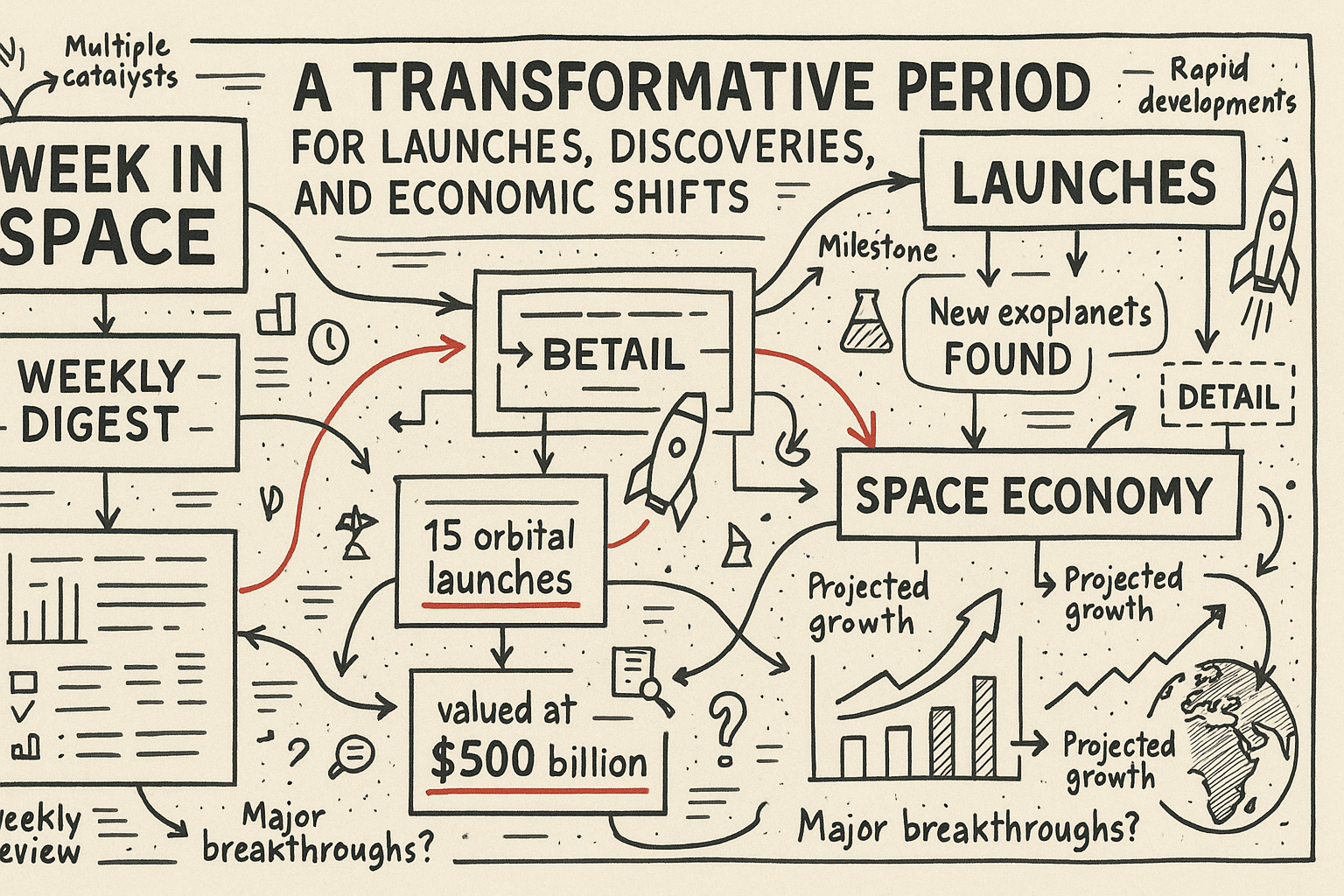
In the realm of industry and policy, the space economy continues to be a focal point of transformative change. The Federal Communications Commission (FCC) took significant steps by streamlining its satellite spectrum licensing process. This reform aims to bolster the commercial space economy, facilitating more efficient and competitive satellite deployment. This move aligns with the broader trend of increasing investment in satellite technology, which reached a record $8.1 billion in the first half of 2026. This surge is driven by major deals in radar-imaging and industrial artificial intelligence, highlighting the growing importance of satellite capabilities in both commercial and governmental applications.
On the international stage, Mauritius joined the Artemis Accords as the 70th signatory, reinforcing global commitments to peaceful and collaborative space exploration. This addition reflects the increasing international collaboration essential for addressing the myriad challenges and opportunities presented by space exploration.
Forward Look: Anticipating the Next Leap
As we look ahead, several key developments are poised to capture the spotlight in the coming weeks. The anticipated impact of a SpaceX Falcon 9 upper stage on the Moon on August 5 promises to provide unprecedented observational opportunities, potentially yielding new insights into lunar science. Furthermore, the ongoing advancements in AI-driven technologies, like those being developed by LegendSpace for rocket engine optimization, indicate a future where space technology development cycles are significantly shortened, enhancing our capability to explore and utilize space resources.
The intersection of scientific discovery, technological innovation, and international policy continues to define the narrative of space exploration. As we navigate these dynamic frontiers, the collaborative efforts of nations, private enterprises, and scientific communities will be crucial in crafting a sustainable, inclusive, and expansive future in space. Stay tuned as we continue to chart this incredible journey into the cosmos.