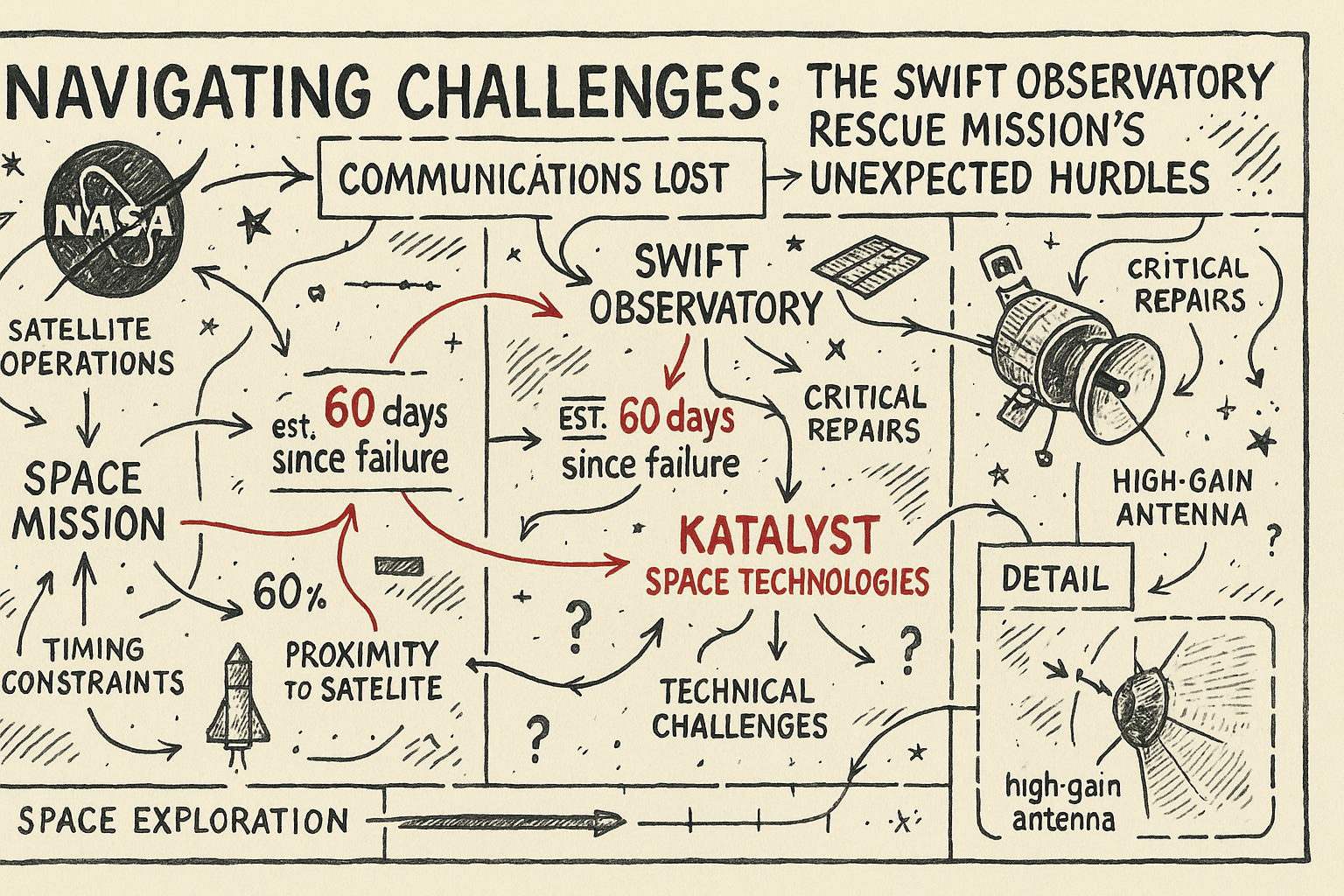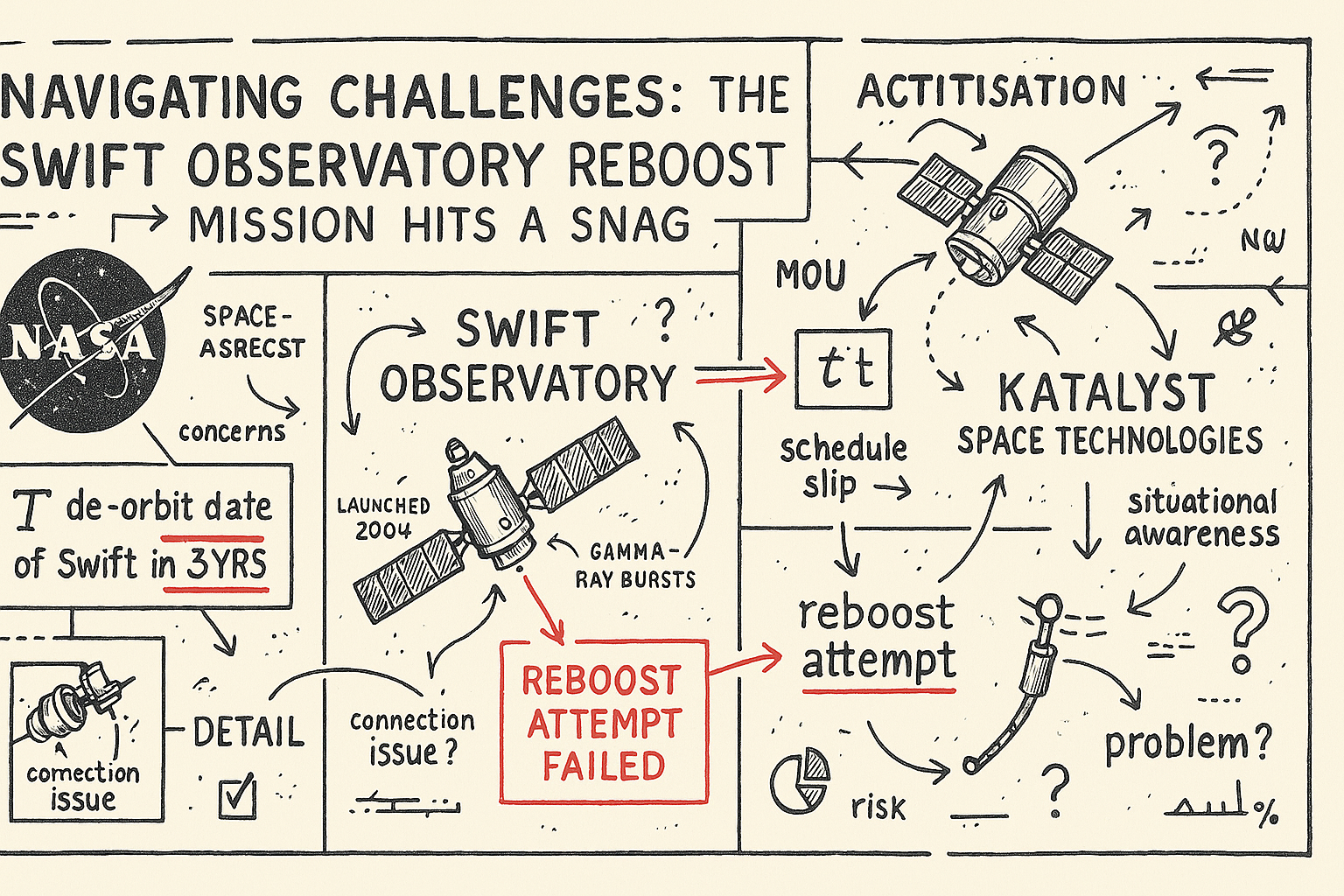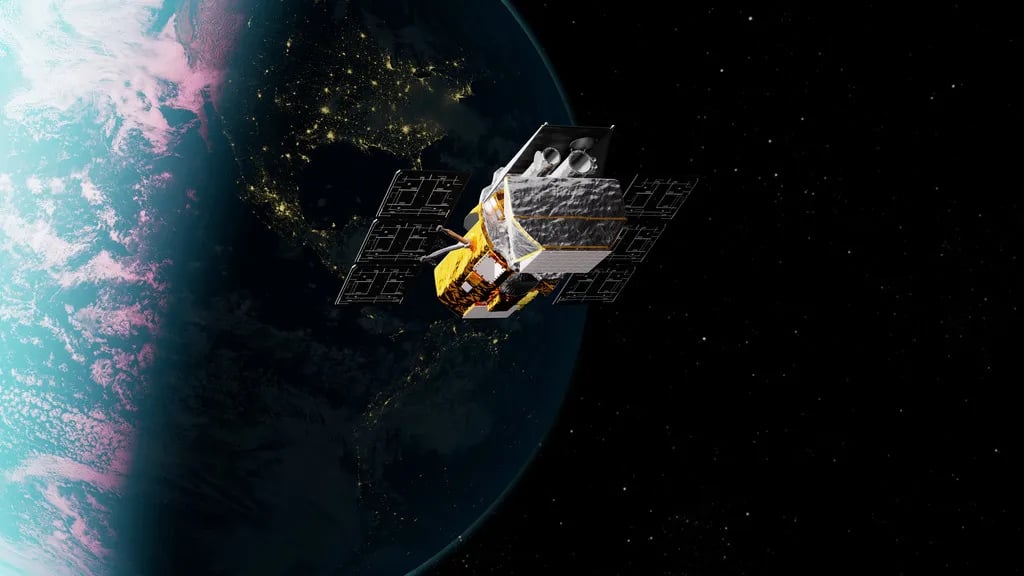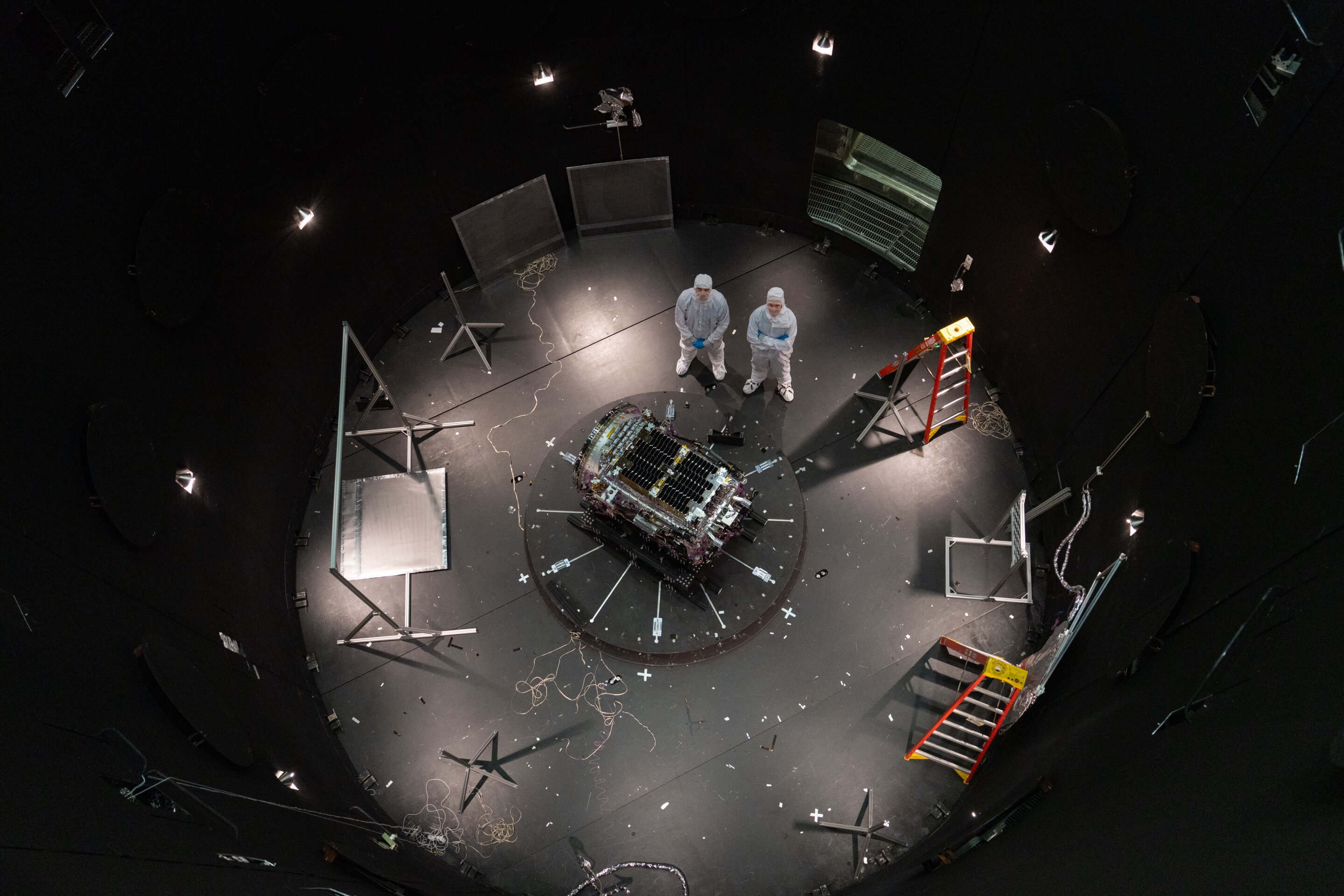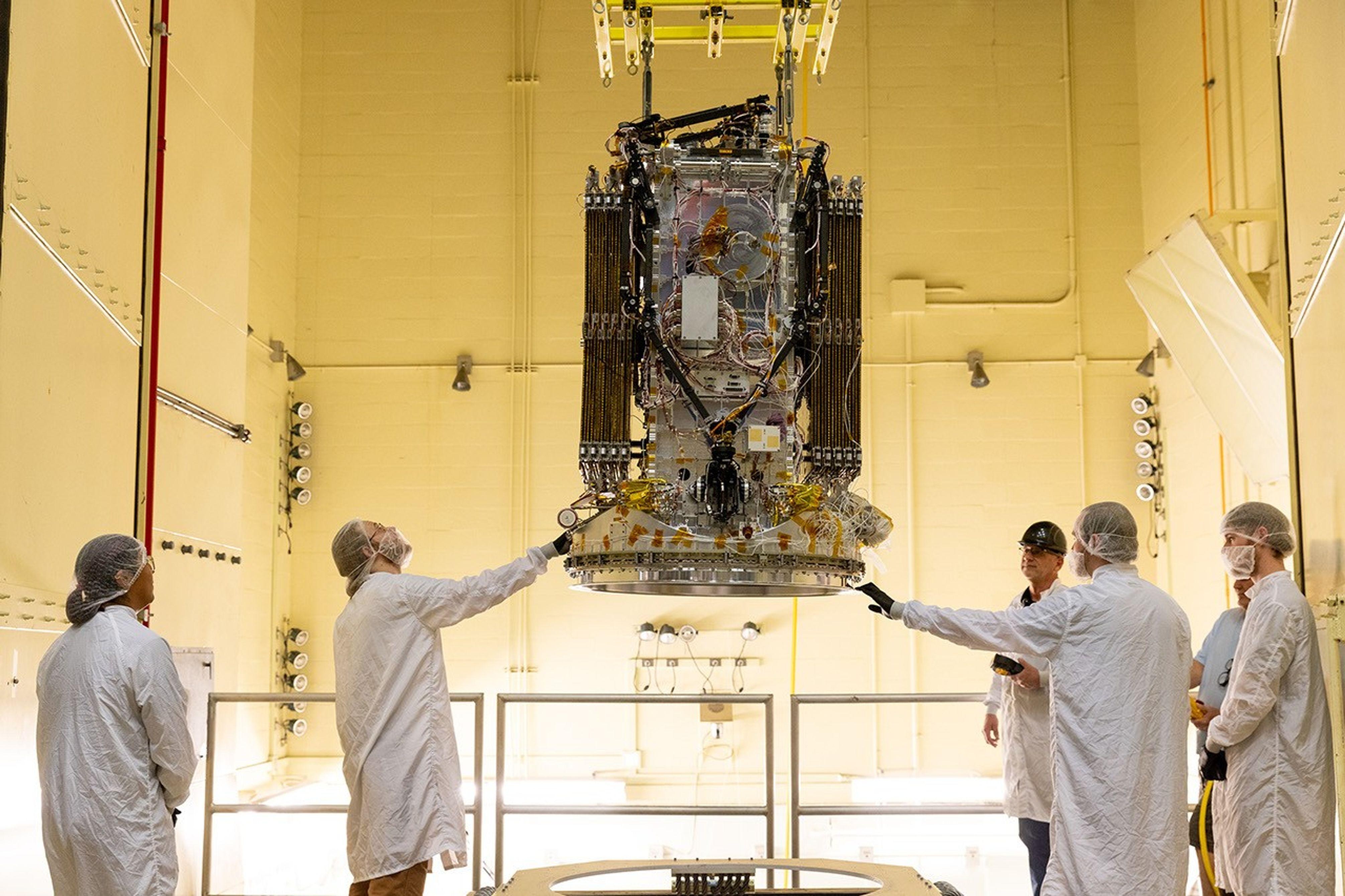
In a bold effort to preserve a vital astronomical tool, NASA has embarked on an emergency mission to rescue the Neil Gehrels Swift Observatory, a satellite that has been crucial in studying gamma-ray bursts for over two decades. The observatory, which lacks its own propulsion system, has been slowly descending in orbit due to atmospheric drag, exacerbated by heightened solar activity. This mission, launched on July 3, 2026, involves a robotic spacecraft named LINK, designed by Katalyst Space Technologies, which will attempt to boost the observatory's orbit to prevent its re-entry into Earth's atmosphere.
The Challenge of Space Debris
In recent years, the problem of space debris has become more pronounced, with orbit becoming increasingly crowded with defunct satellites and fragments. According to the European Space Agency, more than 1.2 million pieces of debris larger than one centimeter orbit the Earth, each posing a significant risk of collision. The Swift Observatory, launched in 2004, has been slowly descending due to atmospheric drag, a natural process for satellites in low-Earth orbit. The situation was further aggravated by the solar maximum in 2024, a period of intense solar activity that increased atmospheric drag on the satellite.
The LINK Mission
To address this urgent issue, NASA awarded a $30 million contract to Katalyst Space Technologies to develop the LINK spacecraft. The mission was executed with impressive speed, coming together in just nine months. LINK, a 880-pound robotic spacecraft, was launched aboard Northrop Grumman's Pegasus XL rocket, which was deployed from a Stargazer airplane that took off from the Marshall Islands. The mission aims to elevate Swift's orbit by approximately 150 miles, from its current altitude of 224 miles.
The operation involves LINK capturing the Swift Observatory and gradually raising its orbit over several months. The mission is complex, requiring precise maneuvers to dock with a satellite that was not originally designed for servicing. Previous successful missions by Northrop Grumman, using their Mission Extension Vehicles, have demonstrated the feasibility of such operations, bolstering confidence in the current mission.
Significance of the Swift Observatory
The Neil Gehrels Swift Observatory has been instrumental in the study of gamma-ray bursts, the universe's most powerful explosions. These bursts offer insights into extreme cosmic events such as the formation of black holes and neutron star collisions. By swiftly repositioning to capture these fleeting phenomena, Swift has significantly advanced our understanding of the early universe.
Shawn Domagal-Goldman, director of NASA’s astrophysics division, emphasized the importance of the mission, noting the unique capabilities of the Swift Observatory to quickly pivot across the night sky, metaphorically finding “things that go boom in the night.” This capability underscores the decision to save the observatory amidst the challenging conditions.
Future Implications
The successful execution of the LINK mission could pave the way for more frequent satellite servicing missions, potentially extending the lifespan of numerous aging satellites and mitigating the growing issue of space debris. As space becomes more congested, the ability to service and deorbit satellites safely will be crucial for sustainable space exploration and utilization.
As this mission unfolds, it serves as a reminder of the ingenuity and rapid innovation required to tackle the challenges of an increasingly cluttered orbital space. The collaboration between NASA, Katalyst Space Technologies, and Northrop Grumman exemplifies the potential of public-private partnerships in advancing space technology and addressing critical issues in space exploration.