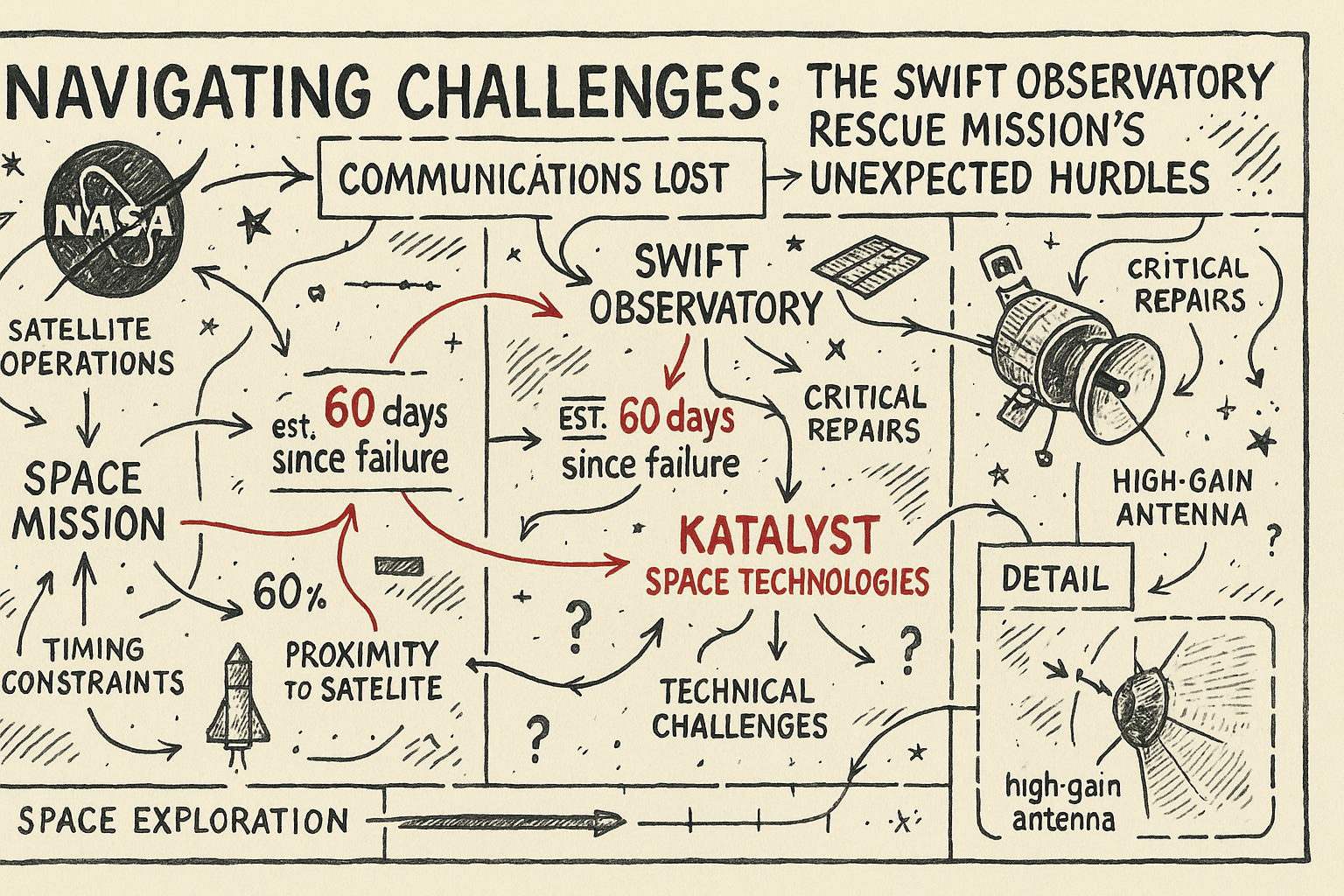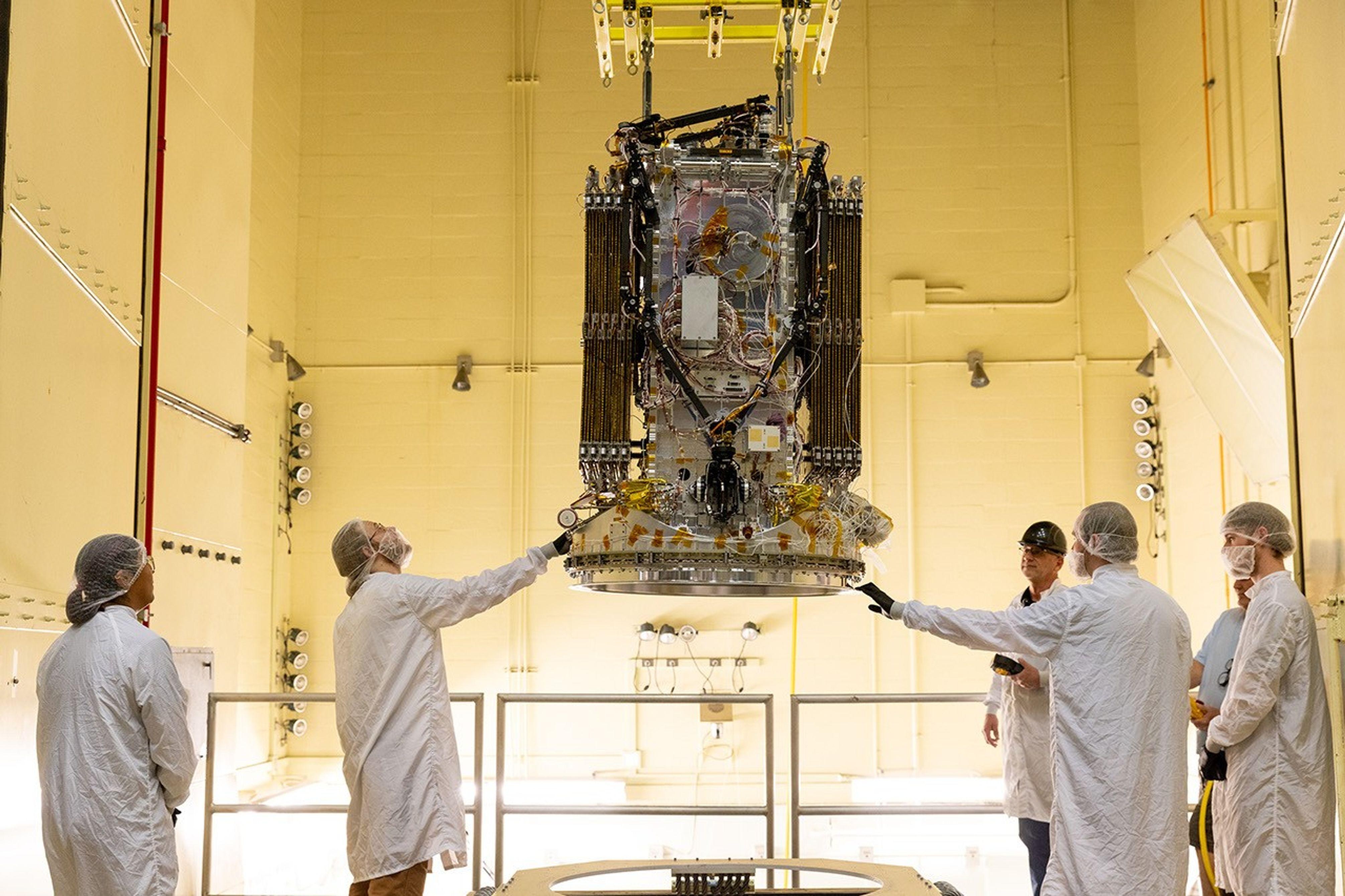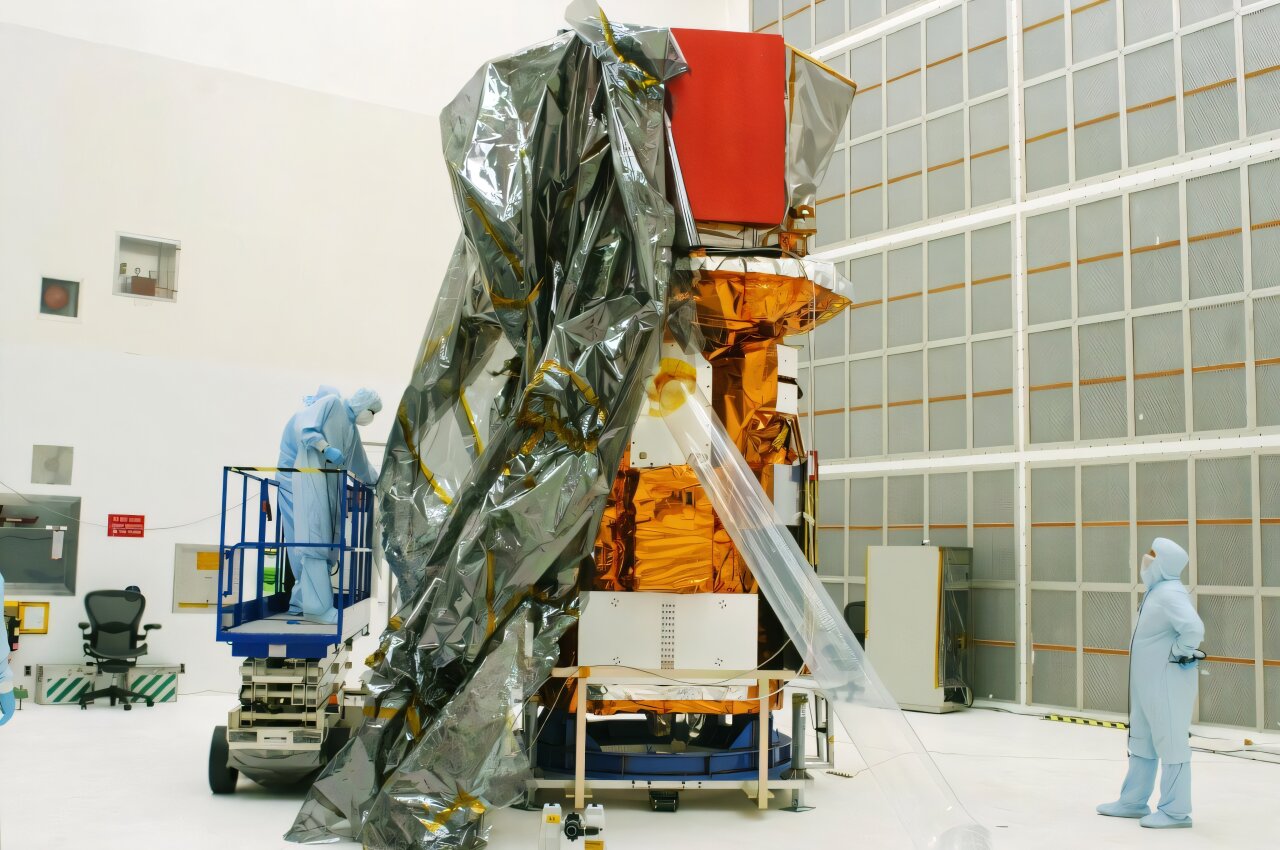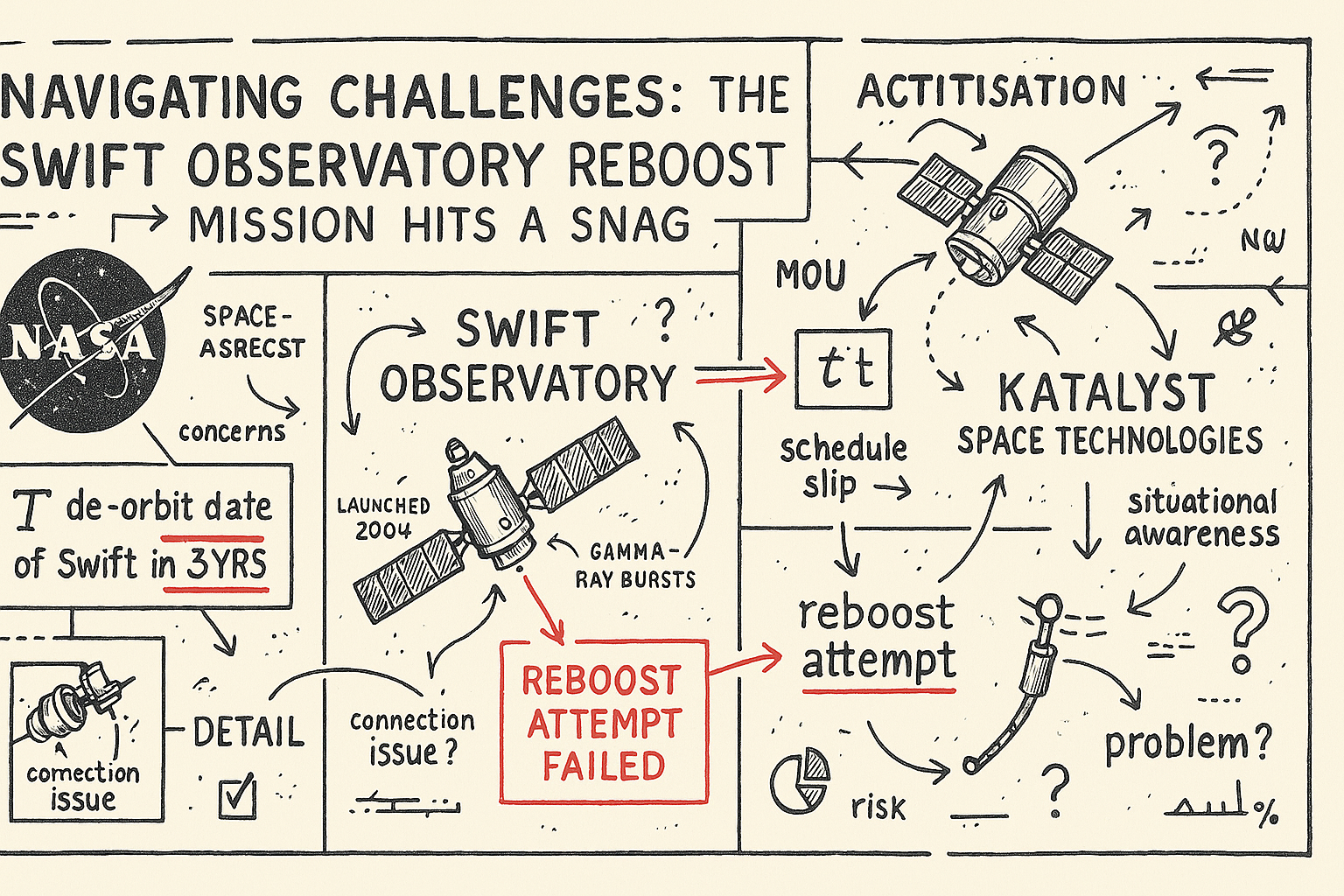
The ambitious mission to extend the operational life of NASA's Neil Gehrels Swift Observatory has encountered a significant hurdle. Katalyst Space Technologies, the private company contracted by NASA, is grappling with technical difficulties in its LINK spacecraft, which was launched on July 3, 2026, to reboost the aging observatory's orbit.
The Swift Observatory, renowned for its gamma-ray burst studies since 2004, is facing an accelerated orbital decay due to heightened solar activity. To prevent its atmospheric re-entry, NASA enlisted Katalyst Space to develop a method to elevate Swift's orbit. However, the mission has hit a snag as the LINK spacecraft entered a multi-axis spin, disrupting its communication capabilities and posing a threat to the mission's success.
Technical Setbacks
The problems began when two of the three reaction wheels, crucial for maintaining the spacecraft's orientation, failed. Compounding the issue, one of the spacecraft's thruster systems also experienced malfunctions. This combination led to the spacecraft's uncontrollable spin, which has persisted for over 72 hours. The spin resulted in a temporary loss of communication and a subsequent bus reset, though other systems, including S-band and L-band communications, remain operational.
Despite these challenges, Katalyst Space Technologies remains hopeful. The company is working diligently to stabilize the spacecraft using backup systems. The success of these efforts is crucial, as the LINK spacecraft must attach itself to the Swift Observatory to perform the reboost maneuver and prevent its premature descent into the Earth's atmosphere later this year.
High Stakes and Innovation
This mission marks the first time NASA has outsourced the task of lifting one of its space telescopes to a higher orbit to a private company. The decision underscores a growing trend of collaboration between public space agencies and private enterprises, leveraging the latter's innovation and agility to tackle complex space challenges.
For Katalyst Space Technologies, this mission is a high-stakes endeavor that could set a precedent for future collaborations in space infrastructure maintenance. The company's ability to overcome the current technical difficulties will not only determine the fate of the Swift Observatory but also influence the future of private-public partnerships in space exploration.
As the situation develops, both NASA and Katalyst are closely monitoring the spacecraft's status, ready to make critical decisions on the mission's continuation. The outcome remains uncertain, but the efforts to stabilize the LINK spacecraft are a testament to the resilience and ingenuity driving modern space exploration.