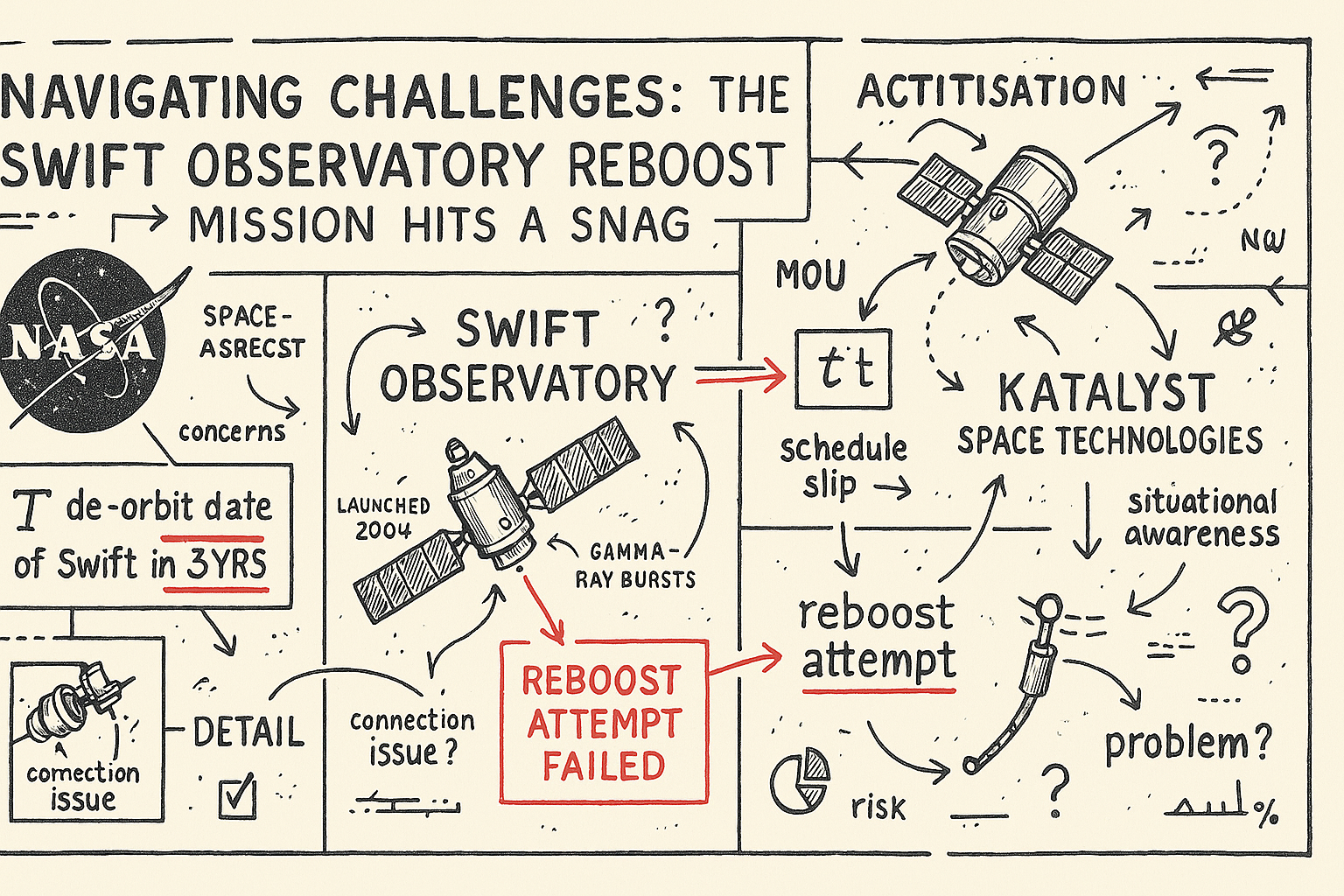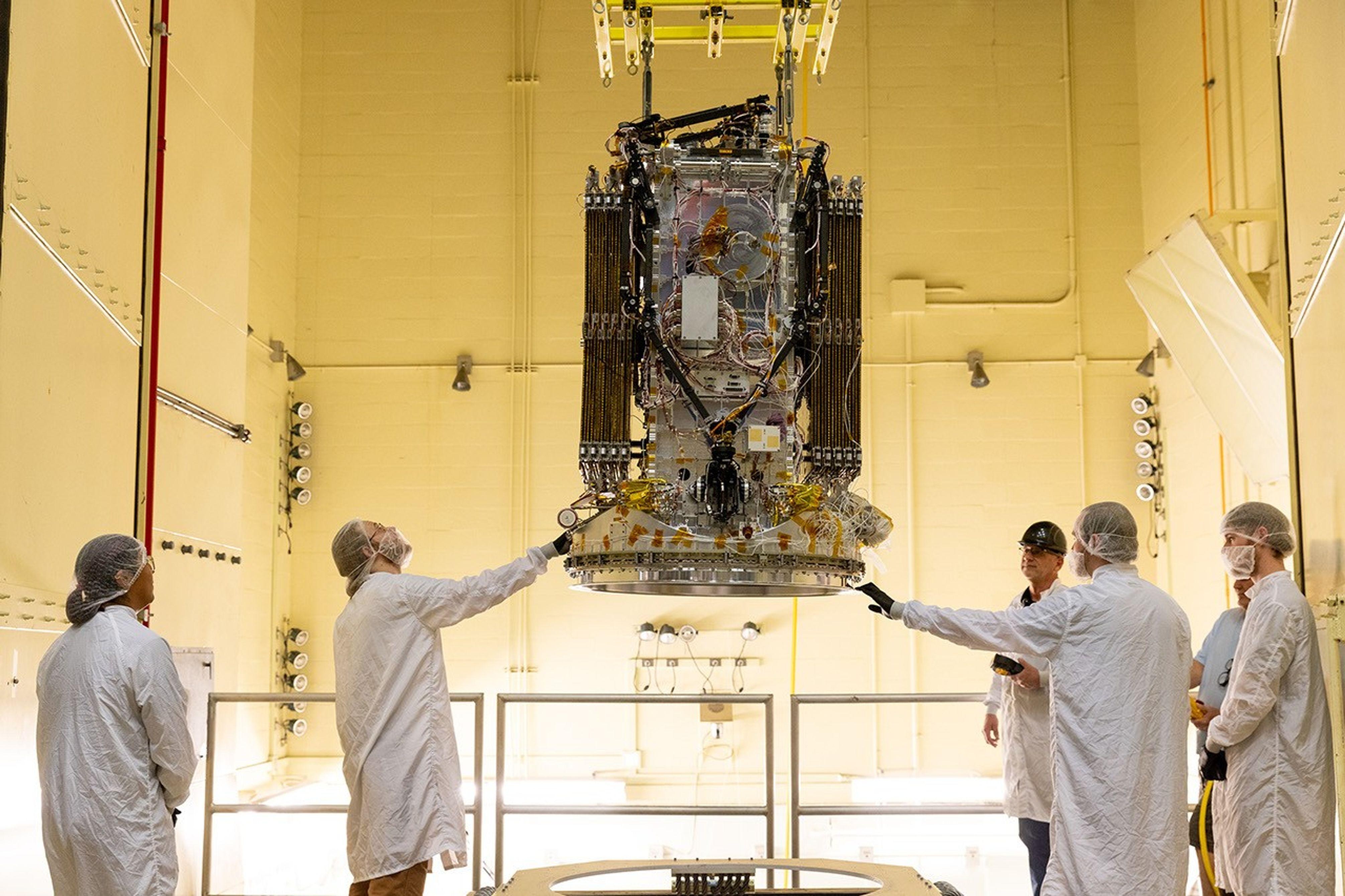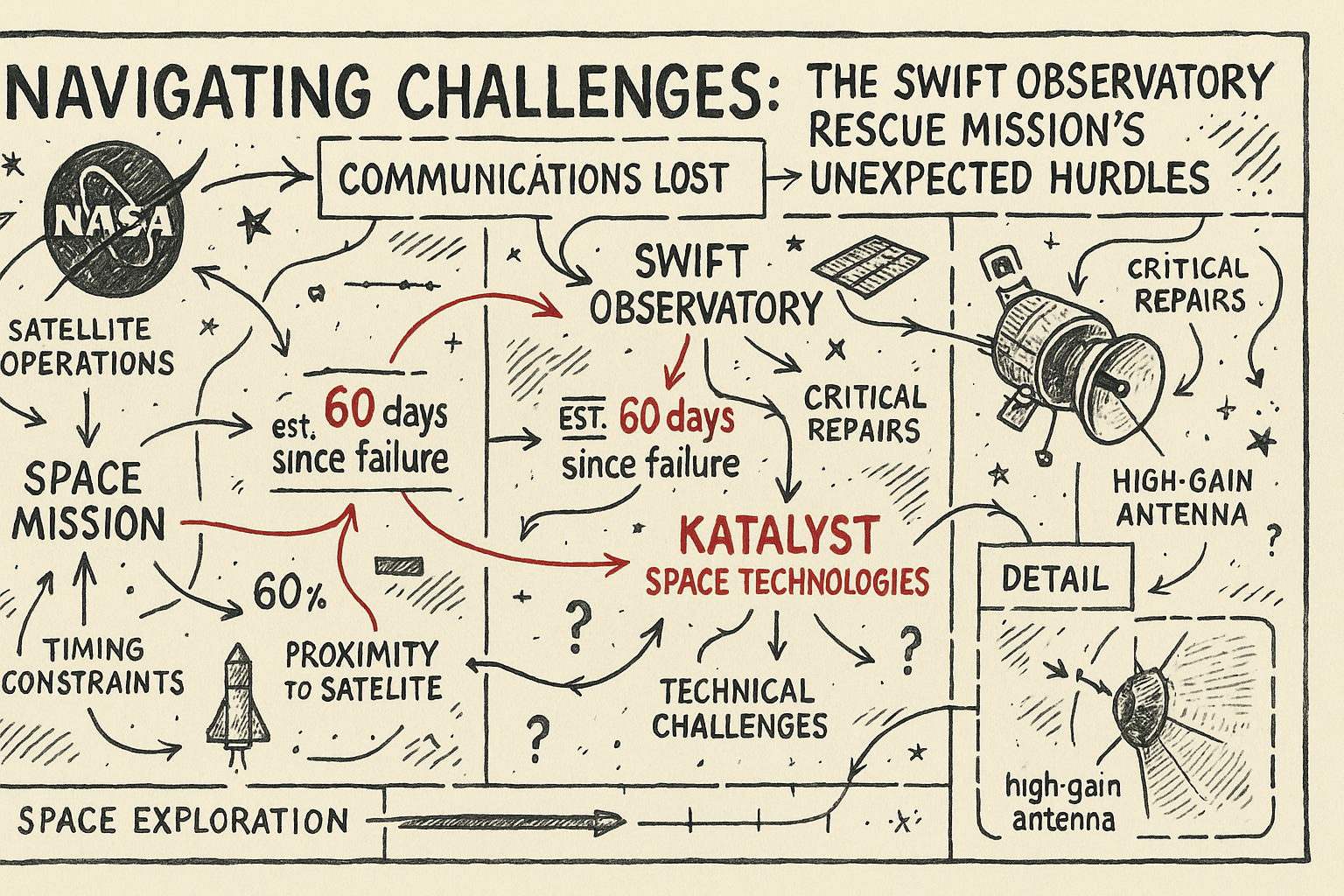
NASA's ambitious mission to extend the life of its Swift Observatory by raising its orbit has encountered significant challenges. The mission, which involves a robotic spacecraft developed by Katalyst Space Technologies, aims to prevent the observatory from re-entering Earth's atmosphere prematurely. However, the rescue spacecraft has faced unexpected technical difficulties that threaten the mission's success.
The primary issue stems from the malfunction of two out of the three reaction wheels, crucial components responsible for maintaining the spacecraft's alignment. Additionally, problems have arisen with one of the thruster systems, further complicating the mission. These issues have resulted in the spacecraft tumbling out of control, a situation that NASA and Katalyst Space Technologies are urgently trying to rectify.
This mission marks a significant milestone as it is the first time NASA has contracted a private company to perform such a task. The objective is to attach the Katalyst Space Technologies' Link spacecraft to the Swift Observatory and boost its orbit, thereby extending its operational lifespan. Despite the current setbacks, the mission underscores the growing role of private companies in space exploration and operations.
Efforts are underway to stabilize the spacecraft using backup systems. Engineers are racing against time to regain control and assess whether the mission can proceed as planned. The outcome of these efforts will determine the future of the Swift Observatory and its ability to continue contributing valuable data to scientific research.
While the mission faces hurdles, it also highlights the potential for innovation and collaboration in space exploration. The involvement of private companies like Katalyst Space Technologies in critical missions could pave the way for more partnerships in the future, potentially accelerating advancements in space technology and exploration.