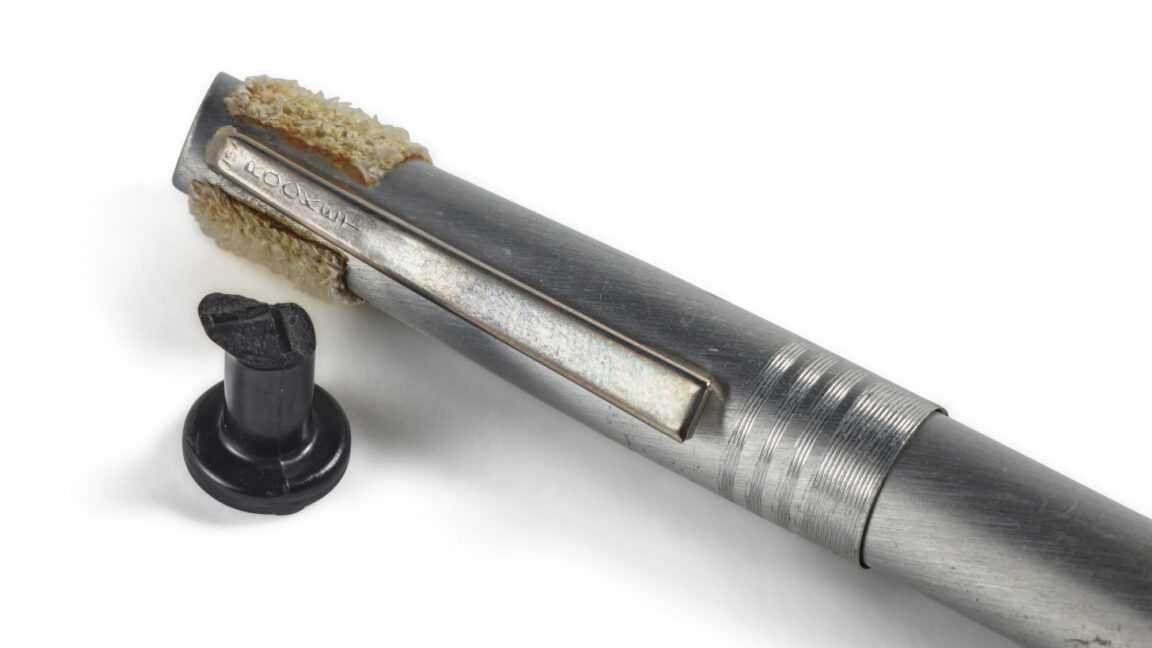
The Apollo 11 mission, a monumental achievement in human history, continues to capture public imagination and interest, as evidenced by the recent auction of an unlikely hero from the mission—a felt-tip pen used by astronaut Buzz Aldrin. This simple tool, a Duro Rocket felt-tip pen, became a crucial player in the success of the moon landing mission and was sold at a Sotheby’s auction in New York for a staggering $857,600. This item, along with a broken piece of circuit breaker, was part of Aldrin’s personal collection and has now entered the annals of space history as a symbol of human ingenuity and resilience.
The auction, held on July 15, 2026, drew competitive bidding, with five bidders vying for the piece of space history, which ultimately sold for more than $850,000. The pen and the broken circuit breaker switch were considered invaluable due to their role in ensuring the safe return of astronauts Buzz Aldrin and Neil Armstrong from the moon during the historic Apollo 11 mission in July 1969.
As detailed in Aldrin’s 2009 autobiography, "Magnificent Desolation," the pen was used to fix a broken engine-arm circuit breaker. This breaker was essential for providing electrical power to the ascent engine, which would lift Aldrin and Armstrong off the lunar surface. The incident occurred after they had completed their first moonwalk and were preparing to rest. Aldrin noticed the broken switch on the floor of the cabin, realizing the critical nature of the problem. Aldrin humorously noted in the provenance letter from Sotheby’s that both he and Armstrong blamed each other for the mishap, though he later conceded that his own heavy backpack might have caused the break.
Upon discovering the issue, the astronauts communicated with Mission Control in Houston, who initially hoped to reroute the power but ultimately found it impossible. Faced with this dilemma, Aldrin ingeniously used his felt-tip pen to fix the problem. Rather than risking electrocution by using his finger, Aldrin inserted the plastic pen into the circuit breaker opening, successfully rearming the circuit and enabling the ascent engine to ignite. This quick thinking averted a potential disaster, allowing the astronauts to rendezvous with Michael Collins in the command module and return safely to Earth.
The pen’s sale is a testament to the enduring fascination with the Apollo missions and the ingenuity of the astronauts who undertook them. Aldrin’s actions exemplify the problem-solving skills and resilience that have come to define human space exploration. Historically, this event underscores the fact that even the most advanced technological achievements can hinge on the simplest solutions.
Buzz Aldrin’s pen had previously been part of the Smithsonian's "Destination Moon" traveling exhibit, highlighting its significance in the narrative of human space exploration. The Apollo 11 mission remains a pinnacle of human achievement, representing the first time humanity set foot on another celestial body. It continues to inspire awe and wonder, as well as to provide a reminder of the challenges and triumphs of space exploration.
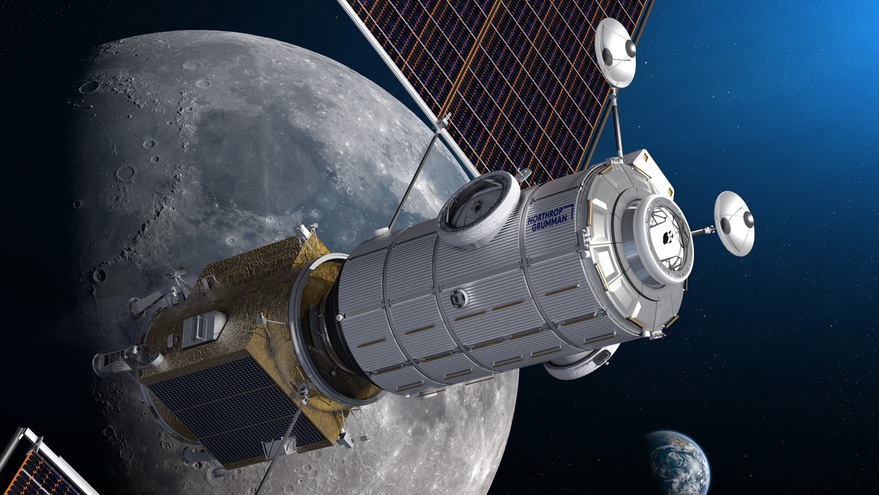
As we look to the future, the legacy of Apollo 11 and the lessons learned from its challenges are paving the way for new missions and discoveries. The Artemis program, NASA's latest initiative to return humans to the moon and eventually send them to Mars, draws inspiration from the Apollo missions. It aims to continue the exploration of the moon and beyond, building on the experiences and technologies developed during the Apollo era.
The auctioning of the felt-tip pen is more than just a sale of memorabilia; it is a celebration of human ingenuity and the spirit of exploration that drives us to reach for the stars. It serves as a reminder that even in the face of seemingly insurmountable challenges, simple solutions can lead to monumental successes.