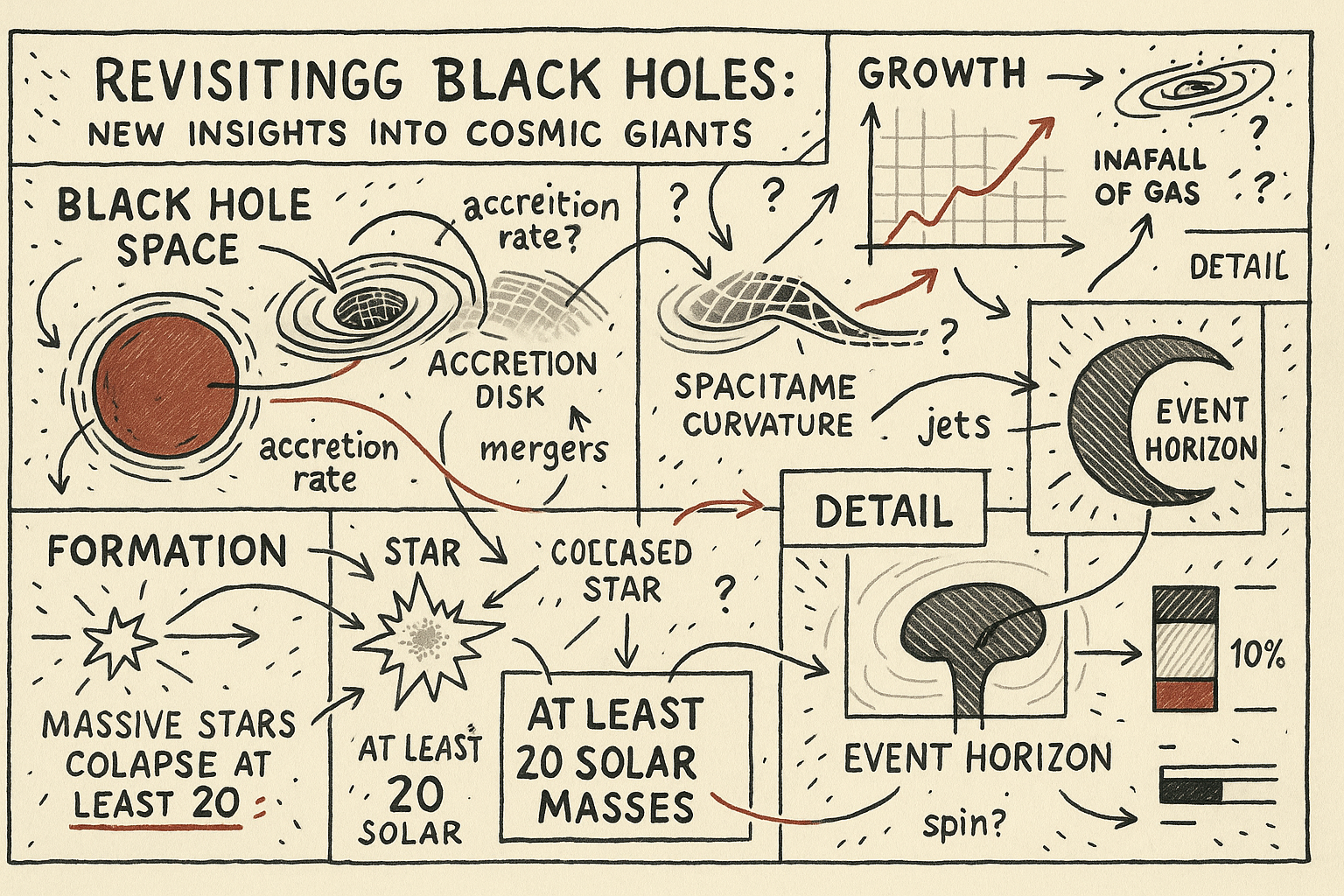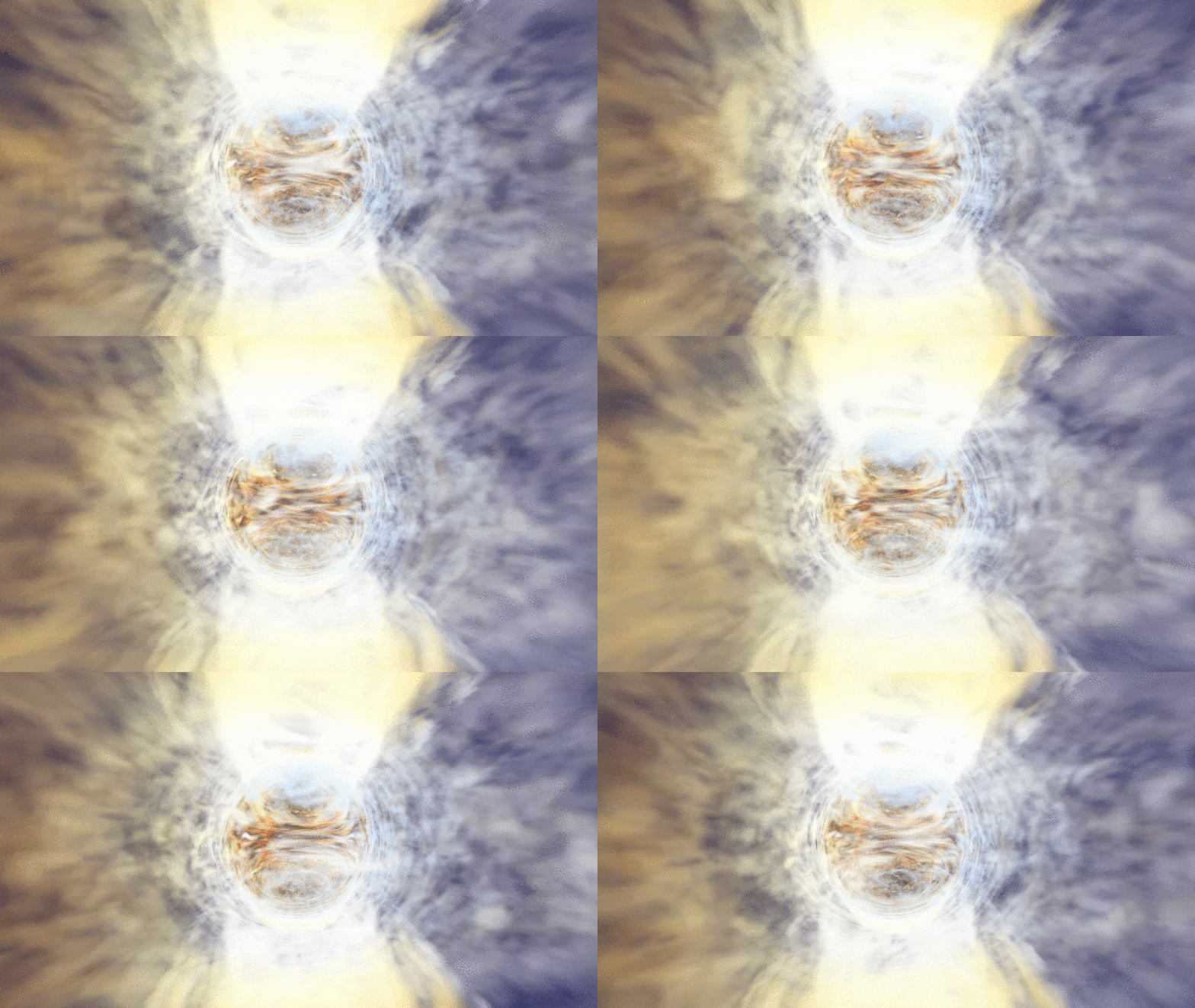
In the realm of astrophysics, black holes have long fascinated scientists and the public alike, representing some of the universe's most enigmatic phenomena. Traditionally, the singularity within a black hole — the point where the laws of physics as we know them cease to function — has been conceptualized as a zero-dimensional point of infinite density. However, groundbreaking research by theoretical physicists Andrew J. S. Hamilton from the University of Colorado Boulder and Tyler McMaken from the University of Mary proposes a radical rethinking of this concept.
Published in the journal Physical Review D, their study argues that the singularity might actually be better understood as a flat, three-dimensional surface. This theory challenges the conventional wisdom that has dominated astrophysical models for nearly a century. The transition from viewing a singularity as a point to considering it as a surface could have profound implications for our understanding of black holes and the broader universe.
Hamilton remarks on the difficulty of reconciling intuitive understanding with the counterintuitive nature of black holes. "I joke to my students that black holes always defy my intuition," he notes, highlighting the surprises that such cosmic entities hold. The flat appearance of the Schwarzschild singularity, a non-rotating black hole, initially perplexed him. However, his insights gained from visualizations of black holes dating back to the 1990s began to form a coherent picture of this new understanding.
The history of black hole singularity models is itself a journey through the evolution of theoretical physics. By the 1930s, singularities were pictured as points, a notion that persisted into the 1960s. However, with the study of Kerr black holes — rotating black holes — it was discovered that the singularity forms a ring due to centrifugal forces. Despite these advancements, the concept of a point singularity remained for Schwarzschild black holes, primarily because of its simplicity and pedagogical utility.
Hamilton’s work, however, suggests that this framework might have oversimplified the complex reality. The research utilizes advanced general-relativistic visualizations to depict what it might be like to fall into a black hole, revealing the possibility of a surface rather than a point. This insight is particularly significant in the context of quantum gravity, which seeks to unify general relativity and quantum mechanics — the two pillars of modern physics that currently remain incompatible at singularities.
"Quantum gravity is THE central question of theoretical physics, and the singular surfaces of black holes are where quantum gravity happens in our Universe," Hamilton emphasizes. This breakthrough could potentially pave the way for new theories that adequately describe the behavior of matter and energy in such extreme environments.
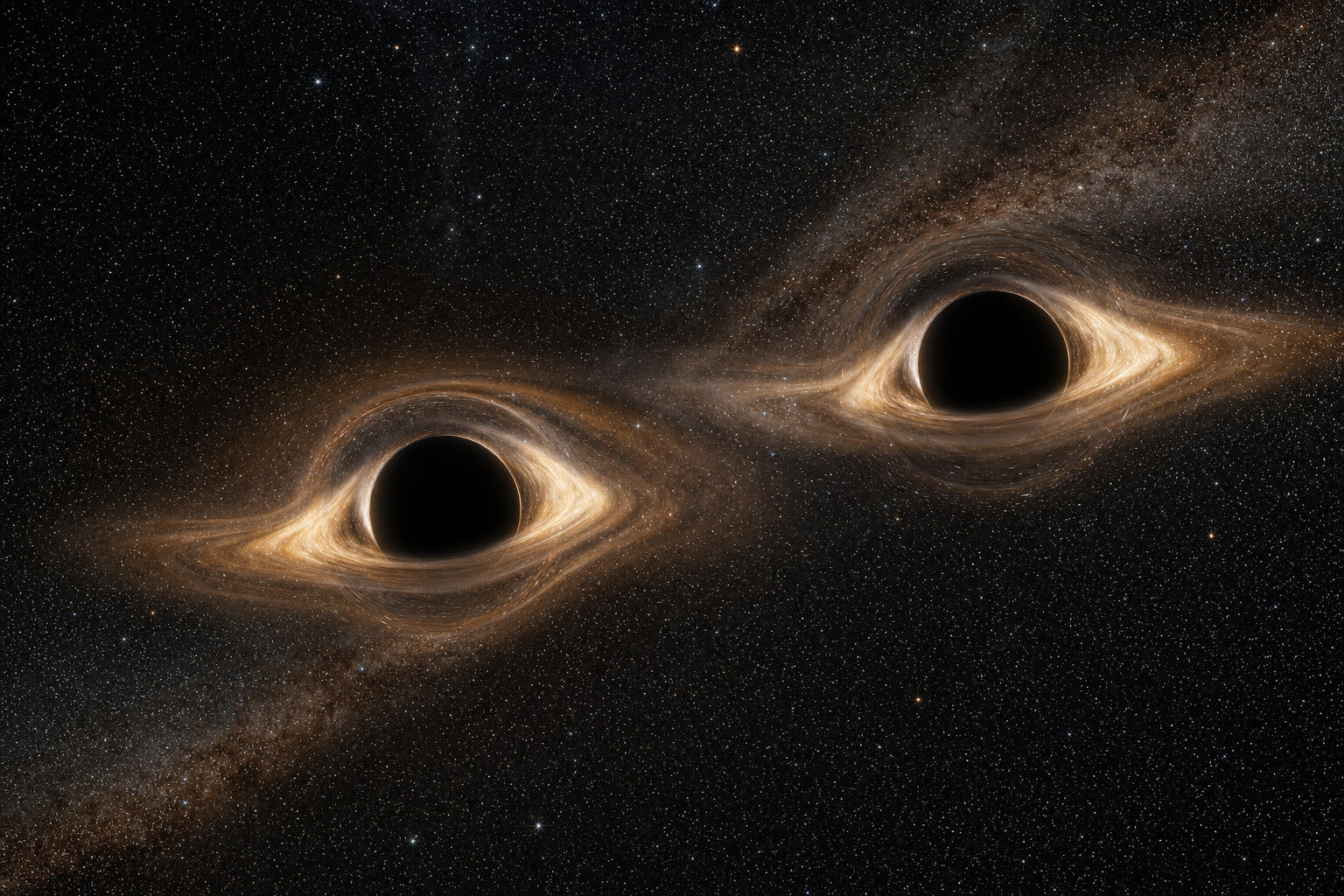
The implications of this research extend beyond theoretical musings. Understanding the true nature of black hole singularities could impact how we interpret phenomena like black hole mergers and gravitational waves, which are currently detected by observatories such as LIGO. As scientists continue to refine the laws of thermodynamics to apply to dynamically changing black holes, the insights from Hamilton and McMaken could be instrumental in advancing our comprehension of these cosmic events.
While these ideas are still in the realm of theoretical exploration, they underscore the dynamic nature of physics as a discipline. As researchers delve deeper into the mysteries of the cosmos, each new insight brings us closer to a fuller understanding of the universe, challenging and expanding the limits of human knowledge.