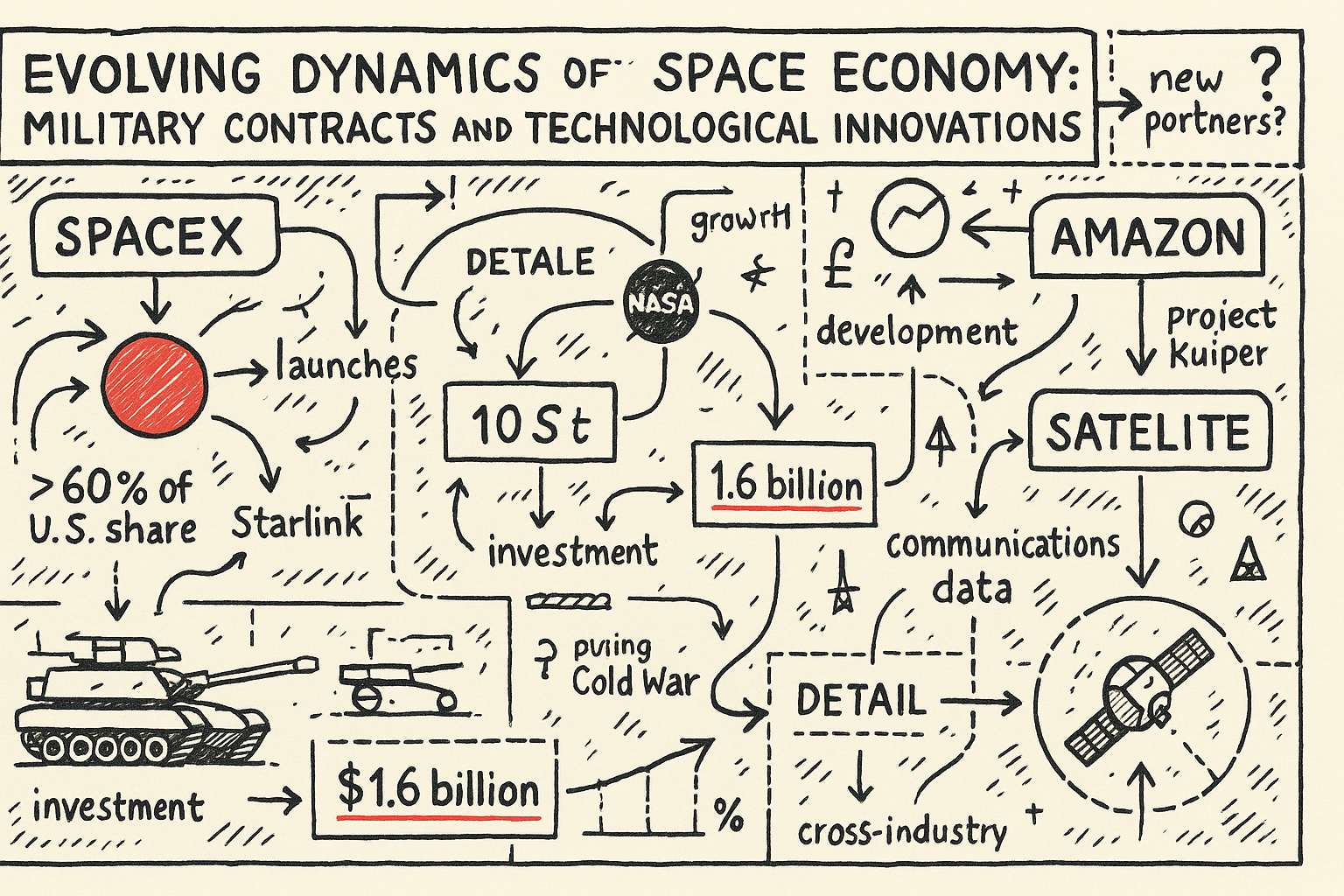
The space economy continues to evolve with significant developments that reflect both commercial ambitions and strategic military interests. SpaceX has secured $1.6 billion in military satellite launch orders, underscoring the increasing reliance on private companies for national security objectives. This contract highlights the pivotal role of commercial space enterprises in supporting military operations, including missile tracking and secure communications.
Amazon's recent filing with the FCC to deploy a massive constellation of 5,105 satellites for direct-to-device services signifies a bold step in the competitive satellite internet market. This move not only intensifies competition with existing players but also showcases the rapid expansion of satellite infrastructure aimed at enhancing global connectivity.
On the technological front, NASA's funding of research into nuclear heaters for lunar missions represents a crucial step towards sustaining human presence on the Moon. Compact radioisotope heating devices could be vital for astronauts' survival in harsh lunar environments, paving the way for future exploration missions.
Meanwhile, international developments such as Japan's planned private lunar transportation system and China's investment in space situational awareness further illustrate the global nature of the space economy. These initiatives highlight the growing collaboration and competition among nations and private entities in the quest to harness space as a domain of economic and strategic importance.