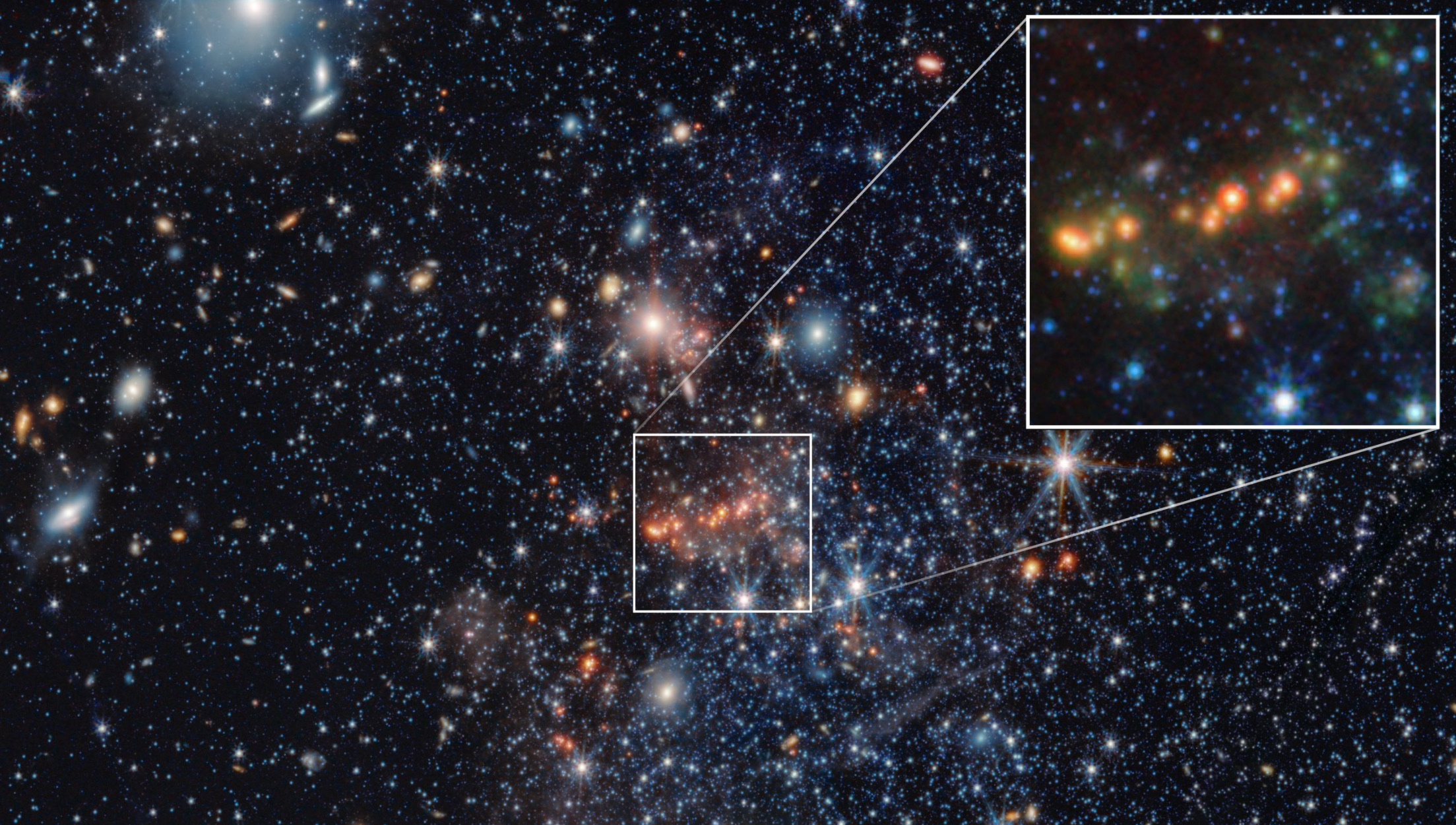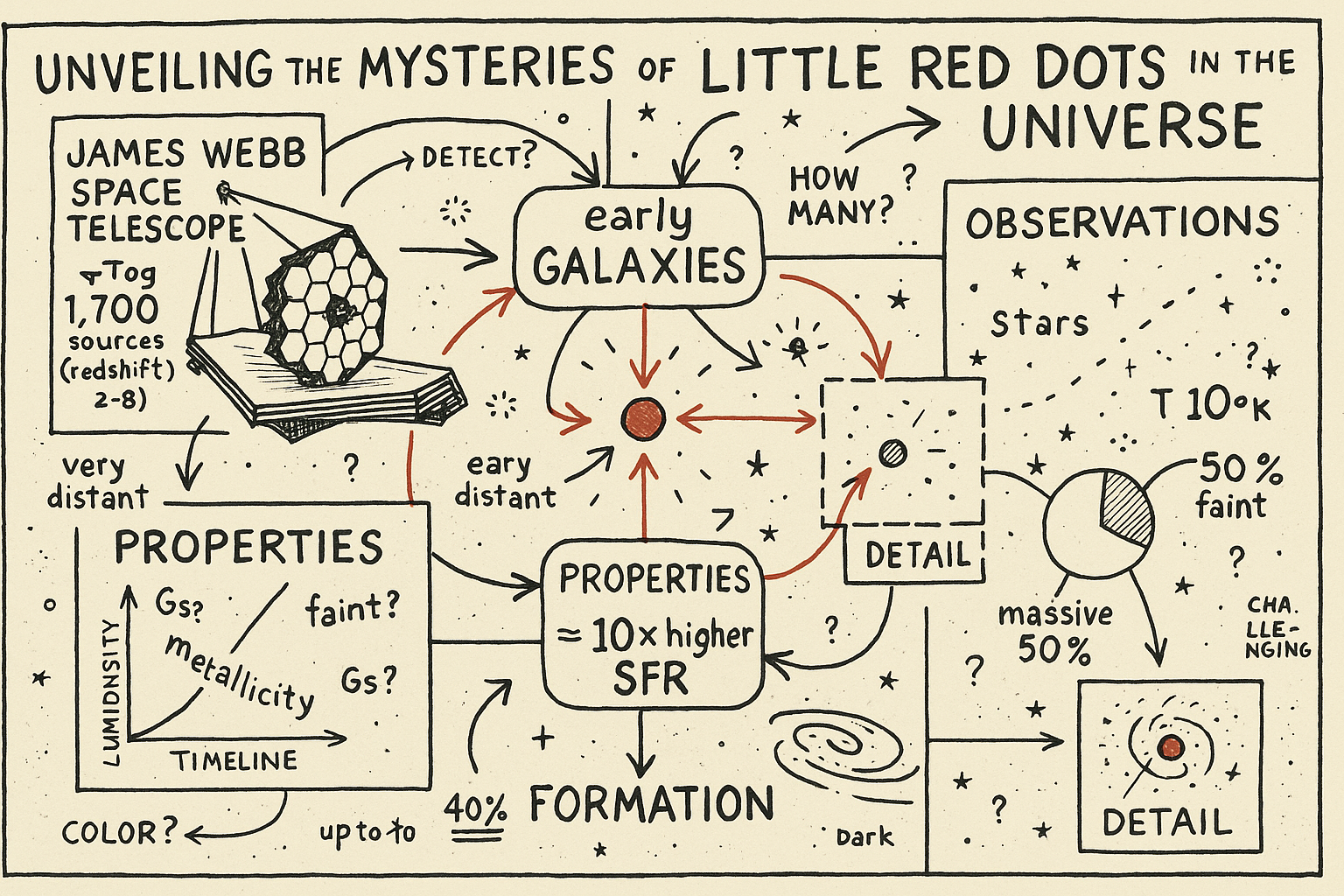
The universe, vast and enigmatic, continues to reveal its secrets through the lens of the James Webb Space Telescope (JWST). Recently, astronomers have been captivated by mysterious objects known as 'Little Red Dots' (LRDs), discovered during JWST's infrared surveys of the distant cosmos. These enigmatic entities, appearing as small, red points in the telescope's observations, offer a tantalizing glimpse into the universe's infancy, potentially reshaping our understanding of cosmic evolution.
The Discovery of Little Red Dots
First identified in 2022, Little Red Dots have quickly become a focal point of astronomical research. Over 300 of these objects have been cataloged, each presenting a unique opportunity to peer into the universe's primordial past. The JWST, with its unparalleled infrared sensitivity, has enabled astronomers to detect these compact red sources, believed to exist within the first billion years after the Big Bang. The discovery of LRDs has sparked a flurry of hypotheses regarding their nature and origin.
Potential Origins and Theories
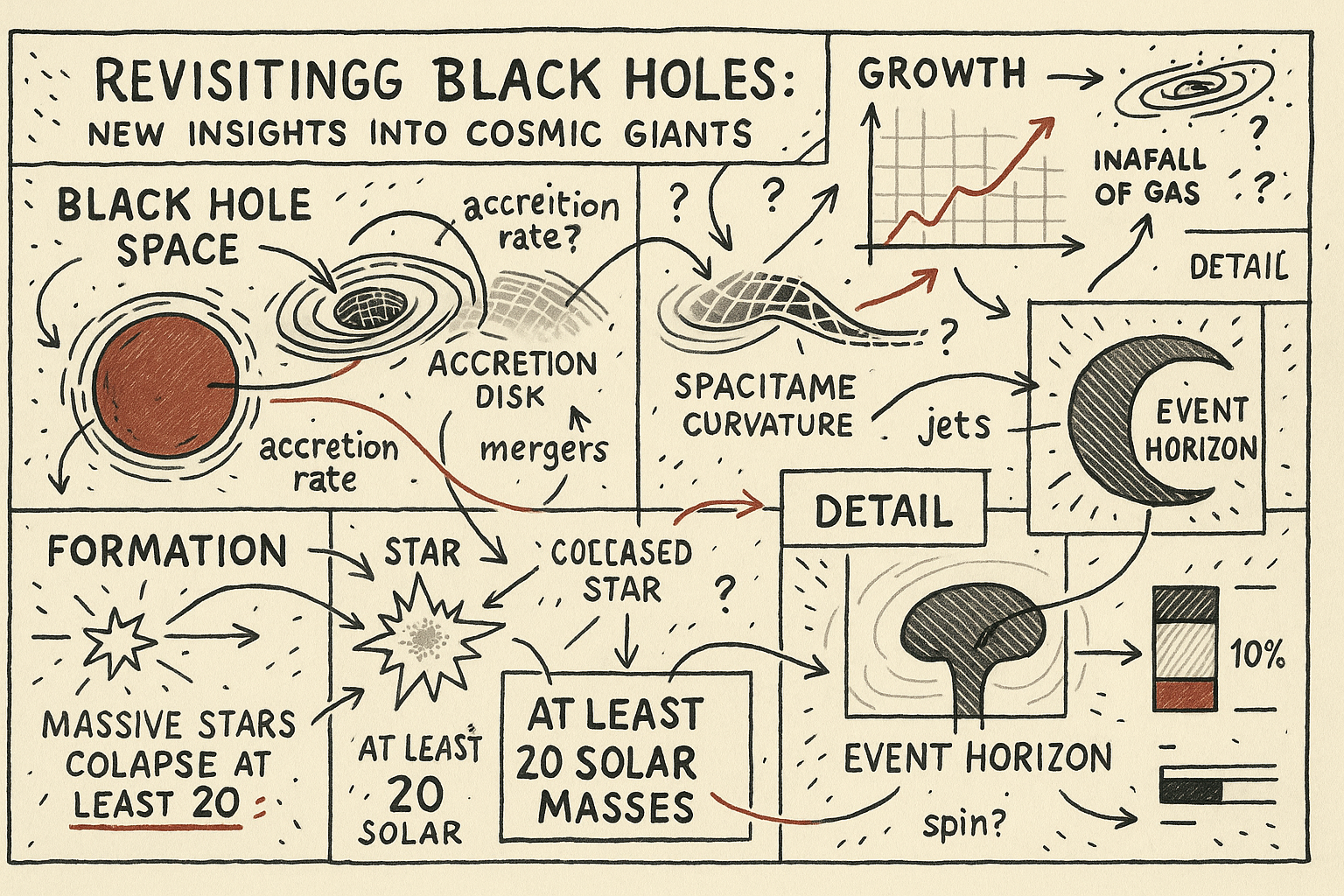
One of the prevailing theories suggests that Little Red Dots may be ancient globular clusters dominated by supermassive stars, as posited by recent research. These clusters could serve as cosmic fossils, offering insights into the conditions of the early universe. Alternatively, some scientists propose that LRDs might be supermassive black holes in a temporary phase, contributing to the understanding of black hole formation and growth in the nascent cosmos.
Another intriguing hypothesis is that LRDs are not standalone entities but rather part of a larger family of distant, compact objects. This perspective aligns with the notion that they could be progenitors of early galaxies, potentially influencing the distribution of matter and the formation of cosmic structures.
Implications for Cosmic Understanding
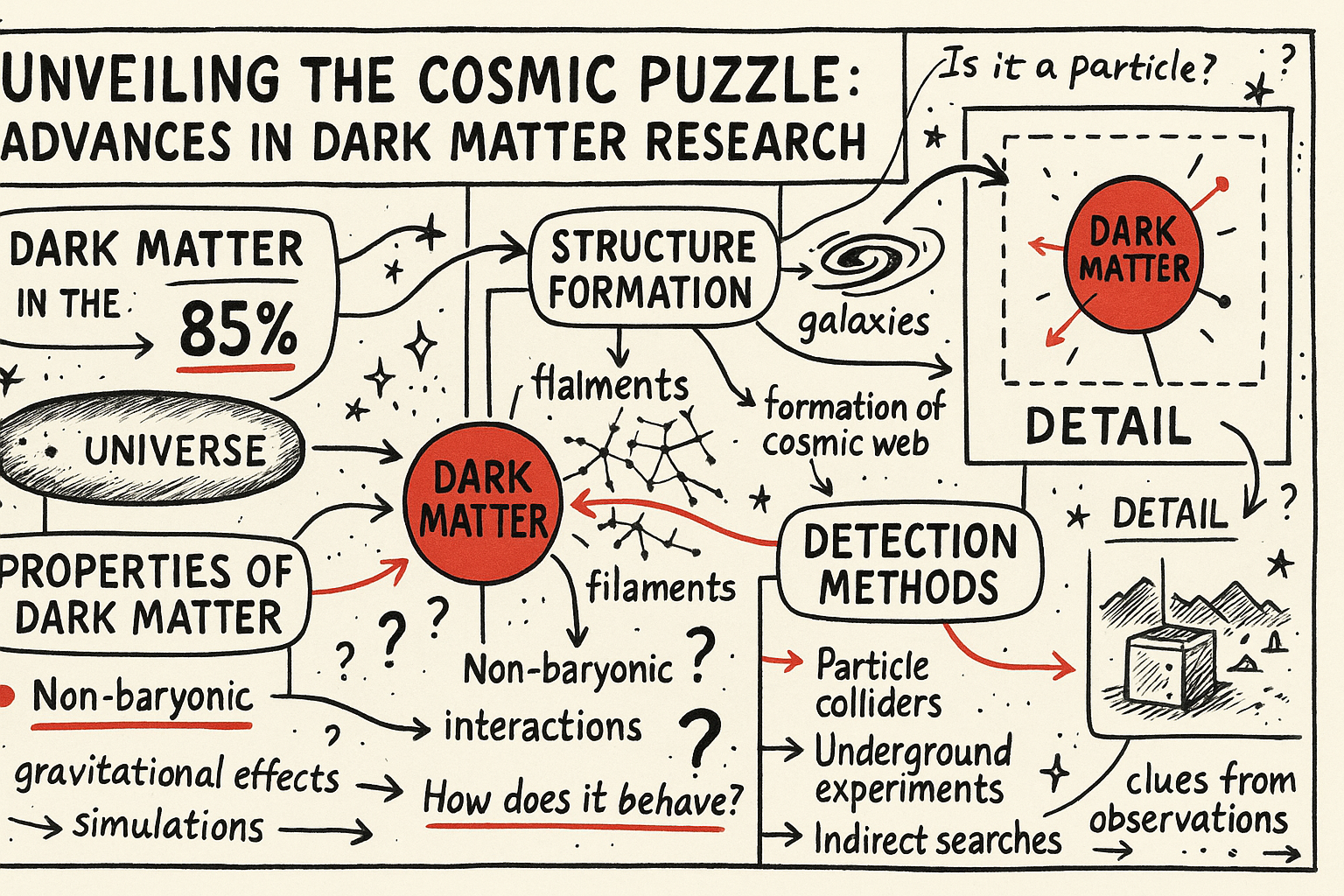
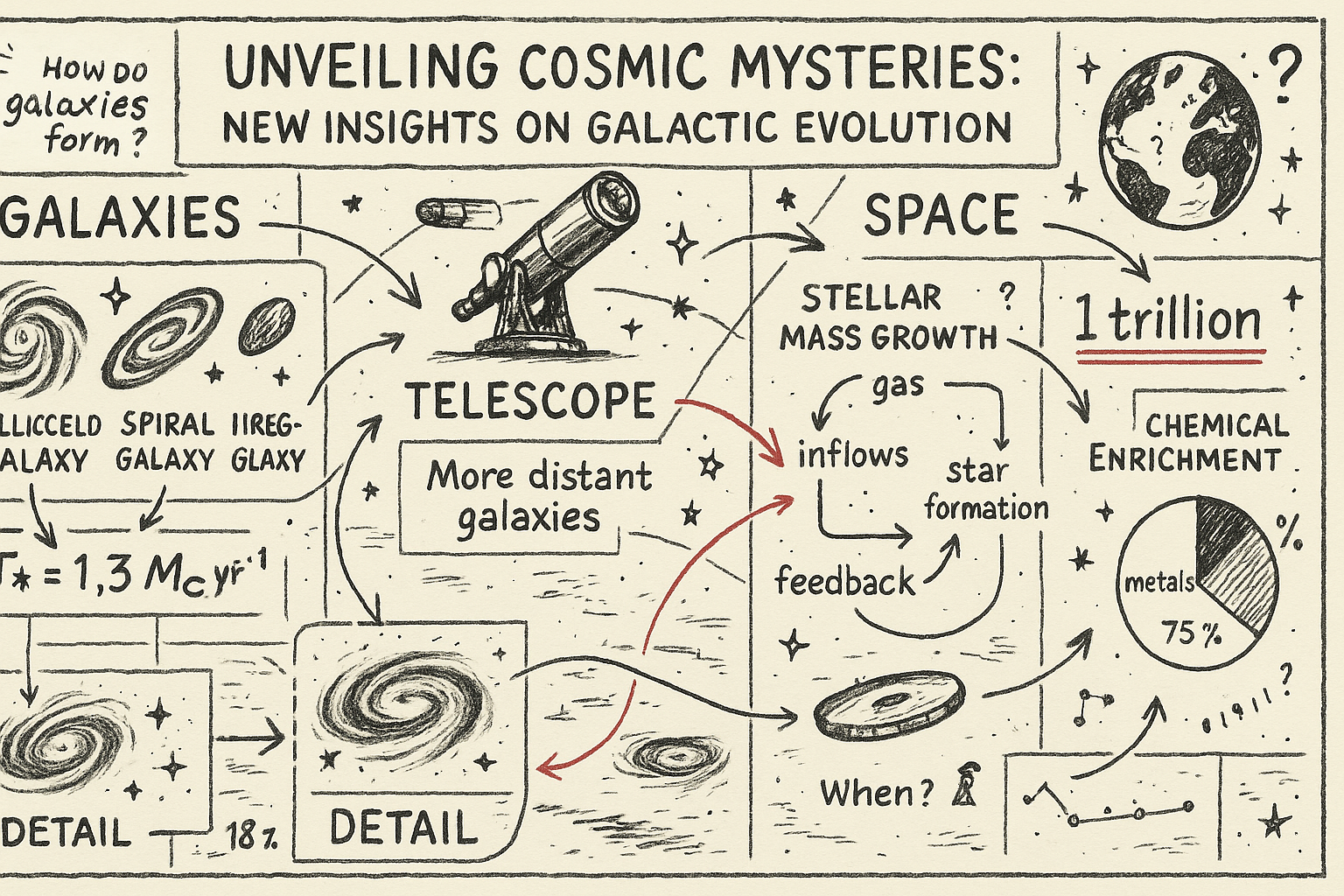
The study of Little Red Dots is not merely an exercise in curiosity. It holds profound implications for cosmology and astrophysics. By examining these objects, astronomers aim to uncover the processes that governed the early universe's evolution. The findings might illuminate how galaxies formed and evolved, shedding light on the distribution of mass and the role of dark matter in shaping cosmic architecture.
Moreover, the exploration of LRDs could impact our understanding of the initial mass fraction (IMF) of galaxies, challenging the assumption that it is universal. Observations from the JWST, especially those probing binary stars in the Small Magellanic Cloud, are crucial in refining models of galactic formation and evolution.
Future Prospects
As the JWST continues to scan the heavens, the scientific community eagerly anticipates further revelations from the study of Little Red Dots. These discoveries will not only expand our cosmic horizon but also refine the theoretical frameworks that underpin our understanding of the universe's infancy. The synthesis of data from LRD observations with other cosmic phenomena, such as fast radio bursts, could provide a more comprehensive picture of the universe's 'missing matter,' offering a holistic view of cosmic evolution.
In the coming years, collaborative efforts among astronomers, leveraging the JWST's capabilities, will be pivotal in unlocking the mysteries of these enigmatic objects. As we stand on the brink of a new era in astrophysics, Little Red Dots symbolize the uncharted territories of knowledge awaiting exploration, reminding us of the universe's boundless potential to surprise and enlighten.