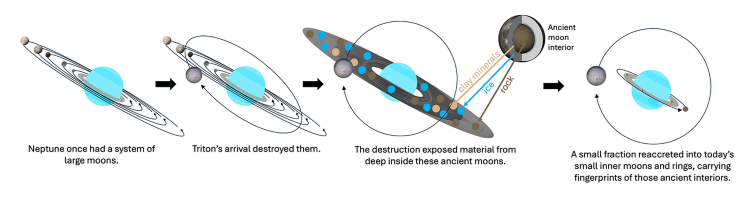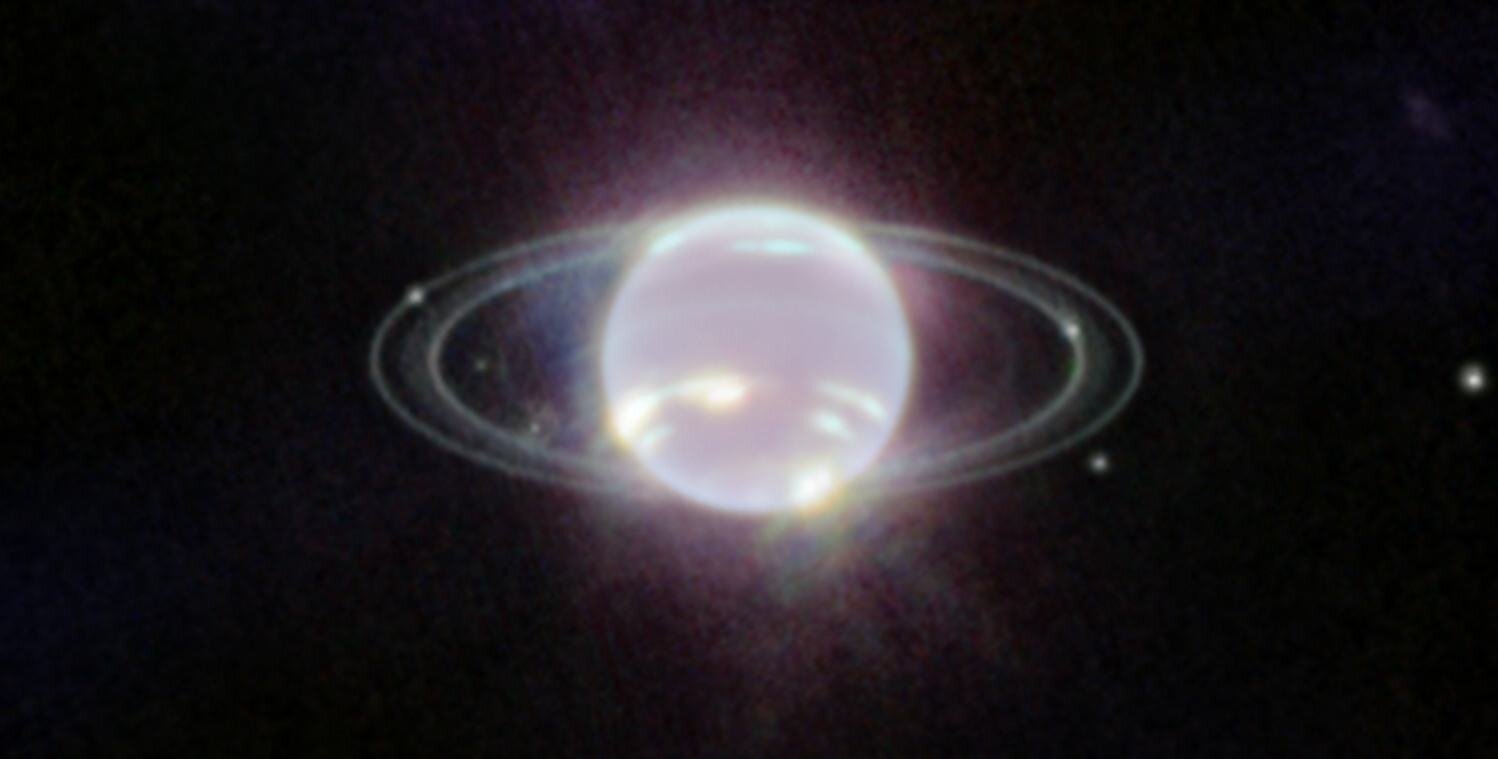
In a remarkable leap for planetary science, recent observations from NASA's James Webb Space Telescope (JWST) have shed new light on the enigmatic inner moons of Neptune. The findings, spearheaded by a team from the California Institute of Technology, suggest that these moons are likely remnants of a primordial satellite system that was drastically altered by the capture of Triton, Neptune's largest moon.
Neptune, the eighth and most distant planet in our solar system, has long intrigued astronomers with its dynamic atmosphere and unusual moon system. Unlike other giant planets such as Jupiter and Saturn, which boast large and orderly satellite systems, Neptune's moons are a peculiar collection. The Voyager 2 mission, which flew by Neptune in 1989, discovered six new moons, including five small ones orbiting just beyond the planet's main rings. These small moons—Larissa, Galatea, Proteus, Thalassa, and Despina—have been notoriously difficult to study due to their diminutive size and proximity to the planet.
The recent study by Caltech researchers, led by Ryleigh Davis, hypothesizes that these inner moons are the shattered remains of an ancient, larger system. Their research, published in Science Advances, posits that Triton was likely captured by Neptune's gravity after forming elsewhere in the solar system. This event would have been catastrophic, potentially destroying any existing moons and forming the irregular system observed today. The JWST's observations confirm that the compositions of Larissa, Galatea, and Proteus are unique among outer solar system bodies, aligning with the idea of a violent historical reshaping.
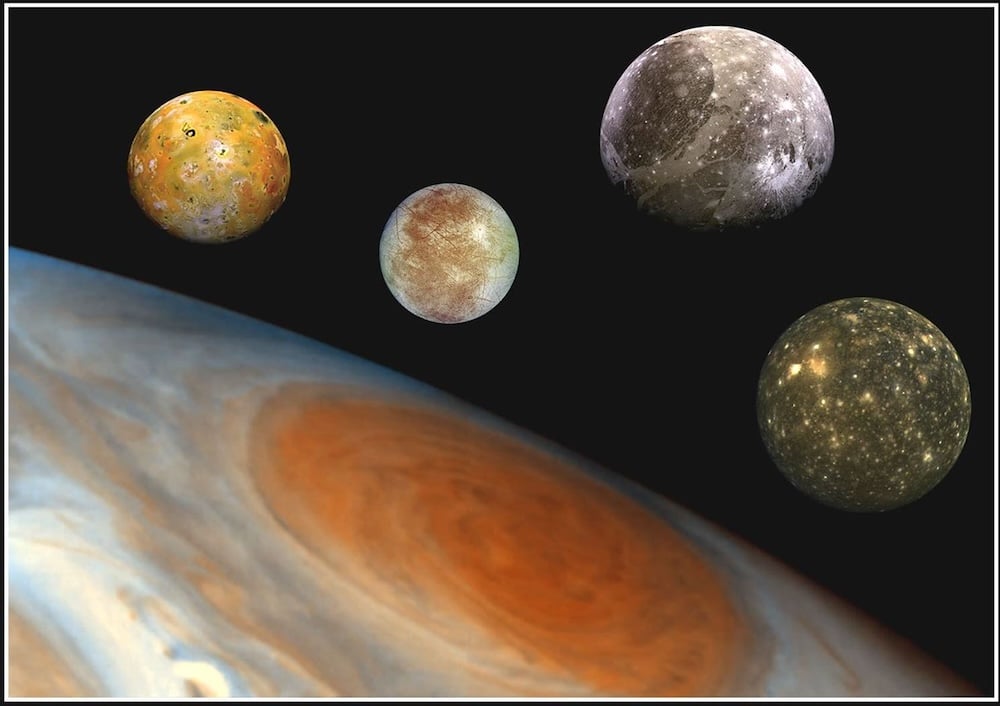
Neptune's moon system is particularly intriguing because it contrasts sharply with that of Uranus, which maintains a more conventional satellite arrangement. If Neptune once had a system resembling Uranus’s, the capture of Triton would have obliterated it. This dramatic past is a compelling narrative that challenges our understanding of moon formation and planetary dynamics.
Adding to the intrigue is the potential role of Nereid, another of Neptune's moons. A parallel study by Matthew Belyakov, also from Caltech, suggests that Nereid might be the only intact survivor of the original satellite system. The implications of these findings are significant, offering a rare glimpse into the chaotic processes that can shape planetary systems.
Triton's capture and its aftermath not only provide a window into the solar system's past but also help refine models of planetary formation and evolution. Understanding these processes gives researchers clues about how similar events might play out around exoplanets in distant star systems. The broader ramifications of this research extend into the field of exoplanetary science, where similar gravitational interactions could explain the architecture of alien worlds.
The JWST's success in studying Neptune's moons underscores its critical role in advancing our knowledge of the cosmos. As the telescope continues to explore the outer reaches of our solar system, it is poised to unravel more mysteries about the planets and their satellite systems.
The ongoing investigation of Neptune's moons is a testament to the power of modern astronomy to revisit and refine our understanding of the universe. These findings invite further exploration and pose new questions about the nature of celestial bodies and the forces that shape them. As technology advances, scientists are optimistic that we will continue to peel back the layers of Neptune's history, gaining insights that could reshape our understanding of the solar system and beyond.