In the vast expanse of the Milky Way, the phenomenon of rogue planets—that is, planets that drift through space unattached to any star—has long piqued scientific curiosity. Recent simulations conducted by Yannick Badoux and Simon Portegies Zwart at Leiden Observatory have shed light on an intriguing aspect of these celestial wanderers: the fate of their moons.
Historically, rogue planets have been envisioned as solitary giants, cast adrift by the gravitational disturbances of their native star systems or as a result of close encounters with other stars. However, the new simulations, which encompassed over 34,000 stellar encounters, paint a more complex picture. They suggest that moons often accompany their planets during such ejections, rather than being abandoned in the chaos.
Central to understanding this process is the concept of the Hill radius. This is the region around a planet where its gravitational influence dominates over that of its star. A moon's fate during a planetary ejection largely depends on its position relative to this boundary. Moons that orbit within roughly 40% of the Hill radius are likely to remain gravitationally bound to their planet, even as it is flung into interstellar space. Beyond this threshold, the gravitational grip weakens rapidly, and the chances of moons being left behind increase significantly.
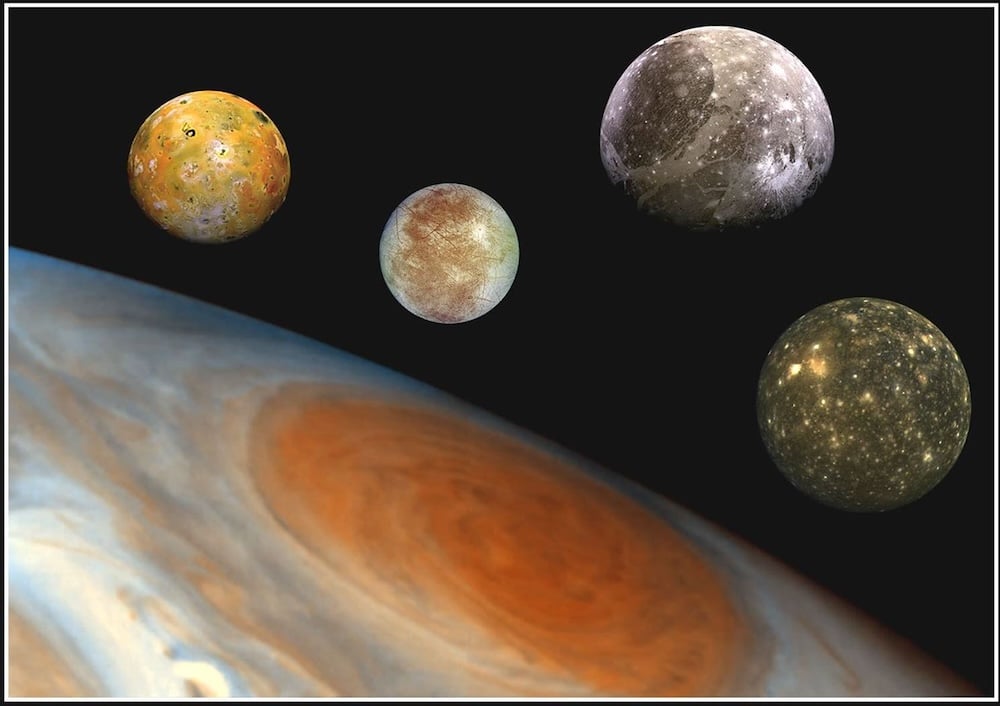
For instance, the moons of Jupiter—Io, Europa, Ganymede, and Callisto—orbit well within Jupiter's Hill radius. If a rogue star were to eject Jupiter from its solar orbit, simulations indicate that these moons would likely accompany it on its journey through the cosmos. This insight challenges the long-held view of rogue planets as isolated entities, suggesting instead that they might carry entire moon systems with them.
Moreover, the simulations reveal fascinating details about the orbits of these moons post-ejection. Moons that stay close to their planets tend to emerge with stable, circular orbits. In contrast, those that cling on at the edge of the Hill radius exhibit more eccentric, tilted orbits, indicative of the tumultuous forces they endured during ejection. These orbital characteristics offer a window into the past, allowing astronomers to infer the nature of the ejection events that created rogue planet-moon systems.
The implications of these findings extend beyond mere academic curiosity. They provide a framework for understanding the evolutionary history of celestial bodies in our galaxy and offer clues on how to identify and study such systems. For example, Europa, with its subsurface ocean kept warm by tidal forces, could remain habitable even after being ejected from the solar system, as its internal heat would persist in the absence of solar warmth.
This research enriches our understanding of the dynamic processes that can shape planetary systems. It also emphasizes the importance of gravitational interactions in determining the architecture of these systems, both during their formation and in their potential dispersal. The possibility that rogue planets could traverse the galaxy with their moons in tow adds a new dimension to the search for exomoons and the study of planetary system evolution.
As astronomers continue to explore the cosmos, these insights underscore the delicate interplay of forces that govern the celestial ballet of planets and moons, both within our solar system and beyond.