Avio launches Vega-C carrying ESA’s FLEX and Copernicus Sentinel-3C to Sun-synchronous orbit
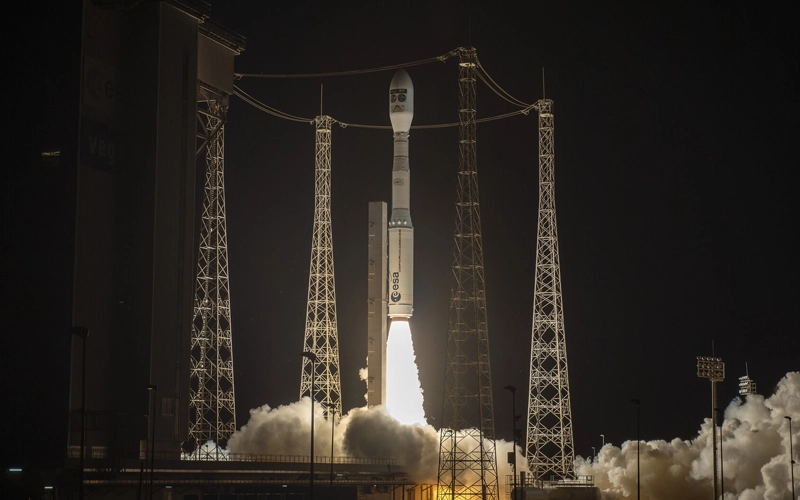
Italian launch services company Avio successfully launched a Vega-C rocket from the Guiana Space Centre on 15 September 2026 at 01:21 UTC, placing two European Earth-observation satellites into a sun-synchronous orbit. The mission, designated VV30, carried the European Space Agency’s Fluorescence Explorer (FLEX) and the European Commission/EUMETSAT-managed Copernicus Sentinel-3C spacecraft to an altitude of about 820 km with an inclination of 98.6 degrees.
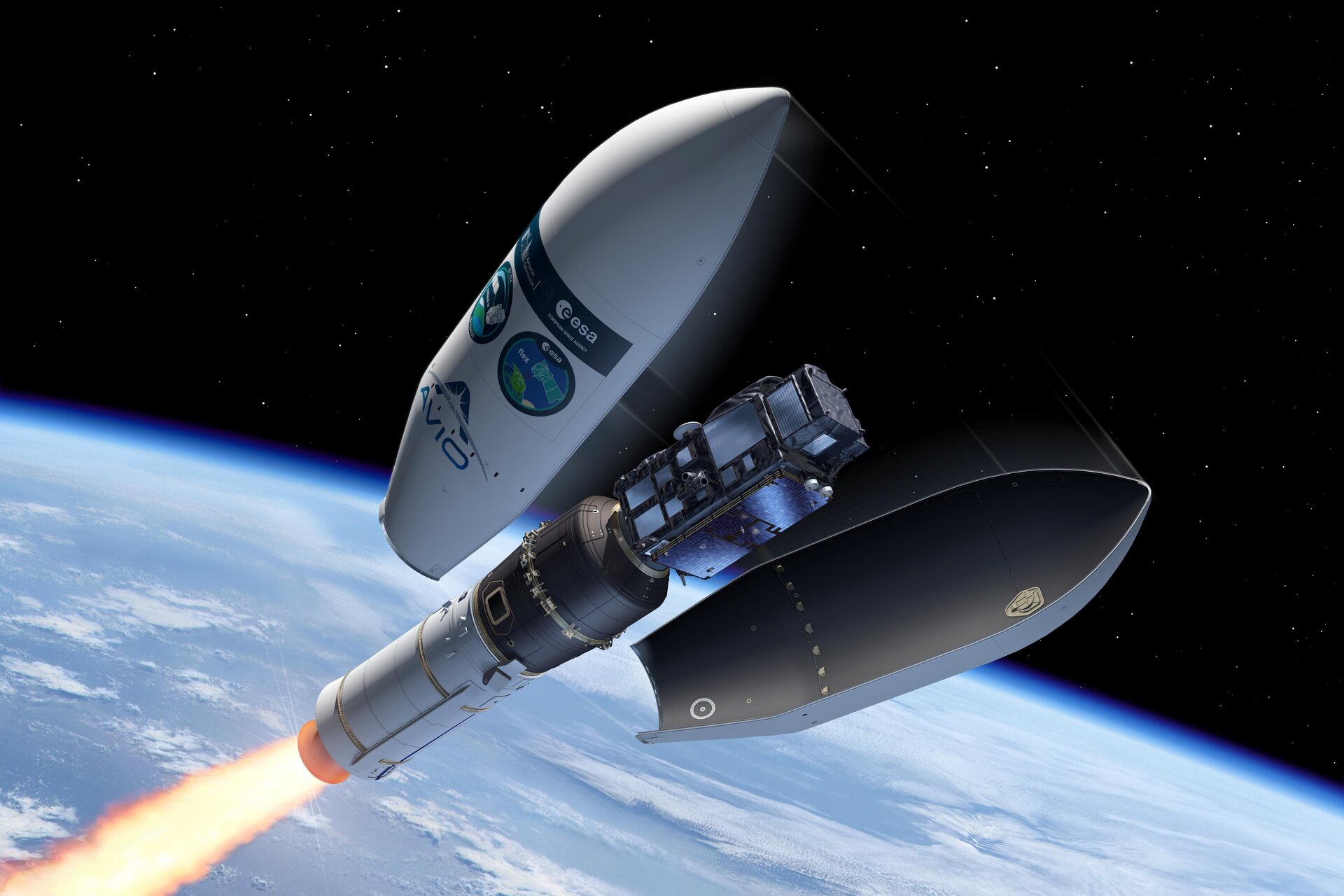
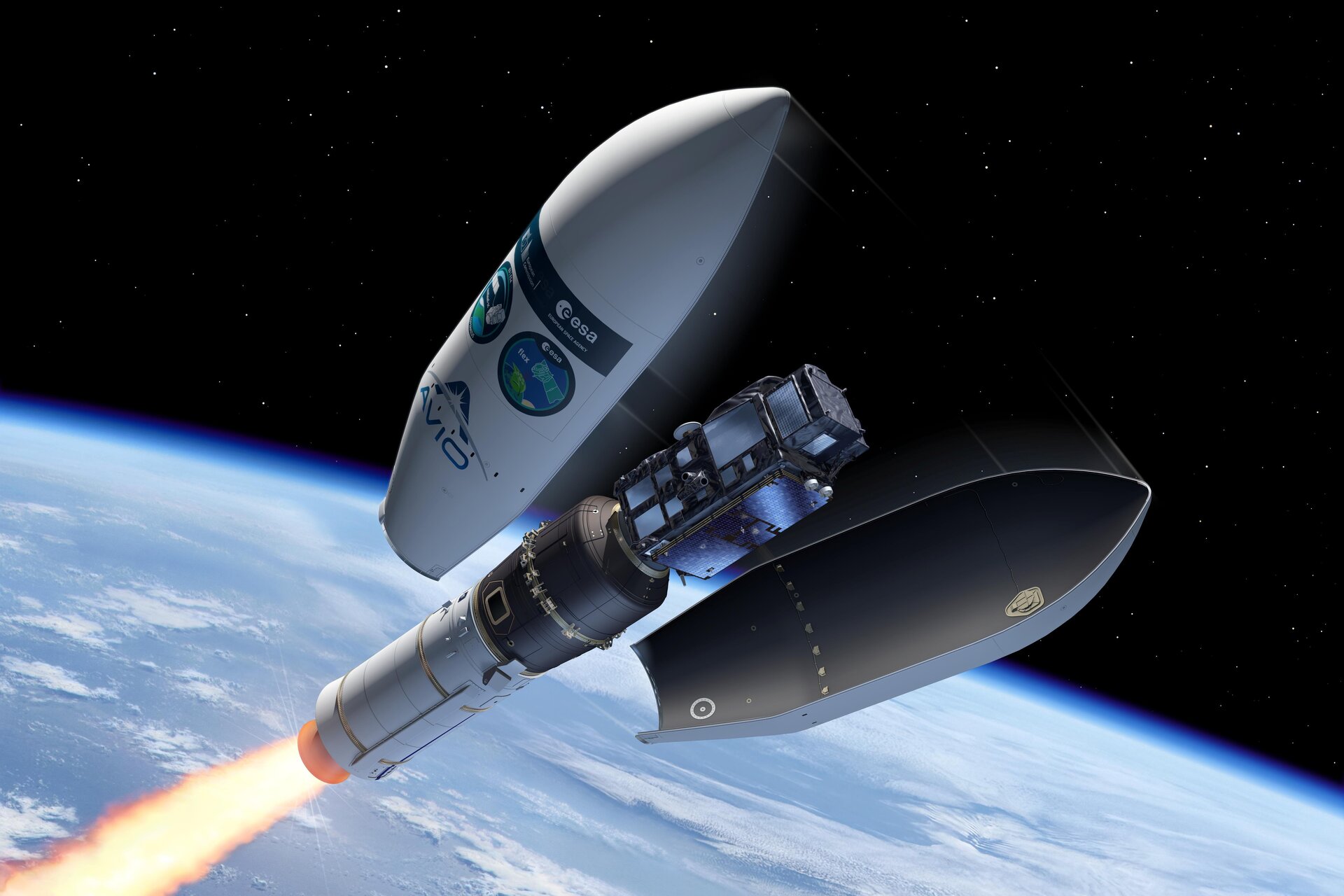
The 34.8-meter Vega-C rocket carried out a multi-burn profile using its re‑ignitable AVUM+ upper stage. According to mission reports, Sentinel-3C was deployed about one hour after liftoff following two AVUM+ burns; the stage then executed two further burns before FLEX separated approximately 56 minutes later. Both satellites established contact with ground stations minutes after deployment and began initial commissioning.
Sentinel-3C, managed by the European Organisation for the Exploitation of Meteorological Satellites (EUMETSAT), joins the Sentinel-3 constellation alongside Sentinel-3A and -3B, launched in 2016 and 2018. The 1.15-tonne spacecraft carries instruments to monitor sea-surface temperature, ocean colour, sea level and sea-ice characteristics and will support observations of Earth’s oceans, land and atmosphere. EuropeanSpaceflight's coverage notes Sentinel-3C is intended eventually to replace Sentinel-3A, which has exceeded its planned seven-year design life and operated for more than a decade.
FLEX, the European Space Agency’s eighth Earth Explorer mission, is designed to measure the faint fluorescence emitted by vegetation during photosynthesis. That signal — the tiny light emitted when plants re-emit absorbed solar energy — offers a direct proxy for photosynthetic activity and plant health. FLEX will produce global maps of vegetation fluorescence, providing new data to assess plant stress, productivity and ecosystem function.
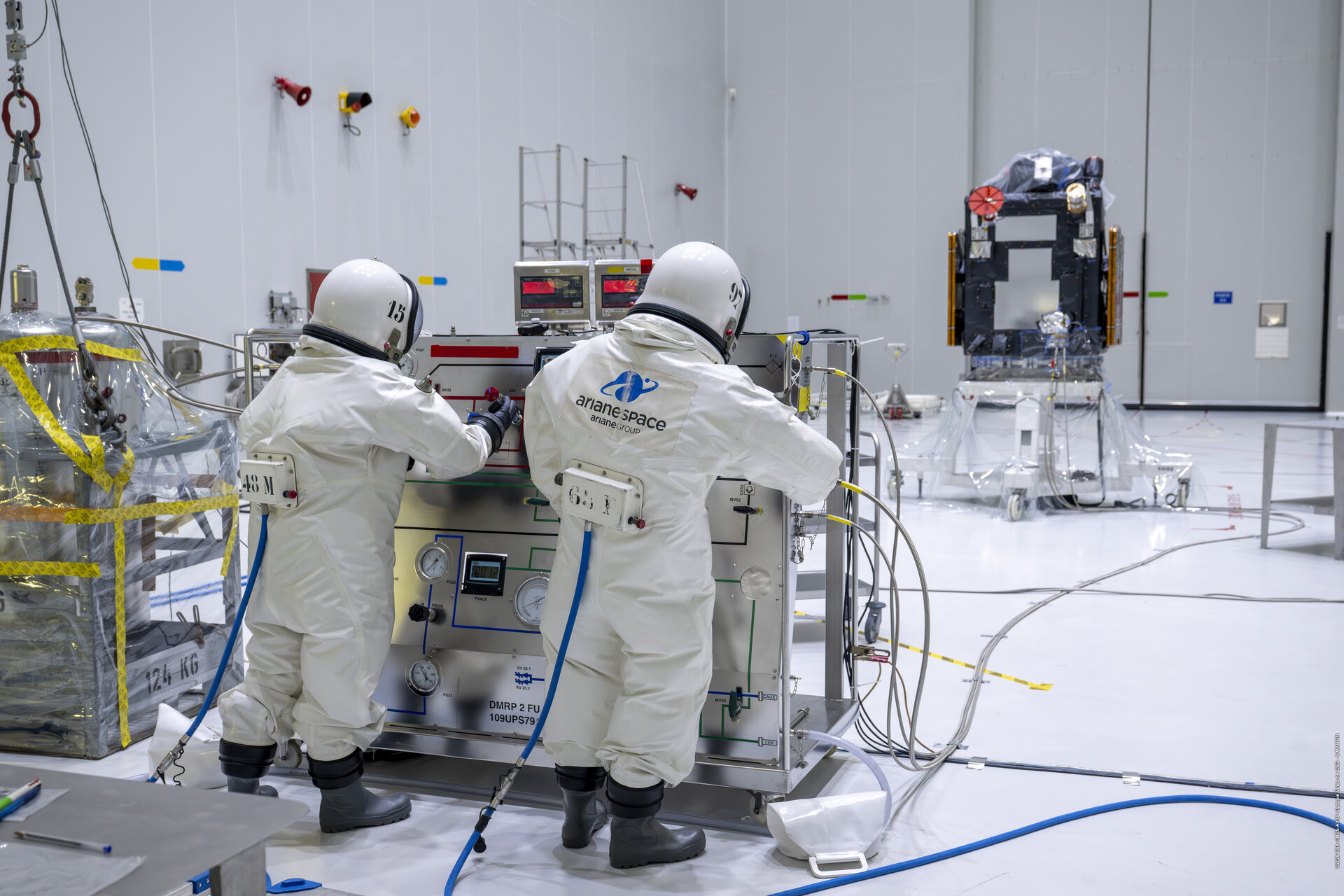
Spacecraft integration and launch hardware details reported ahead of liftoff highlighted the Vega-C’s four-stage architecture. The rocket’s first three stages—P120C, Zefiro-40 and Zefiro-9—use solid propellant; the AVUM+ upper stage uses a Ukrainian RD-843 engine and hypergolic propellants (UDMH and dinitrogen tetroxide), and is capable of performing up to seven burns. The Vega-C can deliver up to 2,300 kg to a 700-km sun-synchronous orbit, roughly 50 percent more capacity than the original Vega vehicle.
Avio’s CEO Giulio Ranzo commented in a post-launch statement that the mission’s success “confirms Avio as a reliable Launch Service Operator for Vega-C launches,” and said the launcher “performed flawlessly, putting in orbit two strategic satellites for Europe, that demonstrate how space technologies have become essential in addressing the environmental and climate change challenges.” European Space Agency and Avio imagery and social posts confirmed both spacecraft were healthy after deployment.
The VV30 flight was the second Vega‑C launch of 2026 and the eighth Vega‑C mission overall. It was also the second Vega‑C flight managed solely by Avio after its split from Arianespace. EuropeanSpaceflight reports that following this success Avio will focus on a third Vega‑C launch planned for the end of the year, which Avio said during an earnings call on 10 September is expected at the “very beginning of December” and will carry a batch of satellites for Italy’s IRIDE Earth observation constellation.
Operationally, Sentinel-3C strengthens Copernicus continuity for ocean and land parameters that underpin weather forecasting, marine services and climate monitoring, while FLEX delivers a novel capability: systematic, global maps of plant fluorescence that will be used by researchers, agricultural agencies and climate scientists to better quantify photosynthetic performance and vegetation stress. ESA’s launch video and coverage placed the liftoff at 03:21 CEST on 15 September, matching the mission timeline reported by Avio and EUMETSAT.
Historically, FLEX represents an evolution in Earth-observation approaches. Earlier satellite missions inferred vegetation activity from proxies such as leaf area index, greenness indices and surface reflectance; fluorescence is a more direct biophysical measurement of photosynthesis. Sentinel-3 builds on a decade-plus heritage of medium-resolution optical and radar missions in the Copernicus programme, which has become a backbone for European environmental monitoring and services.
Looking forward, FLEX and Sentinel-3C will enter a commissioning phase lasting weeks to months as teams calibrate instruments and validate data streams. Data from both missions are expected to feed operational services and scientific research, improving understanding of plant carbon uptake, the health of global vegetation, and ocean and atmospheric processes relevant to climate change and environmental policy.
NovΔ mAInd's launch database: Arianespace — 8 launches tracked, 100% success rate, first flight 2025-04-29, most recent 2026-08-27, 21650 kg to LEO; Launch Vega-C | Sentinel-3C & FLEX — scheduled 2026-09-15, it flew successfully, orbit Sun-Synchronous Orbit, operator Avio S.p.A