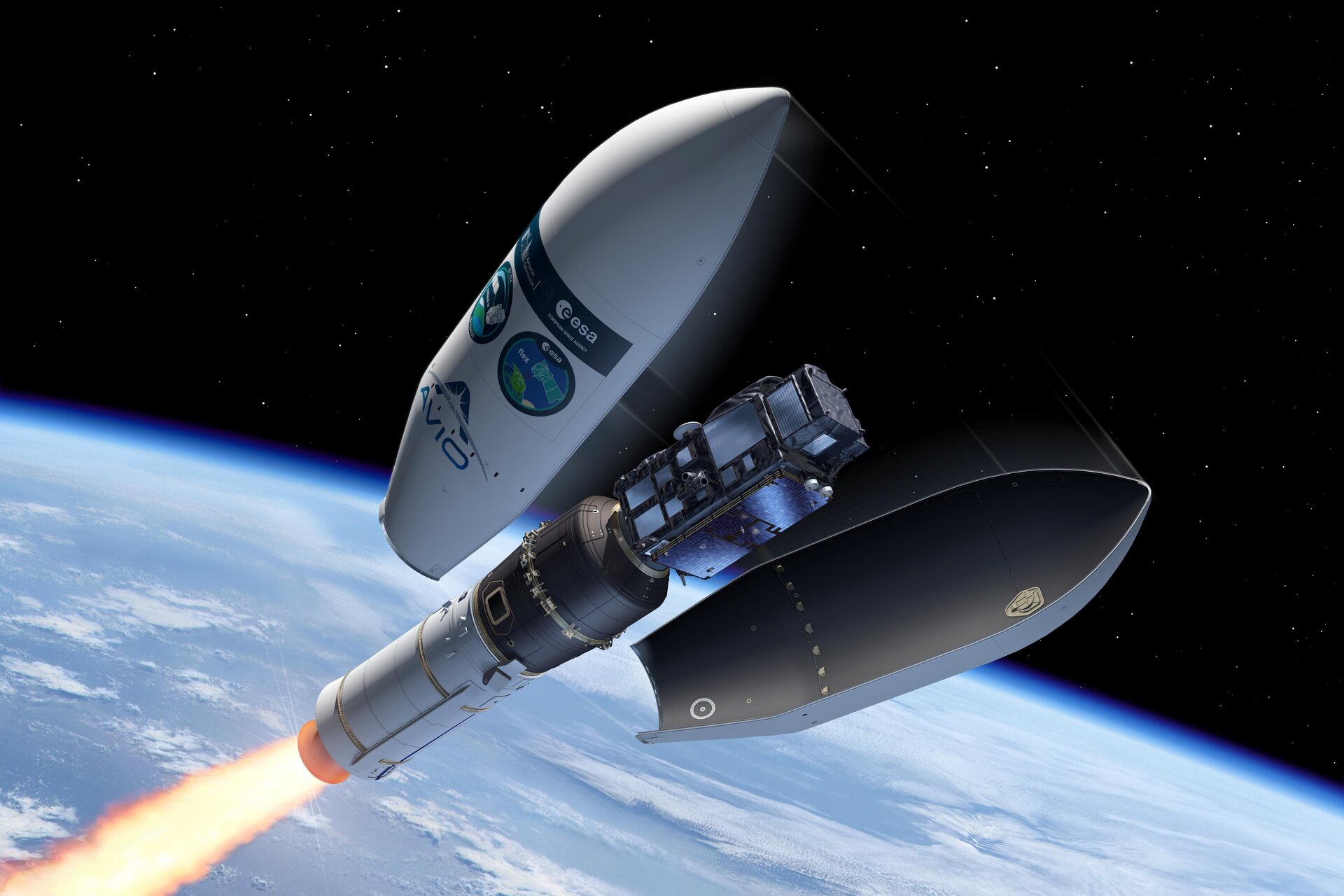
ESA readies Vega-C VV30 to deploy Sentinel-3C and Earth Explorer FLEX
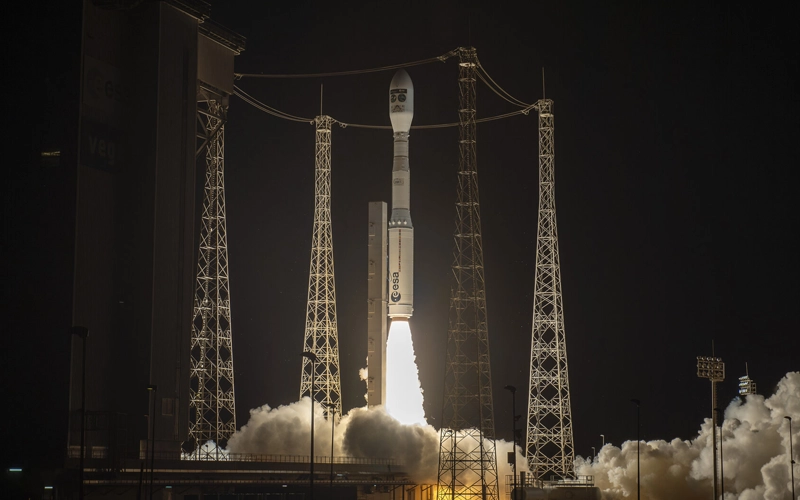
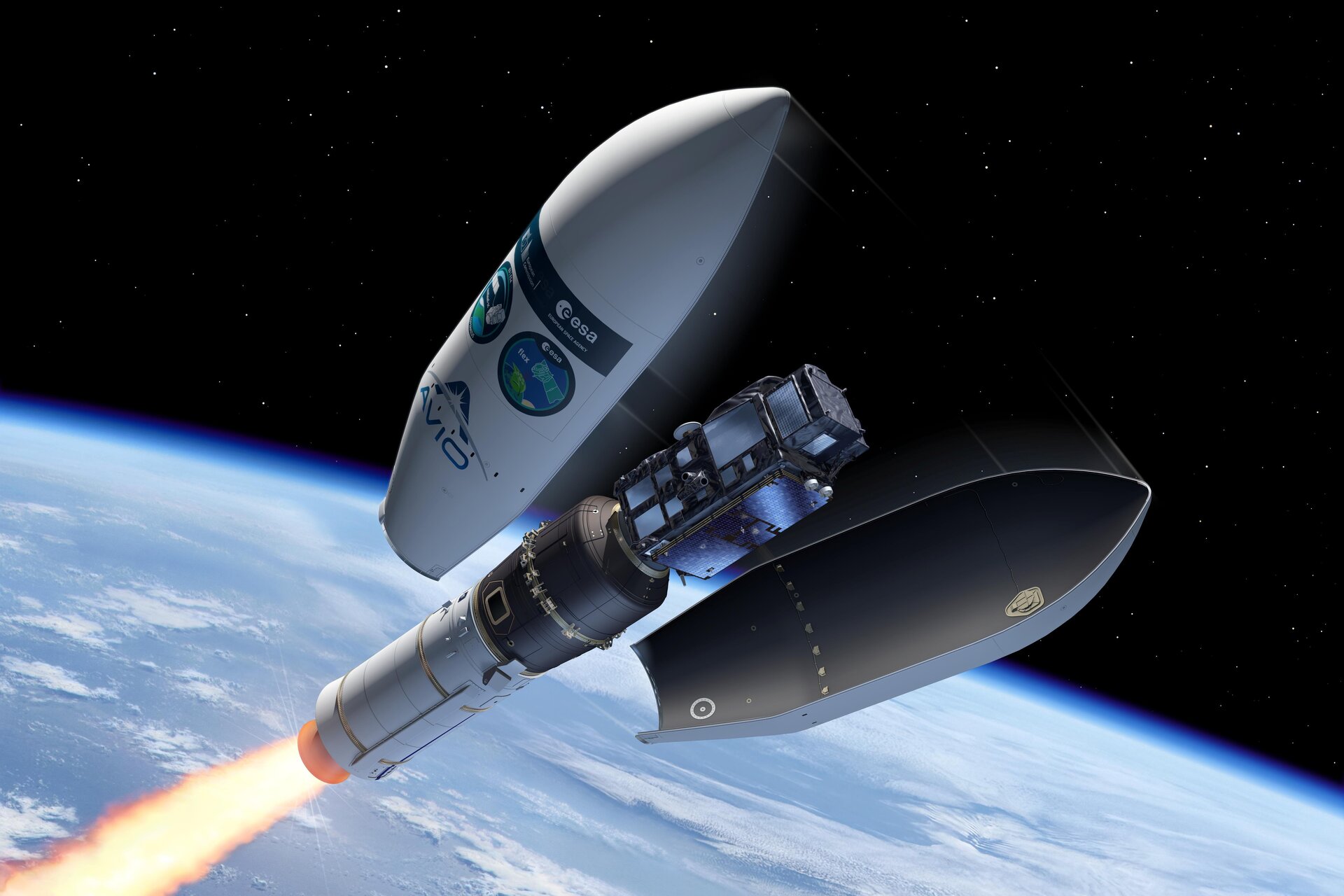
The European Space Agency (ESA) prepared its Vega-C rocket for flight VV30 to carry two Earth-observation satellites — the Copernicus Sentinel-3C spacecraft and the Fluorescence Explorer (FLEX) — with liftoff scheduled for 15 September 2026 at 03:21 CEST (14 September 22:21 local time) from Europe’s Spaceport in French Guiana. Both satellites were encapsulated inside the Vega-C fairing and stacked using a Vespa secondary payload adapter so that Sentinel-3C will be deployed first and FLEX follows approximately one hour later.
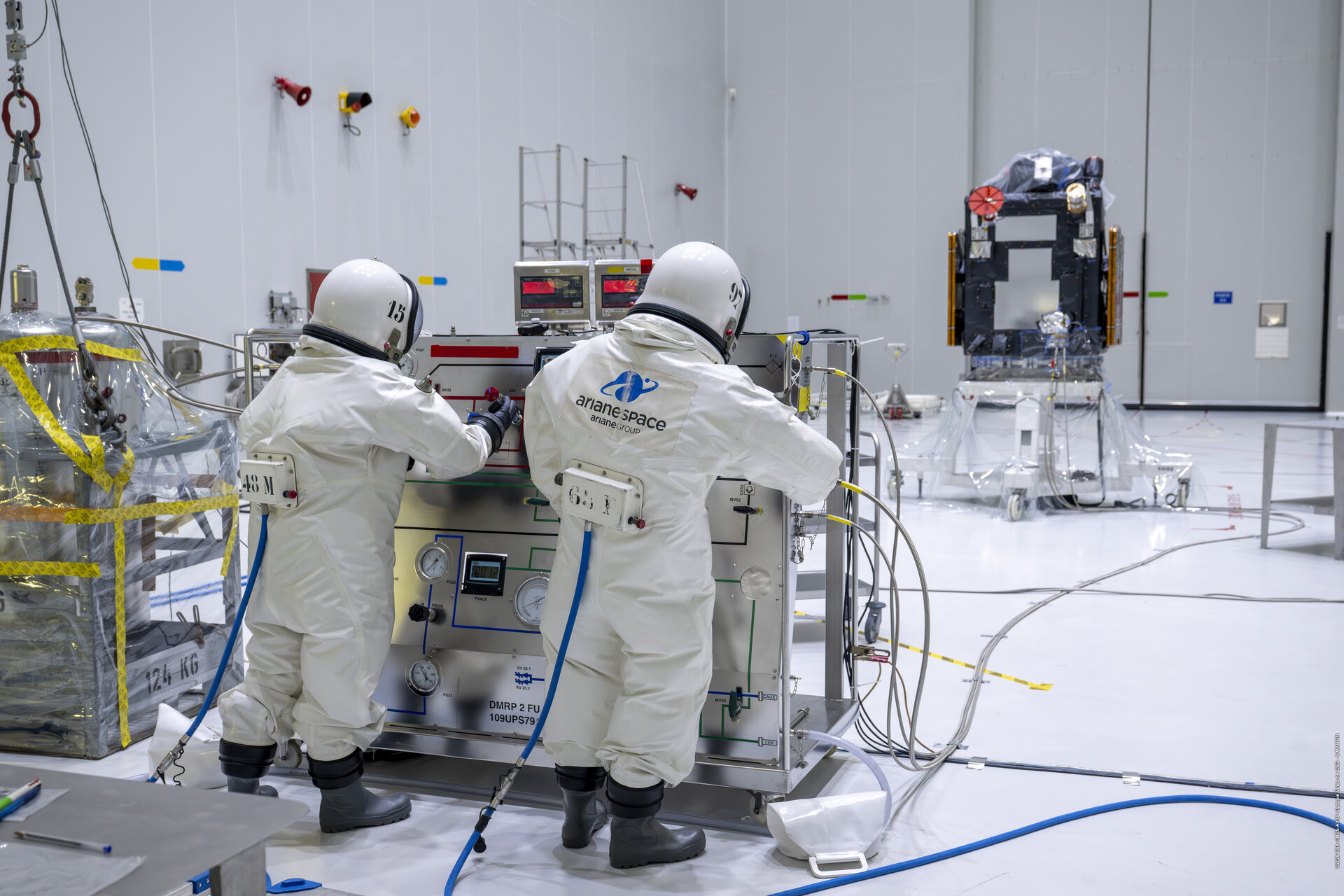
Encapsulation marked the close of more than six weeks of campaign activities at the spaceport, during which teams fuelled and tested both satellites and prepared the Vespa interface. The fairing halves were then closed to shield the payloads from the acoustic, vibrational and aerodynamic loads of ascent. ESA’s coverage planned live broadcast windows beginning at 02:50 CEST and showing separation events: Sentinel-3C at around 04:21 and FLEX at about 05:17 CEST.
Sentinel-3C is the third satellite in the Sentinel-3 series that contributes routine, multisensor observations in support of the EU’s Copernicus services. As with the two Sentinel-3 predecessors launched a decade earlier, Sentinel-3C carries instruments to measure oceans, land, ice and the atmosphere and will supply data for ocean and weather forecasting and near‑real‑time applications. ESA materials emphasise that Sentinel-3C will continue the long-term record of these essential environmental parameters.
FLEX is an ESA Earth Explorer mission developed under the FutureEO programme and is the agency’s first satellite optimised to observe photosynthetic activity from orbit. Its Fluorescence Imaging Spectrometer is designed to detect the extremely faint fluorescence that plants emit during photosynthesis — a signal invisible to the human eye — from an operational altitude of 814 km. FLEX is expected to produce global maps of vegetation fluorescence at 300 × 300 metre resolution, providing a direct proxy for photosynthetic efficiency and a new way to assess plant health, ecosystem productivity and the effects of environmental stress on carbon and water cycles.
Following separation, mission controllers at ESA’s European Space Operations Centre (ESOC) in Germany planned to receive the first signals from each satellite and undertake the Launch and Early Orbit Phase (LEOP), a careful process of checking and verifying spacecraft health and system performance over the coming days. ESA’s Director of Earth Observation Programmes, Simonetta Cheli, said this campaign represented “the culmination of years of scientific innovation, engineering excellence and international cooperation,” and thanked the teams who prepared both satellites for launch.
The dual-payload stacking approach relied on the Vespa adapter: FLEX was encapsulated within the lower part of Vespa while Sentinel-3C was mounted on the upper part, enabling the launcher to inject Sentinel-3C first. ESA communications noted that FLEX will initially orbit in tandem with one of the operational Sentinel-3 satellites, and that Sentinel-3 will be used to provide critical atmospheric information such as clouds and aerosols to support FLEX observations.
Operationally, the Vega-C launcher is built and operated by Avio S.p.A., which is named as the vehicle operator for this flight. According to NovΔ mAInd's launch database, the Vega-C launch carrying Sentinel-3C and FLEX was scheduled for 2026-09-15 and had not flown at the time of the database entry; the mission profile listed a Sun‑synchronous orbit and the operator as Avio S.p.A.
Scientifically, the missions are complementary. Sentinel-3C continues the systematic environmental baseline — sea surface temperature, ocean colour, altimetry proxies, land surface temperature and ice monitoring — that underpins operational Copernicus services, while FLEX provides a novel measurement directly tied to photosynthetic function. By linking fluorescence-derived estimates of photosynthetic activity with atmospheric and surface state measured by Sentinel-3 instruments, researchers expect improved constraints on how ecosystems take up carbon and respond to drought, heat and other stressors.
Historically, the Sentinel programme has been a backbone of European operational Earth observation since the first Sentinel-3 launch a decade earlier, delivering data for maritime safety, land management and climate research. FLEX continues a line of ESA Earth Explorer missions aimed at focused scientific objectives — from magnetospheric studies to biomass and atmospheric chemistry — by bringing a targeted instrument to a specific biophysical question.
Looking ahead, ESA’s campaign plan envisages a series of checks, instrument commissioning and calibration phases after LEOP before routine science and operational data delivery begin. The agencies and teams involved will likely publish commissioning schedules and early data validation results as the instruments reach nominal performance. The combined orbiting of FLEX and the Sentinel-3 constellation may enable new synergies for process studies and user services that bridge research and operational Copernicus applications.
For the moment, attention remained focused on the countdown and the separation timeline for VV30, and on the formal commissioning activities that will determine when each satellite can begin supplying the datasets that mission planners and the user community expect.