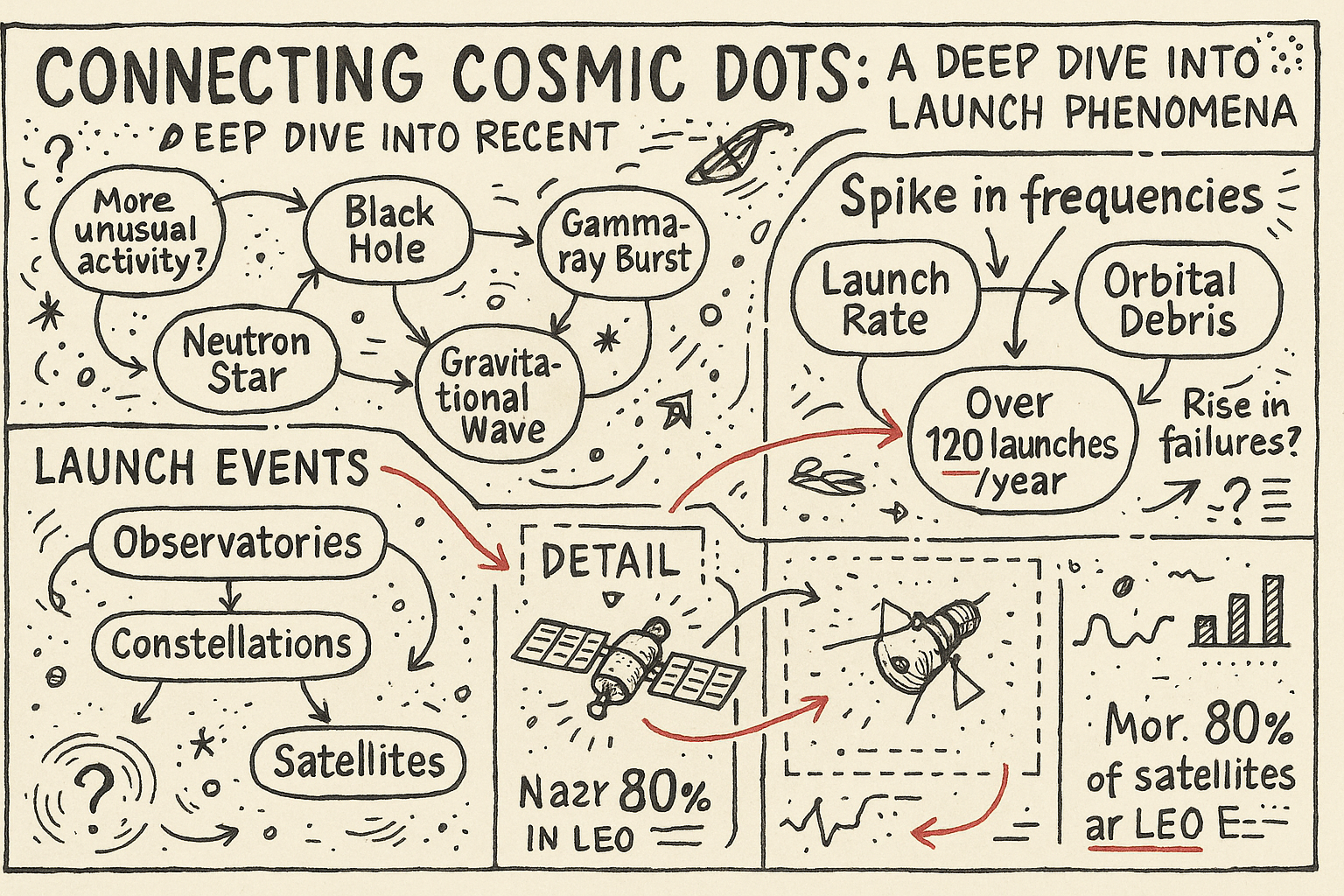
In recent weeks, a series of astronomical events and advancements in space exploration have captivated the scientific community. These occurrences, ranging from mesmerizing celestial displays to pivotal technological developments, are not just isolated instances but interconnected pieces of a larger cosmic puzzle.
Understanding the Celestial Canvas
Among the fascinating events is the apparition of a vaporizing meteor photobombing the Lacerta Nebula. This phenomenon, captured in a series of stunning images, underscores the dynamic interactions between celestial bodies within our universe. Similarly, the appearance of the Buck Moon, accompanied by the ethereal Belt of Venus, serves as a reminder of the intricate dance of planetary and lunar alignments.
These events, while visually captivating, also offer insights into the conditions and forces that affect space launches. The gravitational pull and atmospheric conditions observed during such phenomena can provide critical data for future missions, enhancing our ability to predict and navigate the challenges of launching spacecraft.
Technological Milestones and Their Implications
On the technological front, the testing of Artemis moonsuits marks a significant milestone in space exploration. These suits are designed to withstand the harsh conditions of lunar environments, ensuring astronaut safety and mission success. As NASA progresses with its Artemis program, the lessons learned from these suit tests will feed into the broader strategy for sustainable human presence on the Moon.
Another intriguing development is the discovery of the first 'three-headed' asteroid. Such findings expand our understanding of asteroid compositions and behaviors, critical for developing strategies to mitigate potential asteroid impacts on Earth. The study of these celestial bodies also informs the design and trajectory planning of spacecraft, ensuring missions can safely navigate these cosmic obstacles.
Interconnecting Threads in Space Exploration
When viewed collectively, these events and advancements highlight the interwoven nature of astronomical observation and space technology. Understanding cosmic phenomena allows scientists to refine models that predict the timing and success of launches, while technological advancements, such as the Artemis moonsuits, translate these observations into actionable capabilities.
Moreover, the data derived from observing celestial events can inform policy decisions and resource allocations within space agencies. For instance, understanding the impact of lunar gravitational forces on spacecraft trajectories can lead to more efficient mission planning and cost reduction.
Future Implications and Surprising Insights
One of the most surprising insights derived from these recent developments is the dual role of celestial events as both spectacles and scientific laboratories. While the public marvels at the beauty of meteor showers and lunar eclipses, scientists are gleaning data that could revolutionize our approach to space travel.
Looking forward, the integration of astronomical data into launch technology will likely accelerate. As we push further into space, the synthesis of observational astronomy and aerospace engineering will be pivotal in overcoming the challenges of interplanetary travel and establishing a human presence beyond Earth.
In conclusion, the recent astronomical events and advancements in space technology serve as a testament to the power of interdisciplinary collaboration. As we continue to explore the cosmos, these interconnected threads of discovery will undoubtedly weave a future where space is not the final frontier but a new beginning.