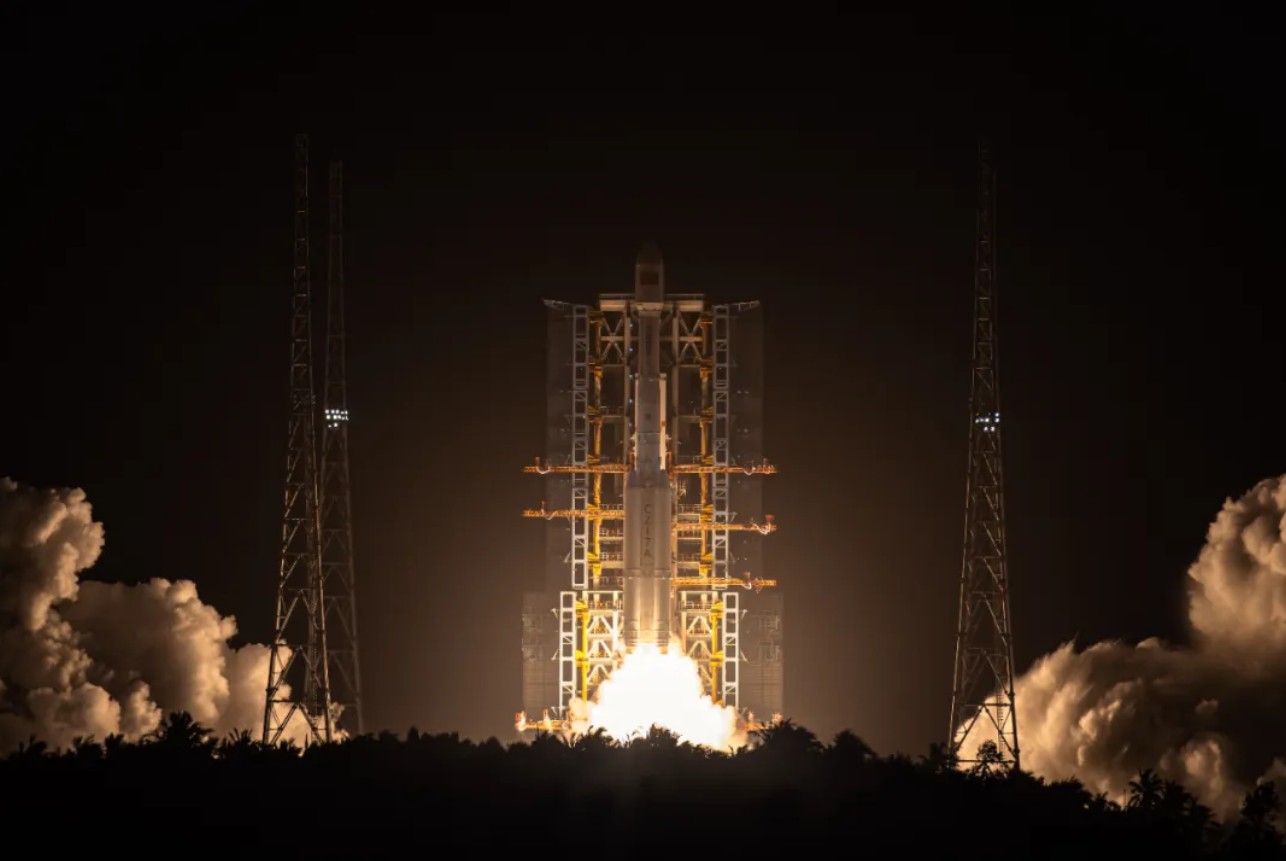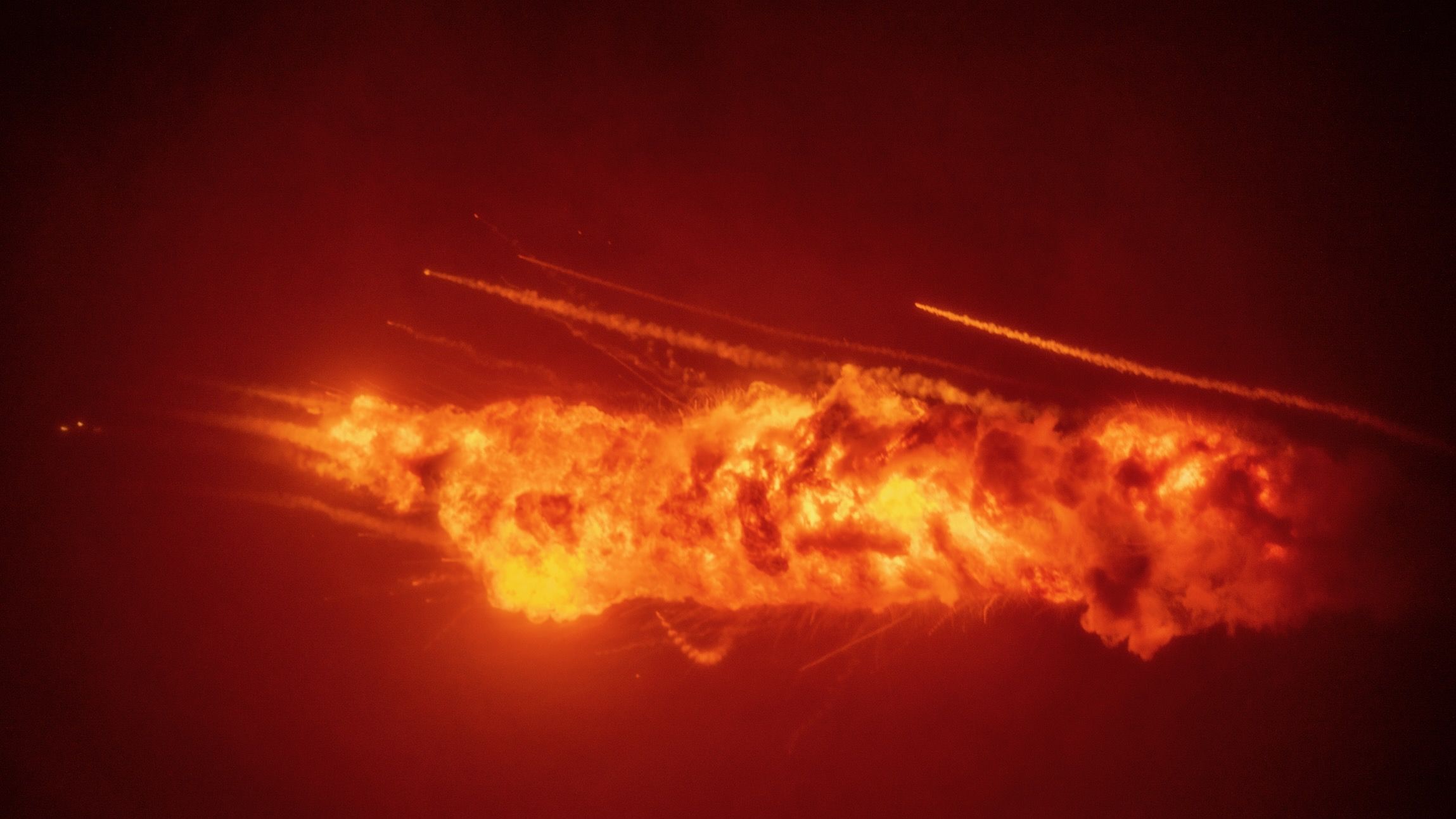
In a significant setback for China's space program, a Long March 7A rocket carrying the ChinaSat-4B communications satellite experienced a catastrophic failure shortly after launch. The rocket exploded approximately 85 seconds into its flight from the Wenchang Space Launch Site in Hainan province, resulting in the loss of the satellite.
The launch occurred at 12:00 UTC (8:02 p.m. local time) on August 10, 2026. The Long March 7A, a three-stage, liquid-fueled rocket designed by the China Aerospace Science and Technology Corporation (CASC), was tasked with delivering the ChinaSat-4B satellite to a geostationary transfer orbit. However, a significant anomaly led to the rocket's in-flight breakup during its main stage ascent, destroying both the rocket and its payload.
Footage from the launch, corroborated by multiple sources, confirms the explosion and a subsequent debris cloud forming in the upper atmosphere well before the completion of the first-stage burn. The rocket was intended to utilize four strap-on boosters alongside a kerolox core stage and a cryogenic upper stage derived from the Long March 3B series. This mission marked the 18th operational flight of the Long March 7A variant.
The failure has prompted immediate investigations by CASC. A formal failure investigation board is expected to review telemetry data, propulsion pressure logs, and optical tracking information to determine the root cause of the failure. As of now, no official technical explanation has been provided by Chinese authorities.
The ChinaSat-4B, reported by some outlets as Zhongxing-4B, was a geostationary communications satellite intended to expand broadcasting and data transmission services for China Satellite Communications (ChinaSat). The satellite's loss represents a setback for China's communications infrastructure goals.
This incident adds to a series of challenges faced by China's space program in 2026. The year has seen a total of 56 orbital launch attempts, with the Long March 7A failure being the fourth unsuccessful mission. Previous failures included the Long March 3B and the debut flights of the Ceres-2 solid rocket and the Tianlong-3 rocket.
The Long March 7A has had a history of both successes and failures. Its inaugural launch in March 2020 ended in failure due to an engine anomaly during first-stage separation. However, the rocket had since demonstrated reliability with successful launches, including the recent deployment of the Tianlian-3 (01) satellite in late July 2026. The current failure occurred earlier in the flight profile than previous issues, prior to the scheduled separation of the four side boosters and core stage.
The implications of this failure are yet to be fully understood. The Long March 7A shares YF-100 kerolox engines with the Long March 5 rockets, which are key to China’s ambitious lunar exploration missions, including the upcoming Chang’e-7 mission to the lunar south pole, scheduled for August 24, 2026.
China's space program, which has been expanding rapidly over the past decade, is known for its resilience and capacity for quick recovery. However, the impact of this incident on future launches, particularly those involving similar technology, remains to be seen. The incident highlights the inherent risks involved in space travel and the continual challenges faced by even the most seasoned space programs.