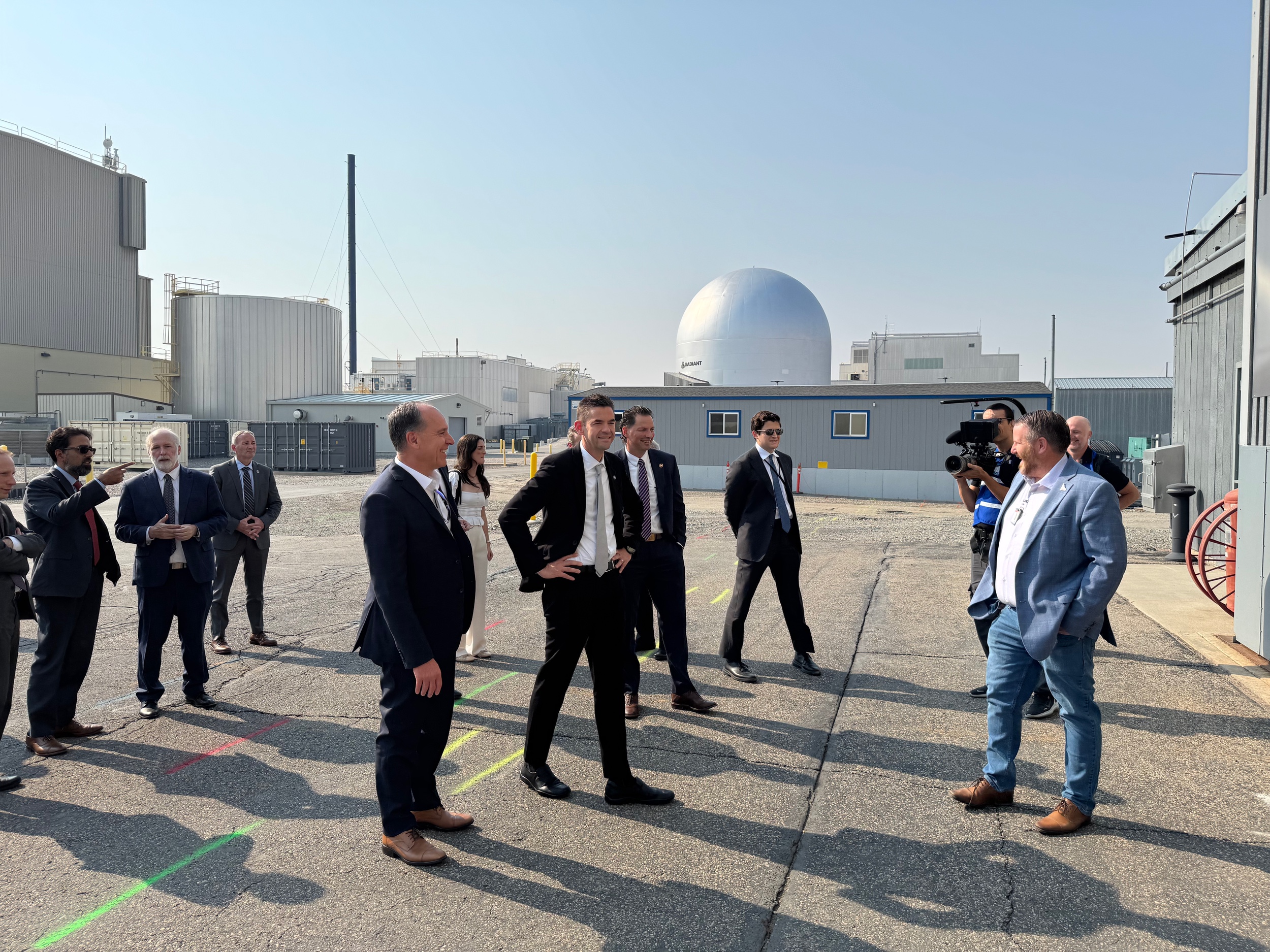
NASA is making significant strides towards realizing its ambitious goals of interplanetary travel, as highlighted by a recent visit to the Idaho National Laboratory (INL) by NASA Administrator Jared Isaacman and Associate Administrator Amit Kshatriya. This visit, which took place on August 7, underscored NASA's growing confidence in the development of its nuclear electric propulsion system, a key component of the Space Reactor 1 (SR-1) Freedom mission, scheduled for launch by the end of 2028.
The INL is tasked with building the reactor for the SR-1 Freedom mission, a project that represents a pivotal step towards the application of nuclear technology in space exploration. This mission will employ a 20-kilowatt-electric nuclear reactor to power an electric propulsion system. Originally developed for the lunar Gateway, this system is designed to propel a spacecraft to Mars, where it will deploy a set of helicopters named SkyFall, modeled on the Ingenuity rotorcraft that accompanied the Perseverance Mars rover.
During his visit, Isaacman drew an analogy between SR-1 Freedom and the USS Nautilus, the first nuclear-powered vessel launched by the U.S. Navy. He emphasized that SR-1 Freedom could be the precursor to a new era of space exploration, akin to the transformative impact the Nautilus had on naval operations. Isaacman described this initiative as leading towards a 'nuclear NASA of the future,' envisioning an 'agencywide Apollo-like endeavor' that progressively incorporates new technology for space exploration. This vision includes a series of SR missions, eventually culminating in a vehicle capable of crewed missions to Mars and back.
Isaacman's remarks highlighted the strategic importance of SR-1 Freedom as a foundational element of what he termed the 'third space race.' Following the original space race of the 1960s and the ongoing efforts to return humans to the moon, this new phase focuses on the technological advancements necessary for human exploration of Mars. The SR-1 Freedom mission is not just a standalone project; it is part of a broader plan that involves establishing a lunar base within the next decade, as announced by NASA at the same event where SR-1 Freedom was revealed.
Despite the ambitious nature of these plans, Isaacman expressed high confidence in meeting the 2028 launch timeline for SR-1 Freedom. He noted that both government and commercial teams are progressing swiftly, driven by the shared objective of advancing nuclear propulsion technology for space applications. This progress is crucial, as the successful implementation of SR-1 Freedom will lay the groundwork for future missions that could eventually transport astronauts to Mars.
The development of nuclear propulsion for space exploration is not without its challenges. However, the commitment shown by NASA and its partners at INL indicates a strong determination to overcome these obstacles. The use of nuclear technology in space offers the potential for greater efficiency and power compared to traditional chemical propulsion systems, making it a promising option for long-duration missions beyond Earth's orbit.
As NASA continues to refine its plans for SR-1 Freedom and other related initiatives, the agency remains focused on the broader implications of these technologies. The success of this mission could mark a new chapter in human space exploration, bringing us closer to the dream of reaching and exploring Mars. Such advancements not only push the boundaries of space travel but also inspire future generations to pursue careers in science, technology, engineering, and mathematics, ensuring the continued progress of humanity's journey into the cosmos.