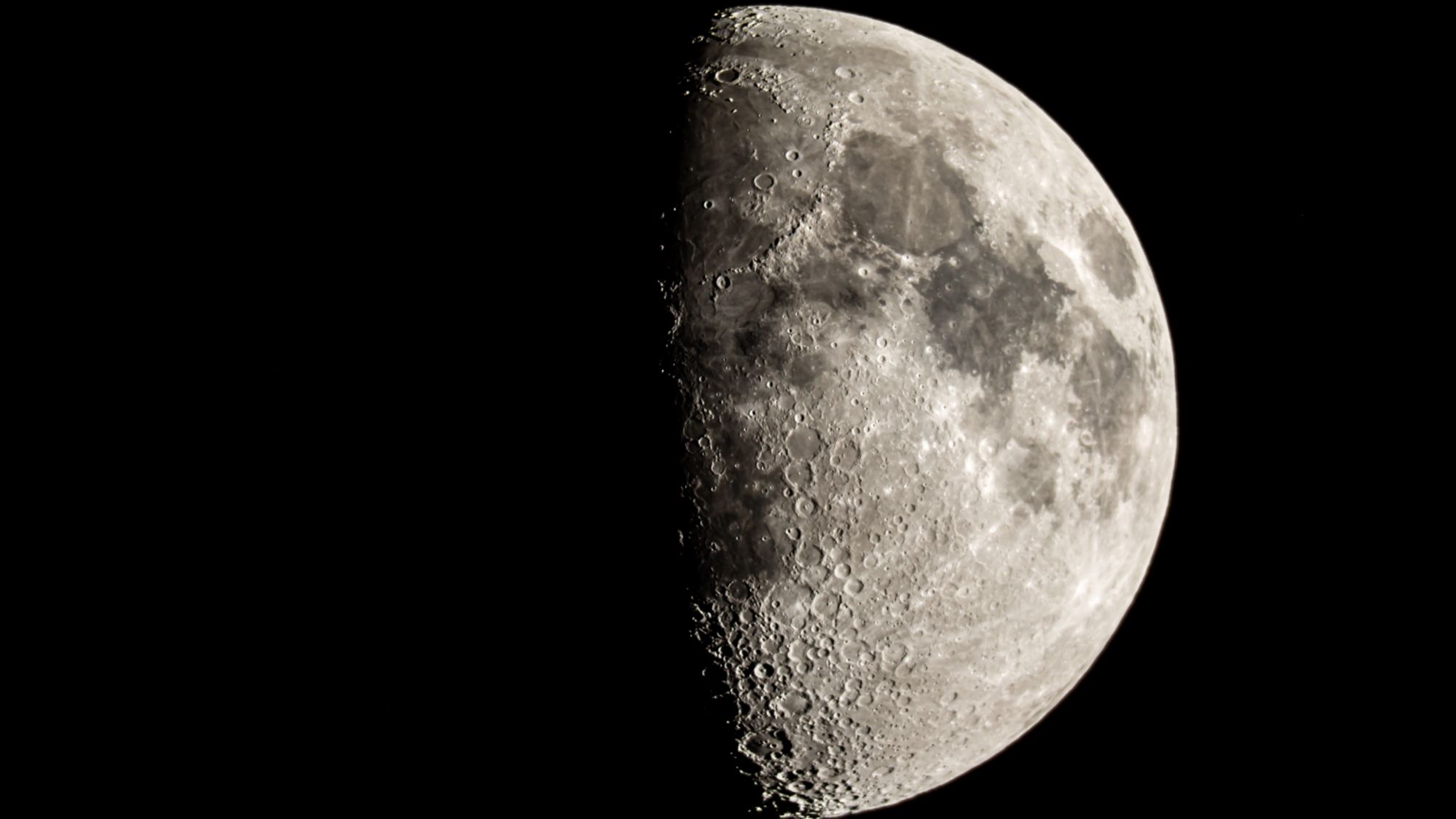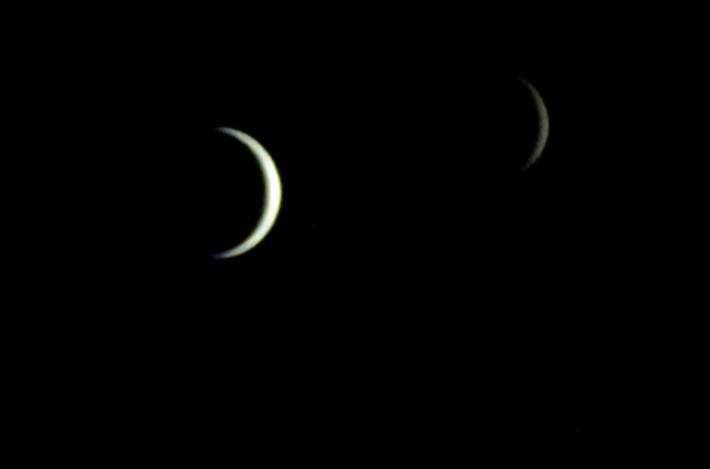
In an impressive display of engineering and collaboration, NASA's ESCAPADE mission has captured striking images of Earth and the Moon. These photos, taken on July 3, 2026, offer a unique perspective of our planet and its natural satellite, seen from the vantage point of the Sun-Earth L2 Lagrange point, about 1.5 million kilometers distant. This milestone is part of ESCAPADE's journey towards Mars, where it seeks to study the Red Planet's magnetosphere and atmospheric loss to solar winds.
The ESCAPADE mission, short for Escape and Plasma Acceleration and Dynamics Explorers, is a testament to the capabilities of small, cost-effective missions under NASA's SIMPLEx program. With a budget cap of $55 million, the mission's twin spacecraft, named Blue and Gold in homage to the University of California, Berkeley, were launched on November 13, 2025, aboard Blue Origin's New Glenn rocket. These spacecrafts were constructed by Rocket Lab and processed at Astrotech’s Space Operations Facility in Florida.
The captured images are not just visually stunning but scientifically significant. They were taken using visible and thermal-infrared sensors developed by faculty and students at Northern Arizona University, with support from UC Berkeley and Rocket Lab. The visible-light image shows Earth and the Moon as 8% sunlit crescents, a view that only a deep-space mission could provide. In contrast, the thermal-infrared image reveals more about the bodies' thermal characteristics. Earth's nightside hemisphere glows due to its heat, with temperatures ranging from -10°F to 44°F, while the Moon's nightside remains dark and cold at -280°F.
Christopher Edwards, a professor of planetary science involved in the project, highlighted the educational and scientific value of these images. The thermal image allows viewers to discern temperature extremes, with Antarctica and parts of Africa being visible. This data is crucial for calibrating the mission's instruments before they begin their primary task around Mars.
The journey of the ESCAPADE spacecraft to Mars is a significant step in understanding Martian atmospheric dynamics. Slated to arrive in Mars orbit by September 2027, the mission will employ dual spacecraft to take simultaneous measurements from different vantage points, enhancing our understanding of Mars' current atmospheric state and its historical changes.
The ESCAPADE mission is a collaboration between NASA, Northern Arizona University, and the University of California, Berkeley's Space Sciences Laboratory. This partnership exemplifies how academic institutions can contribute significantly to space exploration, providing both the technological tools and the educational framework to support complex space missions.
As the mission progresses, scientists and engineers are optimistic about the insights ESCAPADE will offer about Mars. Understanding how Mars lost its atmosphere is crucial not only for planetary science but also for future Mars exploration missions, including potential human landings.
Beyond its scientific goals, the ESCAPADE mission reflects a broader trend in space exploration: the increasing role of cost-effective, small-scale missions that leverage advanced technology and academic partnerships. These missions often provide critical data that support larger-scale projects and contribute to our broader understanding of the solar system.
In conclusion, the images of Earth and the Moon are a testament to human ingenuity and the international collaborative spirit that fuels space exploration. As ESCAPADE continues its journey, it not only paves the way for future Mars exploration but also enriches our understanding of Earth's place in the cosmos.