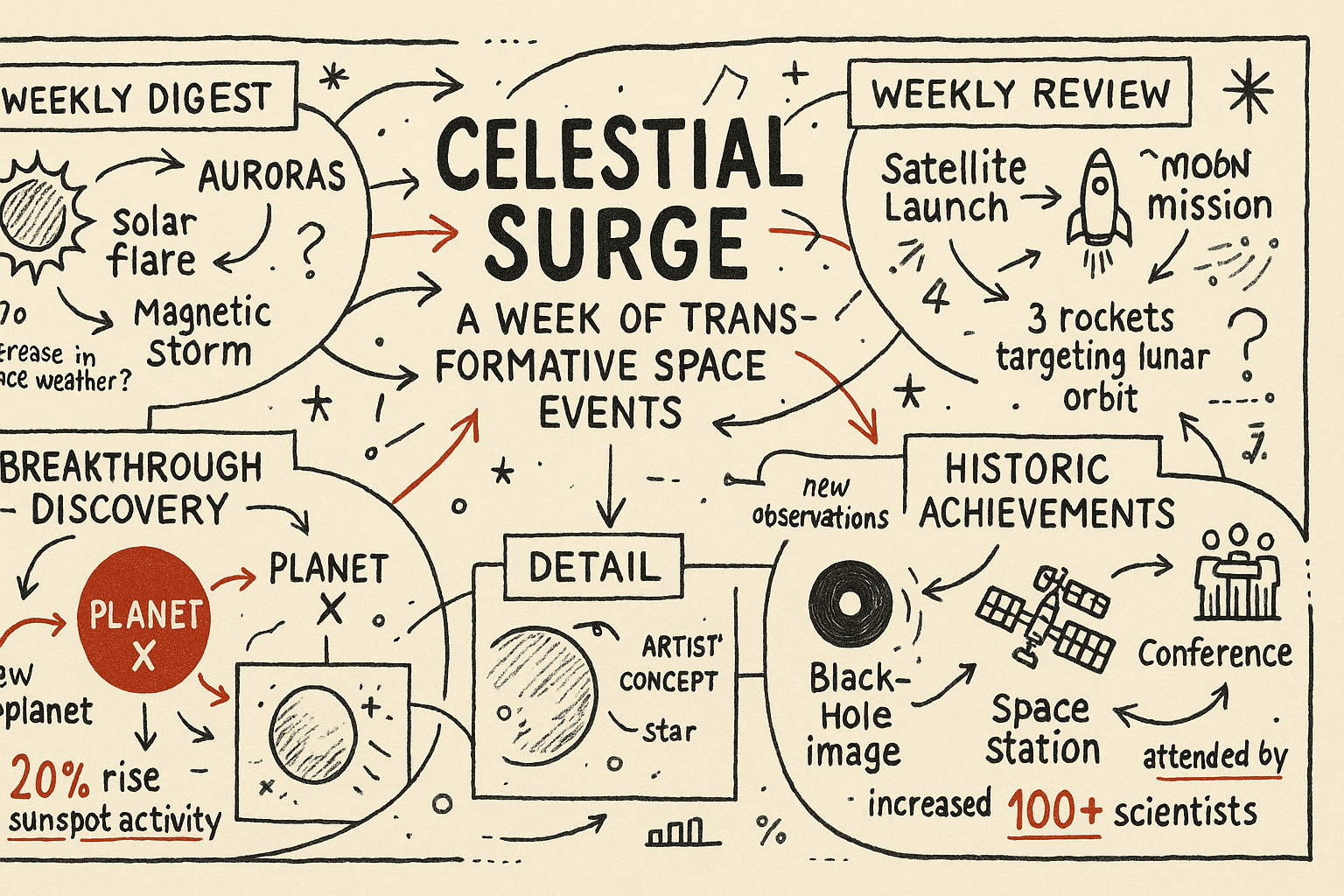
This week in space news, a whirlwind of events unfolded that not only captured the imagination but also charted new paths for exploration and industry. From the unintended lunar impacts raising concerns to strategic advancements in satellite constellations, the cosmos was abuzz with activity. Amidst these developments, the enduring theme of innovation and adaptation stood out, underscoring humanity's relentless pursuit of the stars.
Launch Activity: A Stage Set for the Future
SpaceX once again dominated headlines with its impressive launch cadence. The company achieved a remarkable milestone with its 51st Falcon 9 launch from the West Coast in 2026, continuing to expand its Starlink internet constellation. This achievement underscores SpaceX's pivotal role in reshaping global connectivity through satellite technology. Notably, the company's recent doubleheader launch, deploying satellites for Globalstar and the U.S. Space Force, marked a significant operational feat, setting a new record by launching two Falcon 9 rockets within 38.5 minutes.
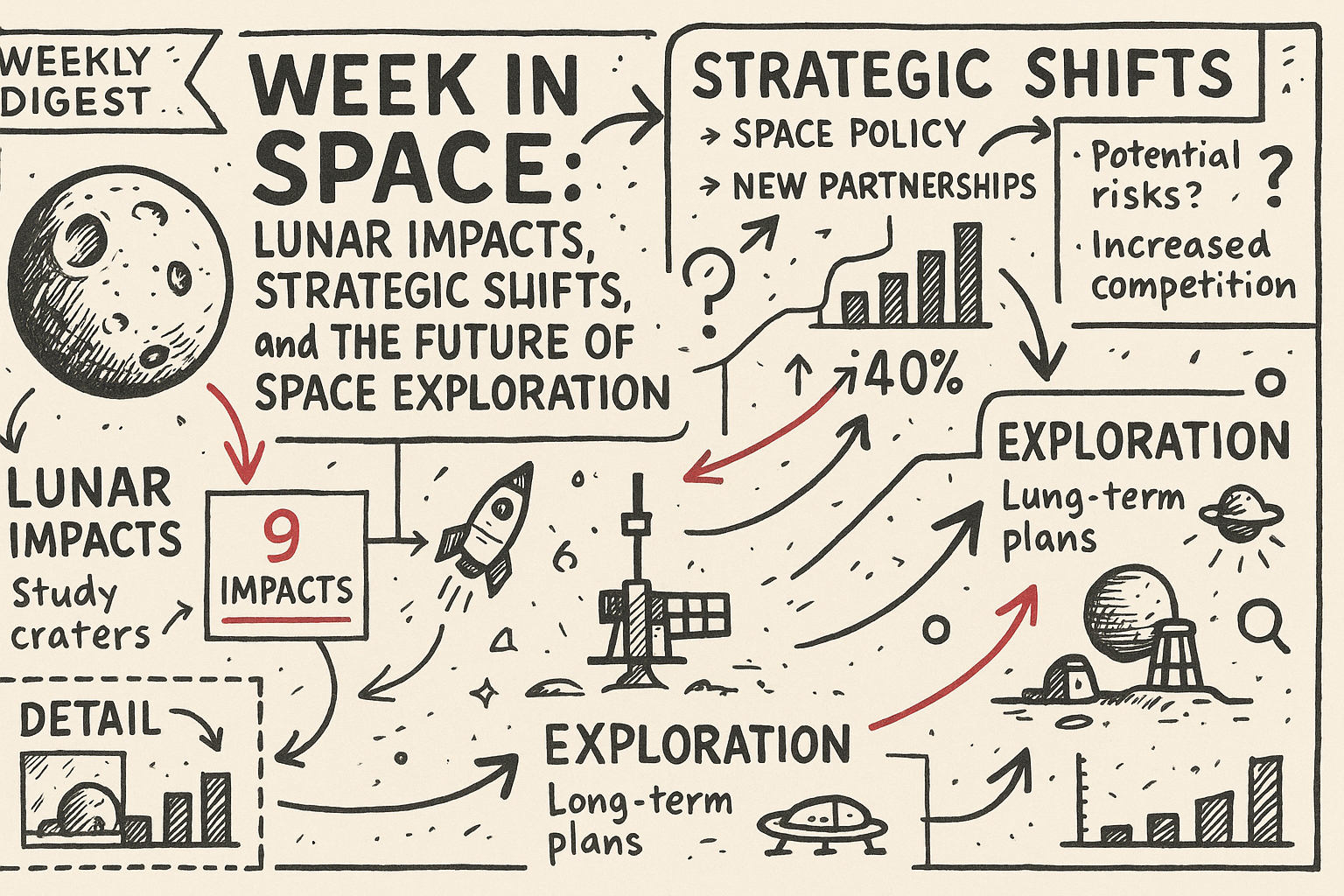
Yet, SpaceX's ventures aren't without their challenges. The unintended lunar impact of a Falcon 9 upper stage has sparked a debate about the growing concerns of space debris and its potential threats to future lunar exploration. This incident has opened new avenues for scientific exploration, with NASA collaborating with SpaceX to observe the impact and strategize prevention measures for future missions.
Meanwhile, Blue Origin faced its own set of challenges. The company identified the main oxygen valve in the BE-4 engine as the culprit behind the New Glenn rocket explosion. Despite this setback, Blue Origin is keen on resuming its launch activities this year, bolstered by the development of Launch Complex 36B at Cape Canaveral, aimed at supporting the new version of the New Glenn rocket.
Exploration & Science: Unveiling Cosmic Mysteries
This week also saw significant scientific discoveries that continue to unravel the mysteries of our universe. NASA's Perseverance rover captured a rare celestial event where Earth disappeared behind Mars' moon Phobos. This stunning observation not only highlights the rover's advanced capabilities but also enriches our understanding of Martian celestial dynamics.
On the lunar front, scientific observations following the Falcon 9's unintended impact have provided new insights into the Moon's surface. The analysis of the impact site, aided by Korean satellites and NASA's ongoing research, could inform future lunar base developments and strategies for dealing with space debris.
In addition, NASA's ongoing efforts to pioneer oxygen production on Mars through the MOXIE experiment aboard the Perseverance rover marked a crucial milestone. By extracting oxygen from the Red Planet's carbon-dioxide-rich atmosphere, MOXIE represents a significant step towards sustainable human presence on Mars, opening doors for future interplanetary habitation.
Industry & Policy: Strategic Shifts and Sovereignty
The space industry saw strategic movements aimed at bolstering economic and technological standing. Europe's ambitious IRIS² satellite constellation project took a definitive shape, with HispaSat at the helm, aiming to enhance Europe's strategic autonomy with a fleet of 348 satellites by 2029. This initiative reflects Europe's commitment to securing its place in the global space race, particularly in the face of increasing competition from U.S. and Chinese space endeavors.
Simultaneously, MDA Space reported significant financial growth, with $809 million in new orders, highlighting its strategic expansion into the U.S. market. These moves are indicative of the company's ambition to strengthen its global footprint in satellite technology and defense sectors.
In a similar vein, SpaceX's pivot towards AI technologies has begun to reshape its business model significantly. With its AI segment now outpacing the space segment in revenue, SpaceX is investing heavily in AI, integrating technologies such as Cursor and Tesla Megapacks. This strategic diversification not only aims to mitigate financial losses but also positions SpaceX at the forefront of innovative technology integration in the aerospace industry.
Looking Ahead: What Lies Beyond
As the week closes, the space industry stands on the cusp of further transformative developments. In the coming days, the focus will shift towards NASA's Artemis III mission, with plans for an orbital test flight in 2027, testing crucial aspects of lunar landing systems. This mission represents a pivotal step in NASA’s broader Artemis program, aiming to return humans to the Moon and eventually establish a sustainable presence there.
Furthermore, the implications of the recent policy shifts and strategic collaborations in satellite networks and security will continue to unfold. As international collaborations reshape the space policy landscape, the emphasis on security and innovation remains paramount.
The celestial frontier is ever-expanding, and with each launch, discovery, and policy shift, humanity inches closer to a future where space is not just the final frontier but an integrated part of our existence. As we watch the skies and plan for the next week, one thing is certain: the stars are not just above us, but now, more than ever, within our reach.