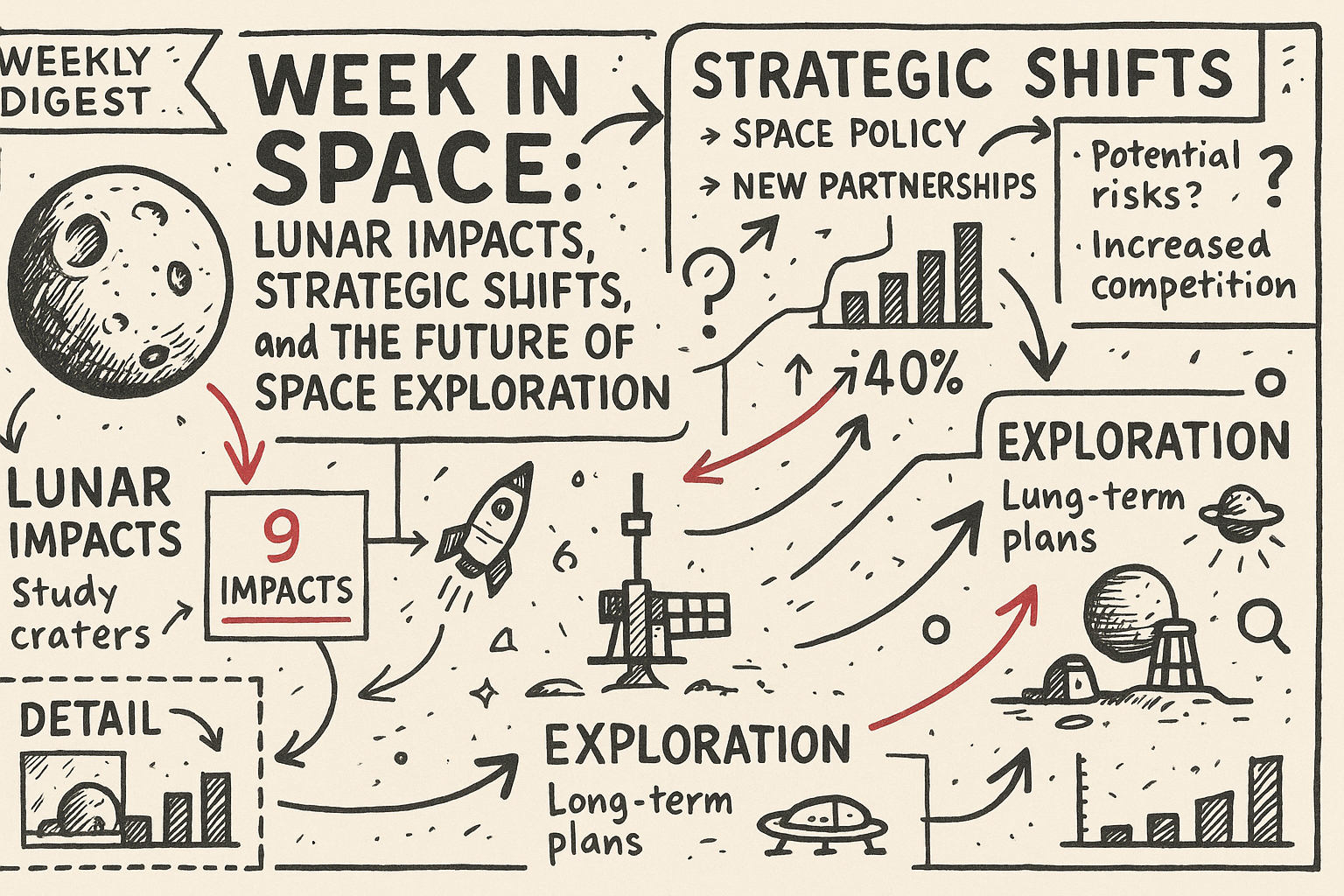
The cosmos was abuzz with activity this past week, as the intersection of human ingenuity and the vast expanse of space once again offered a wealth of discoveries and developments. Dominating the headlines was the unexpected lunar collision involving SpaceX's Falcon 9 rocket stage, an event that not only captivated scientific communities but also reignited discussions surrounding space debris and lunar exploration ethics. Meanwhile, strategic investments in military capabilities and technological advancements underscored the shifting dynamics of the space economy, while the James Webb Space Telescope continued its streak of cosmic revelations, deepening our understanding of the universe.
Launch Activity: Lunar Impacts and Strategic Deployments
The most talked-about event of the week was undoubtedly the unintended crash of a SpaceX Falcon 9 rocket stage into the Moon. This incident, though accidental, has been heralded as a rare opportunity for scientific observation, offering insights into the effects of artificial impacts on the lunar surface. The European Southern Observatory's Very Large Telescope observed the spectral signatures of sodium and lithium in the dust plume, while images from South Korea's Danuri orbiter, released later, confirmed the creation of a new lunar crater. These findings offer a unique window into lunar geology and the potential consequences of human activity on extraterrestrial bodies.
Despite the scientific opportunities, the incident has sparked a broader discourse on the management of space debris and the ethical considerations of lunar exploration. As the Moon becomes increasingly targeted for future missions and potential colonization, ensuring that such impacts do not compromise scientific objectives or future explorations becomes paramount. This event also serves as a reminder of the complex challenges posed by the growing population of defunct satellites and rocket stages in space.
In contrast to the unintended lunar impact, strategic satellite deployments made headlines as China successfully launched its TJS-27A and 27B satellites. These additions bolster China's capabilities in electronic intelligence and communications, marking a notable advancement in the nation's space infrastructure. Similarly, U.S. military interests in space were highlighted by the Air Force Research Laboratory's expanded contract with Blue Origin under the REGAL program, which explores rocket-based logistics as a transformative tool for military operations.
Exploration & Science: Cosmic Discoveries and New Frontiers
While lunar impacts dominated terrestrial discussions, the James Webb Space Telescope continued to unravel the mysteries beyond our planet. This week, it unveiled a fascinating feature in the Carina Nebula, dubbed the 'Treasure Chest,' a cometary globule offering new insights into star formation processes. Such discoveries not only enrich our understanding of cosmic phenomena but also underscore the importance of advanced telescopes in driving astronomical research.
The telescope's revelations were complemented by a study from the University of Heidelberg and the Polish Academy of Sciences on blazars, enigmatic celestial objects known for their intense emissions. Despite two decades of observations, the study on PKS 2155-304 raised more questions than answers, a testament to the complexities inherent in understanding our universe's most energetic phenomena.
On the lunar front, NASA's ambitions were reflected in new endeavors focusing on lunar agriculture, a critical step in sustaining long-term human presence on the Moon. As companies develop technologies to cultivate crops in the harsh lunar environment, the prospect of a self-sustaining lunar colony draws closer, promising to transform our approach to space exploration and settlement.
Industry & Policy: Strategic Shifts and Economic Impacts
The week also highlighted significant shifts in the global space economy, driven by both military investments and commercial advancements. The U.S. Department of Transportation's proposal to waive certain environmental regulations for commercial launches stirred debate, with industry advocates praising the move for expediting approvals, while environmentalists voiced concerns about potential ecological impacts.
Europe's strategic satellite pursuits further illustrated the competitive landscape, as investments in military communications emerged as a key component of the continent's space strategy. This is reflective of a broader trend where nations and private enterprises increasingly view space as a new frontier for geopolitical and economic influence.
In the commercial sector, Rocket Lab's $397 million contract to develop 'Flatellites' for the U.S. Space Force underscored the expanding role of private companies in national defense. These developments highlight the intersection of innovation and strategic interests as nations vie for technological supremacy in the increasingly crowded space domain.
Meanwhile, Redwire's partnership with SpaceX to launch the largest commercial microgravity research flight to date marks a significant milestone in pharmaceutical research, emphasizing the potential of space-based studies in advancing medical science.
Looking Ahead: Challenges and Opportunities
As we look forward to the coming weeks, key developments in space policy, exploration, and industry are poised to shape the future trajectory of space endeavors. The ongoing rescue mission for NASA's Swift Observatory, facing technical setbacks, serves as a reminder of the challenges inherent in space operations, while efforts to stabilize the rescue spacecraft continue. Additionally, with the launch of new satellite constellations and technological innovations on the horizon, the space sector remains a dynamic field ripe for breakthroughs.
The intersection of policy, technology, and exploration continues to drive progress, as stakeholders navigate the complexities of this new frontier. As humanity reaches further into the cosmos, the lessons learned from events such as the SpaceX lunar impact and the ongoing advancements in space infrastructure will undoubtedly inform future endeavors, ensuring that our exploration of the stars is as sustainable and insightful as it is ambitious.