In an era where the Earth's radio waves have become a cacophony of human-made signals, the quest to listen to the universe's quiet whispers has never been more challenging. The 'Wow!' signal, a high-energy radio burst detected in 1977, serves as a stark reminder of what might be missed today amidst the backdrop of satellite chatter and radar transmissions. This backdrop has motivated scientists to propose a solution that sounds almost otherworldly: establishing a radio telescope on the Moon's far side.
David DeBoer from the University of Oxford, along with his colleagues, has presented a compelling plan to build such a telescope, as detailed in a recent pre-print paper on arXiv. This initiative aims to address the growing challenge of radio frequency interference (RFI) that threatens to envelop even the lunar far side by 2030, given the anticipated increase in orbiters and landers.
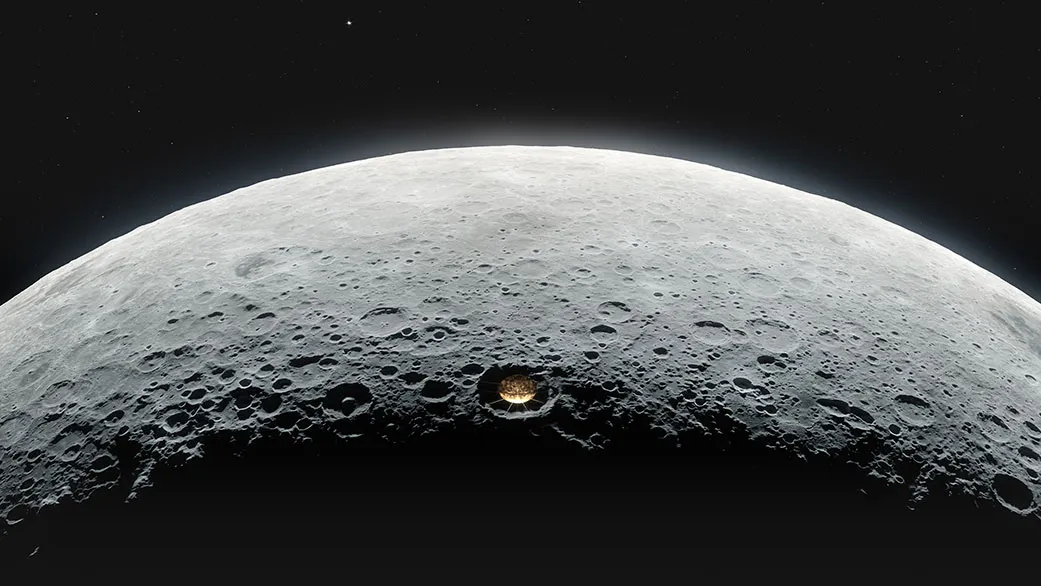
The Lunar Farside Transients and Technology Telescope (LFT3) is at the heart of this ambitious plan. By the end of the decade, this proposed mission intends to deploy a sophisticated radio antenna to the Moon's far side, a location that promises relative radio silence compared to Earth. The urgency is underscored by the fact that, by 2030, this last bastion of quietude might be compromised.
With a budget estimate of $150 million, the LFT3 project leverages NASA's Commercial Lunar Payload Services (CLPS) program, aiming to deliver a cost-effective yet groundbreaking solution. The telescope is designed to operate across HF, VHF, and UHF frequency bands, with a mission duration of around 20 weeks. During this period, it will endure the harsh lunar environment, where temperatures can swing from blistering 120°C during the day to a frigid -130°C at night.
The scientific objectives of the LFT3 are as ambitious as its engineering goals. One of the primary missions is to search for technosignatures, such as those akin to the 'Wow!' signal. The Breakthrough Listen initiative, which supports this project, is dedicated to listening for potential signs of extraterrestrial technological activities. Another intriguing aspect of the mission is to detect auroras around exoplanets, which not only produce radio signals but also indicate potential habitability.
The far side of the Moon presents an unparalleled opportunity for radio astronomy. Situated away from Earth's electromagnetic clutter, it offers a pristine environment for detecting faint cosmic signals. However, this advantage is time-sensitive. As human activity increases on and around the Moon, the window of opportunity to use this natural radio shelter is closing.
The LFT3 project is emblematic of a broader trend in modern astronomy, which increasingly seeks locations and technologies that can overcome the limitations imposed by Earth's interference. It reflects a growing recognition within the scientific community of the need to innovate and adapt to maintain our capacity to explore the cosmos.
As the countdown to 2030 continues, projects like the LFT3 highlight the intersection of urgency and ingenuity in space exploration. They remind us that our quest to understand the universe is not just about looking outward but also about finding the right vantage points from which to listen.