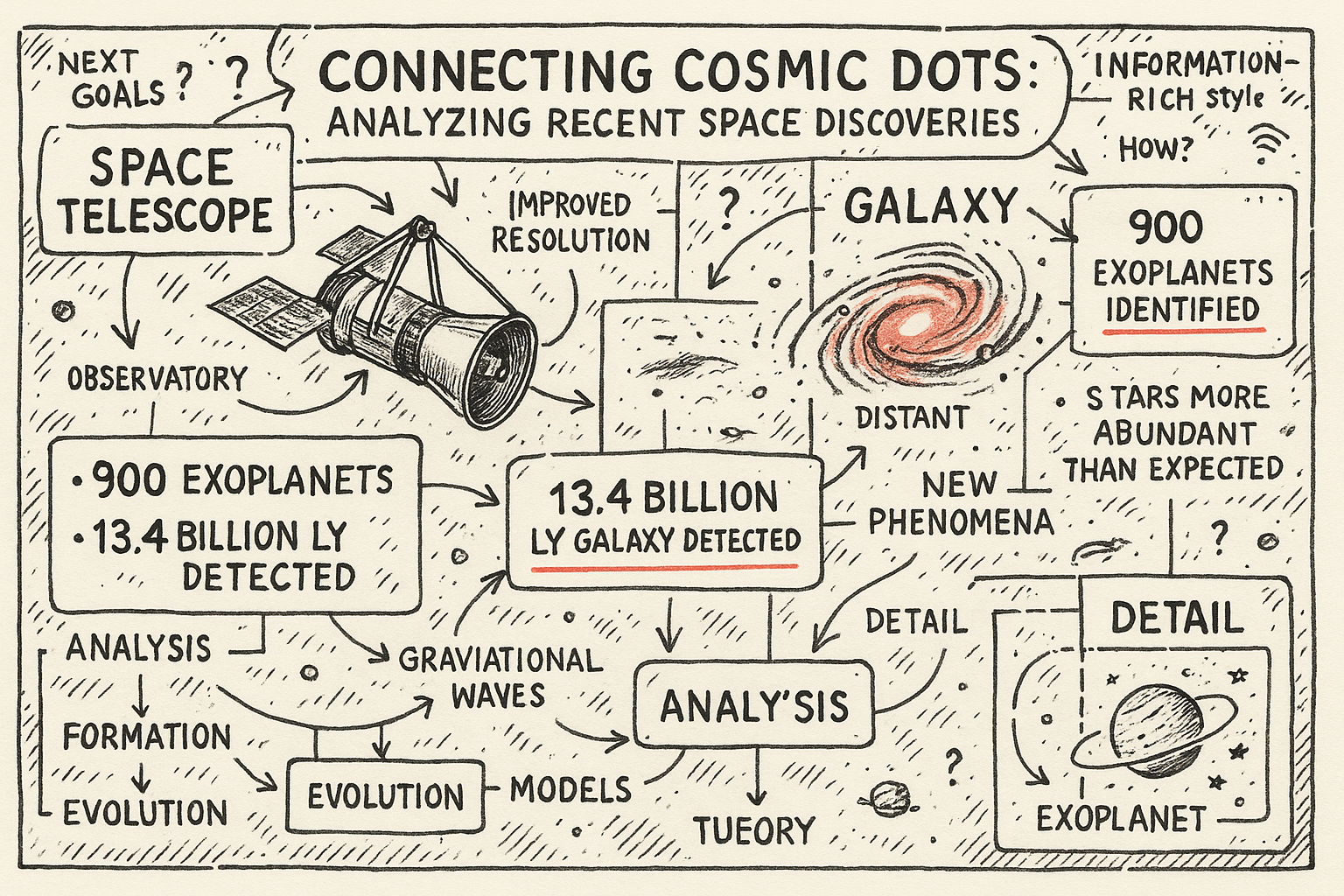
In the ever-expanding realm of space exploration, recent developments are weaving a rich tapestry of interstellar progress, offering a glimpse into how humanity's quest to understand the universe is evolving. From advancements in imaging technology to insights into extraterrestrial environments, these breakthroughs reveal a fascinating narrative of cosmic discovery.
The Eyes of the Cosmos
At the heart of many space missions is the ability to 'see' beyond Earth's confines. The transition from early Charge-Coupled Devices (CCDs) on the Hubble Space Telescope to the advanced detectors on board the upcoming Roman Space Telescope, as reported by Teledyne Space Imaging, marks a significant leap in our observational capabilities. These innovations are not merely incremental improvements but represent a fundamental shift in how we gather and interpret astronomical data, allowing us to probe deeper into the mysteries of the universe.
Such technological advancements are crucial as they enable us to detect phenomena that were previously invisible. For instance, the discovery of a non-transiting exoplanet using a combination of spectroscopic data and stellar light variations exemplifies the power of these new tools. Unlike traditional transit methods, this approach opens the door to identifying planets that were once hidden from our view, potentially increasing the known count of exoplanets significantly.
Interplanetary Progress and Prospects
Meanwhile, the successful launch of Japan's H3 rocket, which deployed the Michibiki 7 satellite, underscores the expanding role of national space programs in satellite navigation and potential deep-space missions. The H3's next target, Mars, reflects a growing ambition and capability in interplanetary exploration. Such missions not only bolster scientific knowledge but also enhance international collaborations, setting the stage for more integrated global efforts in space exploration.
Complementing these ventures, Argotec's collaboration with NASA on the MiniCOR satellite exemplifies the pivotal role of small satellites in studying solar phenomena such as coronal mass ejections. This endeavor highlights how smaller, cost-effective missions can contribute significantly to our understanding of solar dynamics and their impacts on space weather, which is crucial for safeguarding both terrestrial and space-based technological systems.
Life Beyond Earth?
In the realm of astrobiology, research suggesting that terrestrial microorganisms might survive in the shadowed regions of the lunar South Pole introduces intriguing possibilities for life beyond Earth. This finding prompts a reevaluation of planetary protection protocols and raises questions about the resilience of life in extreme environments. Such studies not only inform future lunar missions but also deepen our understanding of life's potential adaptability across the cosmos.
Galactic Recycling: A New Perspective
Equally captivating is the phenomenon of galactic recycling observed in the Helix Nebula. The ability to trace stellar debris as it disperses into the interstellar medium offers invaluable insights into the lifecycle of stars and the continual renewal of galactic matter. This process, akin to cosmic recycling, underscores the dynamic and interconnected nature of the universe.
These developments collectively paint a picture of a rapidly advancing field where technology, exploration, and scientific inquiry converge to expand the boundaries of human knowledge. They reflect a growing recognition of the importance of international collaboration and the integration of diverse methodologies to unravel the universe's complexities.
As we look to the future, the implications of these discoveries and technologies are profound. The continued enhancement of observational tools will likely lead to more groundbreaking discoveries, while interplanetary missions will pave the way for a deeper understanding of our solar system and beyond. Moreover, the insights gained from astrobiological and galactic studies will challenge and refine our conceptions of life and matter in the universe.